Child Witness Need Not Use Word "Penetration" To Prove Rape: Delhi High Court Convicts Rape Accused
 |
|The Bench reversed conviction under Section 354 to Section 376(2)(f) IPC and noted that a child is incapable of understanding or articulating the legal ingredients of the offence.
The Delhi High Court has held that the testimony of a child victim of sexual assault cannot be discounted merely because she did not use the specific word "penetration" while describing the offence, and that such testimony must instead be appreciated for its substance, natural narration, and the surrounding corroborating circumstances. The Court set aside a trial court's finding that had acquitted the accused of rape solely on this technical ground, while convicting him only for outraging modesty on the very same evidence.
Allowing the State's appeal, the Bench held that a child of four and a half years cannot be expected to articulate a traumatic sexual assault in precise legal or medical language, and that where her account is corroborated by consistent medical findings and forensic evidence, the absence of a specific anatomical term cannot defeat the prosecution's case.
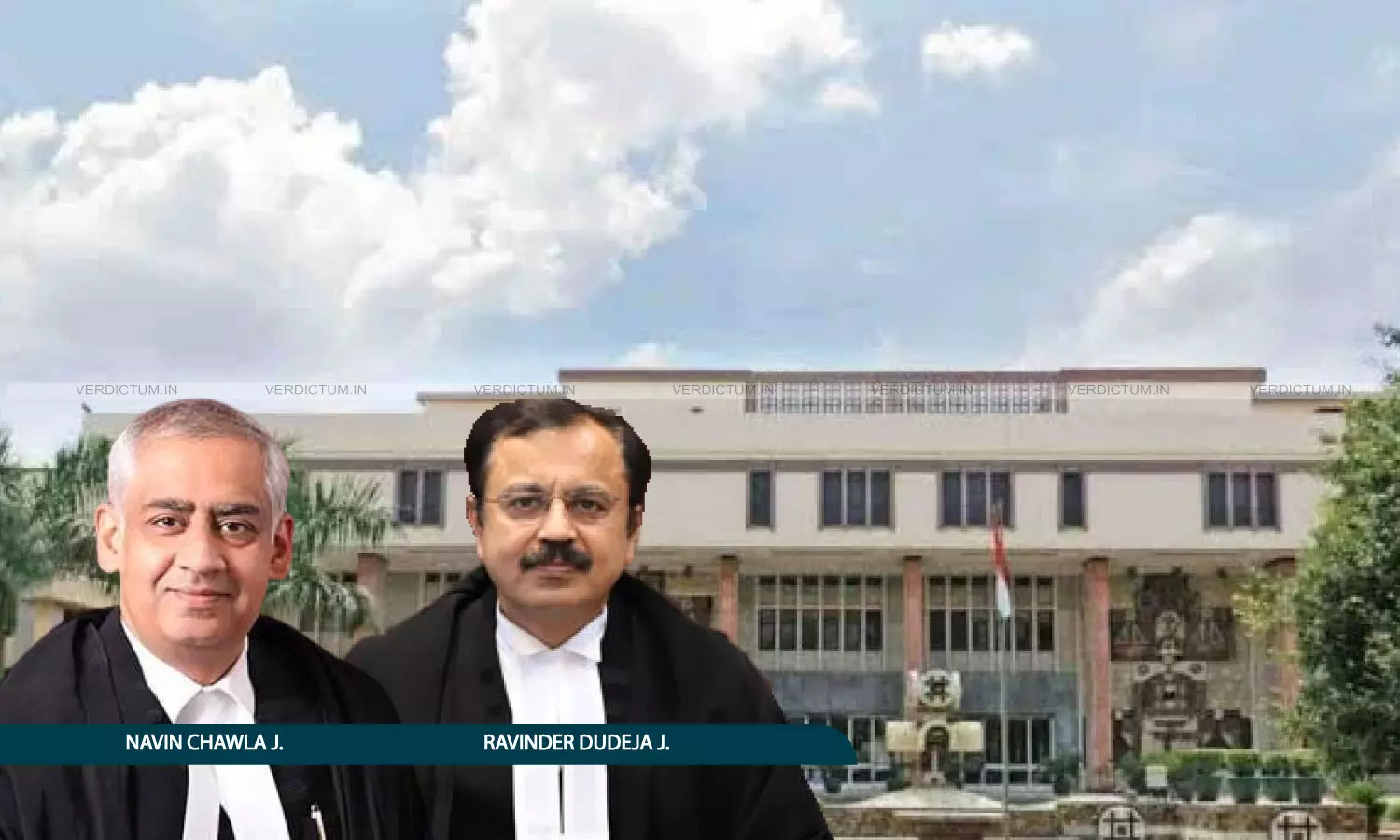
A Division Bench comprising Justice Navin Chawla and Justice Ravinder Dudeja, observed, “We are also unable to comprehend to the reasoning of the learned Trial Court that the offence of rape remained unproved merely because the prosecutrix did not expressly use the word ‘penetration’ in her testimony. The testimony of a child witness cannot be assessed on the touchstone of technical, legal or medical terminology, but must be appreciated by considering its substance, the surrounding circumstances and the natural manner in which the child of such a tender age narrates such a traumatic incident of rape. The Court must remain sensitive to the fact that a child of four years is incapable of understanding or articulating the legal ingredients of the offence and cannot be expected to describe the act in precise language…”.
Aman Usman, Additional Public Prosecutor appeared for the appellant while none appeared for the respondent.
The prosecutrix, aged four and a half years at the time, used to visit the respondent's room for tuition. On the night of August 10, 2008, she returned home bleeding from her private part and disclosed to her mother that the respondent had caused her pain. She was examined at a private hospital and subsequently at a government hospital, where a medico-legal case was registered and an FIR was lodged under Section 376 IPC.
The respondent was arrested, and bloodstained articles were recovered from his room. Forensic examination detected human semen on the victim's underwear and on articles seized from the respondent's residence.
The trial court, by judgment dated April 29, 2010, acquitted the respondent of the charge under Section 376(2)(f) IPC, holding that the prosecution had not established penetration, but convicted him under Section 354 IPC and sentenced him to one year and six months' rigorous imprisonment. The State was granted leave to appeal on May 05, 2011.
The Bench found that the trial court had proceeded on the erroneous premise that the absence of the word "penetration" in the child's testimony was fatal to the prosecution's case. The Court noted that the medical evidence of a torn hymen, corroborated by the presence of semen detected on the victim's undergarments and on articles seized from the respondent's room.
The Bench further held that minor discrepancies regarding the presence of relatives in the house amounted to no more than "minor variation on ancillary details" that did not warrant disbelieving the child's account, and rejected the suggestion of tutoring, noting,
“The testimony of victim cannot be regarded as “tutored” merely because, in cross examination, she stated that her parents and the lady Advocate, present in court, had instructed her before giving evidence. There is nothing on record which may indicate that the parents or the lady Advocate had proded the prosecutrix during deposition. Hence, it cannot be said that the victim was tutored”.
The impugned judgment was set aside insofar as it acquitted the respondent under Section 376(2)(f) IPC and convicted him only under Section 354 IPC. The respondent was held guilty and convicted under Section 376(2)(f) IPC. The matter is listed for September 10, 2026 for hearing on quantum of sentence, and non-bailable warrants were ordered to be issued for the respondent's production, along with a fresh nominal roll to be requisitioned from the jail authorities.
Cause Title: State v. Munna Kumar (Neutral Citation: 2026:DHC:7344-DB)
Appearances:
Appellant: Aman Usman, Additional Public Prosecutor, Manvendra Yadav, Advocate.
Respondent: none appeared for the respondent.