Alleged Police Misconduct During 2020 Delhi Riots Is Not, By Itself, Ground For Transfer Of Probe: Delhi High Court
 |
|Dismissing the North-East Delhi riots petitions, the Bench said that “the allegations against some police personnel being engaged in the riots, even if assumed to be correct, cannot automatically lead to the conclusion that the entire investigative machinery of the Delhi Police is institutionally incapable of conducting a fair investigation”.
The Delhi High Court has held that an allegation of police misconduct during the February 2020 North-East Delhi riots does not, by itself, amount to an allegation that the later investigation was conducted improperly. Transfer of investigation, it said, can be justified only where material connects the misconduct to the investigative process and raises a reasonable apprehension that a fair investigation cannot be undertaken.
Dismissing seven connected petitions, the Court declined to direct FIRs against persons accused of inflammatory speeches, to constitute an SIT or transfer the probe, or to issue general directions on evidence preservation, compensation and rehabilitation. It found no exceptional circumstance warranting Article 226 jurisdiction.
In the matter, the petitioners were Shaikh Mujtaba Farooq & others, Lawyers Voice, Deepak Madan, Ajay Gautam, Jamiat Ulama-I-Hind, through its General Secretary, Jamiat Ulama-I-Hind, Brinda Karat.
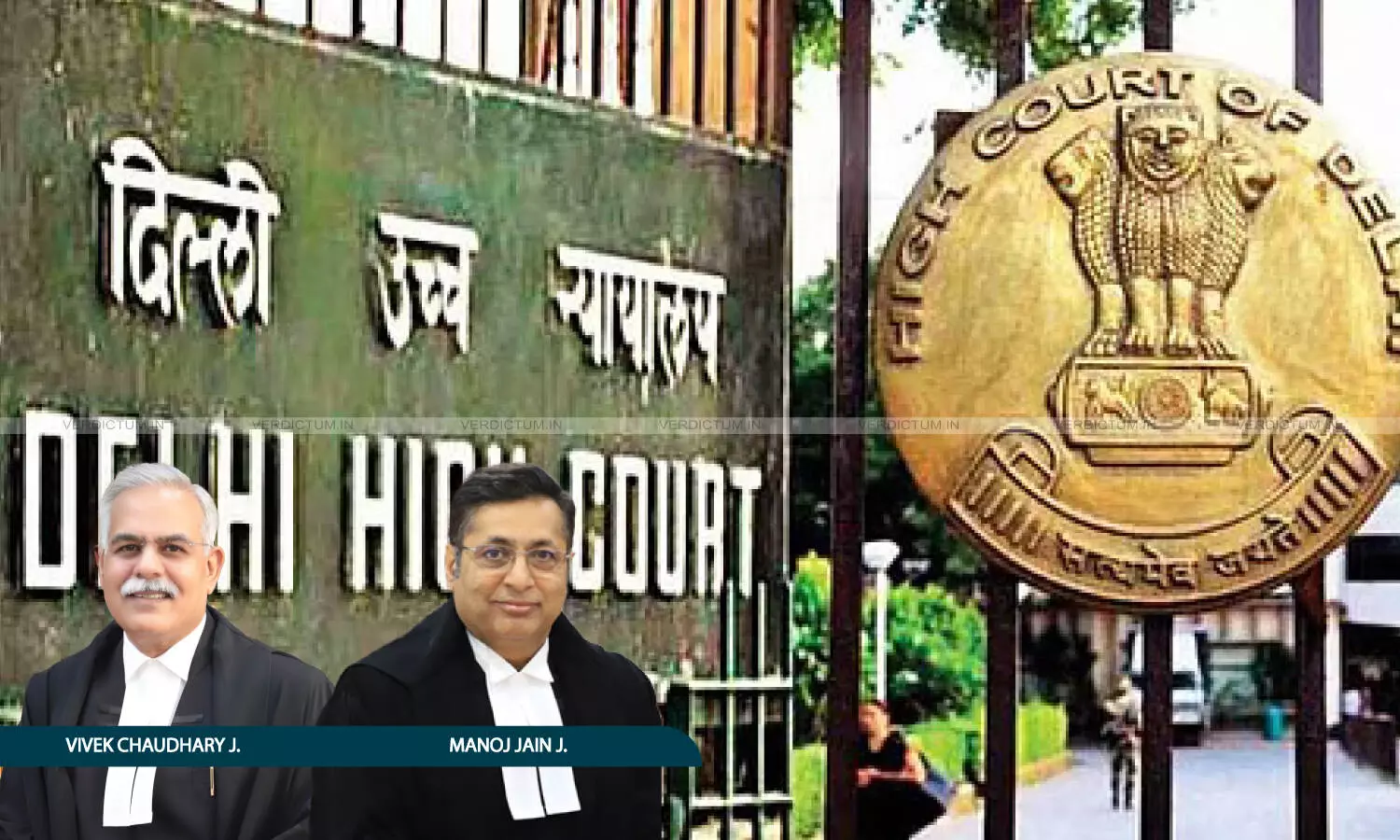
A Bench of Justice Vivek Chaudhary and Justice Manoj Jain observed, “…An allegation that police personnel committed misconduct in the course of the riots is not, by itself, an allegation that the subsequent investigation into the incidents was conducted improperly. The prayer for transfer of investigation can be justified only if there is material connecting the alleged misconduct to the investigative process in such a manner as to give rise to a reasonable apprehension that a fair investigation cannot be undertaken by the existing authority”.
“The present material does not establish such a connection. No specific material has been placed before us to demonstrate that an Investigating Officer, senior police officer or supervisory authority entrusted with the investigation was himself implicated in the alleged acts complained of, had a personal interest in shielding any police personnel, or had acted so as to compromise the investigation. The allegations against some police personnel being engaged in the riots, even if assumed to be correct, cannot automatically lead to the conclusion that the entire investigative machinery of the Delhi Police is institutionally incapable of conducting a fair investigation”, the Bench further observed.
Senior Advocates Colin Gonsalves and Kirti Uppal appeared for the petitioner and S.V. Raju, ASG appeared for the respondent.
The petitions arose from the violence that followed the enactment of the Citizenship Amendment Act and the proposed NRC. The immediate trigger was the events of February 23, 2020, near Jaffrabad Metro Station. Petitioners sought FIRs against named political figures, an SIT, preservation of CCTV footage and compensation. Counsel confined their arguments to four surviving prayers.
The petitions had been pending for over six years, where Brinda Karat's Section 156(3) application was dismissed for want of sanction under Section 197 CrPC, and the High Court upheld that in 2022. The Supreme Court, in Ashwini Kumar Upadhyay v. Union of India, decided on April 29, 2026, set that holding aside to the limited extent of the sanction requirement. As of February 19, 2026, 757 cases had been registered, charge-sheets filed in 369, and the outcomes included 22 convictions and 108 acquittals. A Claims Commissioner had also been appointed.
On the speech-related prayer, the Court held that Lalita Kumari v. Government of Uttar Pradesh & Ors., (2014) 2 SCC 1 and Sakiri Vasu v. State of Uttar Pradesh & Ors., (2008) 2 SCC 409. leave aggrieved persons to the statutory remedies under Sections 154(3), 156(3) and 200 CrPC. It noted that the material relied on was largely excerpts and clippings whose authenticity had not been established.
On the SIT prayer, it held that the Delhi Minorities Commission report could not establish pervasive infirmity in the investigation. There was no allegation against any senior or investigating officer, which distinguished Rubabbuddin Sheikh v. State of Gujarat & Ors., (2010) 2 SCC 200. A wholesale transfer would unsettle pending trials.
On evidence, no specific instance of destruction or tampering had been shown, and preservation now rests with the trial courts. On compensation, the Court noted that the claims mechanism had been substantially acted upon and no systemic failure was shown.
The petitions and all pending applications were dismissed with no order as to costs. Individuals remain at liberty to pursue remedies available in law.
Cause Title: Shaikh Mujtaba Farooq & Ors. v. Union of India & Ors. (Neutral Citation: 2026:DHC:8710-DB)
Appearances:
Petitioners: Senior Advocates Colin Gonsalves and Kirti Uppal, Kirti Singh, M. Taiyab Khan, Advocates and Ajay Gautam in person.
Respondent: ASG S.V. Raju with Rajat Nair SPP, and Syed Abdul Haseen, CGSC.