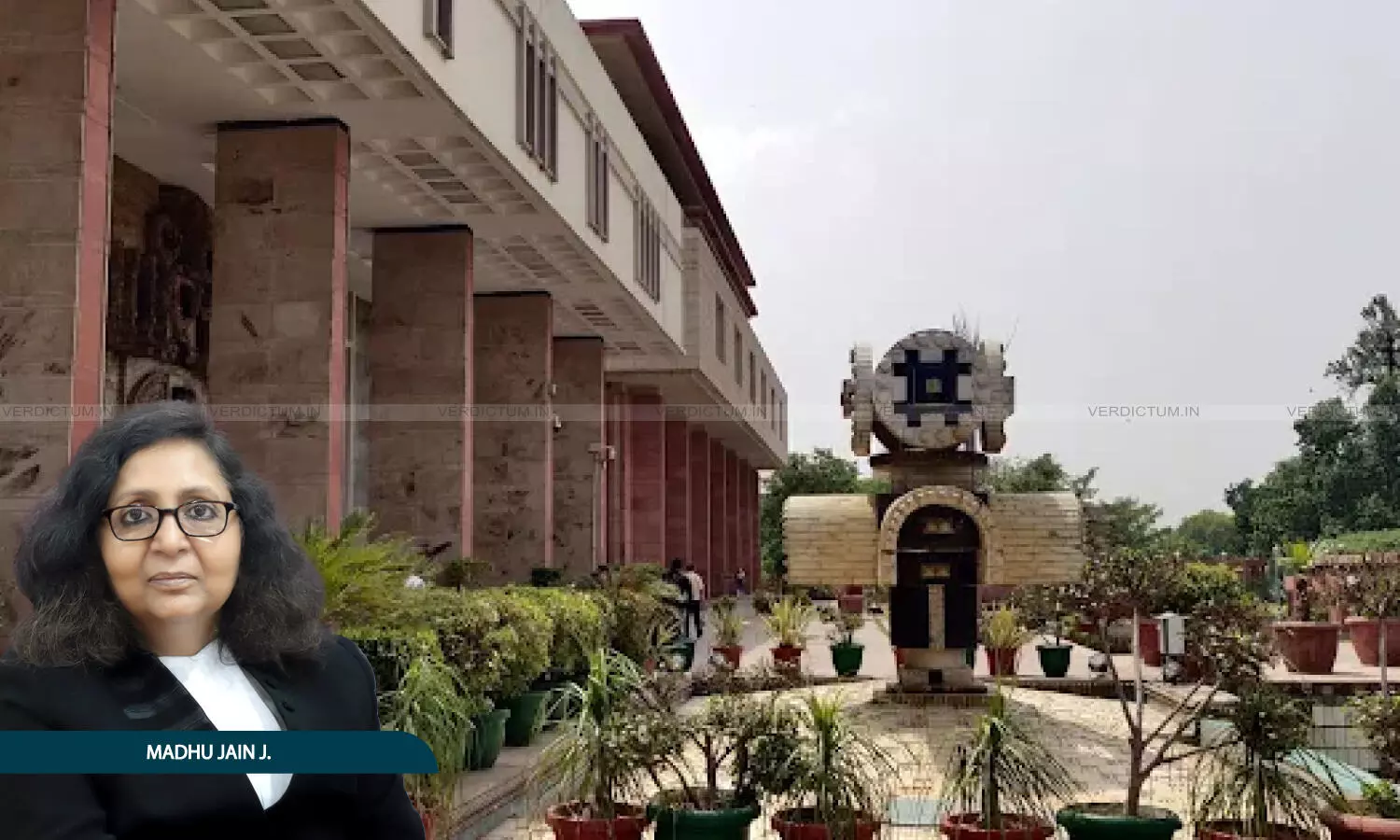
Justice Madhu Jain, Delhi High Court
Mere Fact That Matter Stood Reserved For Judgment Won’t Operate As Absolute Bar To Summon Or Recall Witness U/S 311 CrPC: Delhi High Court
 |
|The Delhi High Court was considering a Petition filed by a 69-year-old senior citizen challenging the order allowing an application preferred under Section 311 of the CrPC.
While observing that the object of a criminal trial is to enable the Court to arrive at the truth on the basis of the best available evidence, the Delhi High Court has held that the mere fact that the matter stood reserved for judgment cannot, by itself, operate as an absolute bar to the exercise of power under Section 311 of the Code of Criminal Procedure, 1973 (CrPC) to summon/recall a witness.
The petitioner, a 69-year-old senior citizen, approached the High Court challenging the order passed by the Special Judge (PC Act), whereby the Trial Court entertained and allowed an application preferred by the CBI under Section 311 after the matter had been reserved for pronouncement of judgment.
The Single Bench of Justice Madhu Jain held, “Reservation of a matter for judgment undoubtedly marks the conclusion of the ordinary course of trial. It does not, however, render the Court powerless to exercise a jurisdiction expressly conferred upon it by the Code where the Court is satisfied that such exercise is necessary for a just decision of the case. The mere fact that the matter stood reserved for judgment cannot, by itself, operate as an absolute bar to the exercise of power under Section 311 CrPC.”
“The contention of learned counsel for the petitioner that the application under Section 311 CrPC merely cites ‘inadvertence’ and does not disclose sufficient reasons, cannot be accepted.The jurisdiction under Section 311 CrPC is vested in the Court and its exercise is not dependent exclusively upon the sufficiency or otherwise of the averments contained in the application preferred by a party. The provision itself empowers the Court to summon or recall a witness even suo motu, where the Court is of the opinion that such evidence is essential for a just decision of the case”, it added.
Advocate Aditya Singh Deshwal represented the Appellant while Special Public Prosecutor Rajesh Kumar represented the Respondent.
Factual Background
The case arose out of a preliminary inquiry registered by the CBI in 2006 concerning the alleged failure of MCD officials to take action against encroachment upon public land, allegedly resulting in pecuniary advantage to private builders. The preliminary inquiry culminated in registration of a case. The petitioner was not initially named in the RC but was subsequently arrayed as an accused in the chargesheet filed by the CBI in 2008, along with certain MCD officials and private persons. According to the petitioner, he was the sole surviving accused/conspirator facing trial, the public servants allegedly forming the core of the conspiracy having been discharged while proceedings against the remaining accused stood abated on account of their death during the prolonged pendency of the trial.
The Trial Court listed the matter for final arguments. Thereafter, the CBI moved an application under Section 311 CrPC before the Special Judge. Instead of rejecting the application at the threshold, the Special Judge entertained the same and issued notice to the petitioner. The petitioner filed his reply to the application whereafter the matter was taken up for arguments. The Special Judge allowed the said application and also gave only one opportunity to the CBI to examine the said witness.
Reasoning
The Bench stated that Section 311 CrPC vests the Court with a wide power to summon or recall a witness where his evidence appears to be essential for a just decision of the case. “While the stage at which such power is invoked is a relevant consideration, it cannot, by itself, operate as an absolute bar where the Court is satisfied that the evidence sought to be brought on record is essential for a just decision of the case”, it added.
The Bench refused to accept the contention of the petitioner that the application under Section 311 CrPC merely cites ‘inadvertence’ and does not disclose sufficient reasons. “The jurisdiction under Section 311 CrPC is vested in the Court and its exercise is not dependent exclusively upon the sufficiency or otherwise of the averments contained in the application preferred by a party. The provision itself empowers the Court to summon or recall a witness even suo motu, where the Court is of the opinion that such evidence is essential for a just decision of the case”, it mentioned.
The Bench explained that the object of a criminal trial is to enable the Court to arrive at the truth on the basis of the best available evidence and an omission at an earlier stage cannot by itself constitute a bar to the exercise of power under Section 311 CrPC, where the Court is satisfied that the evidence sought to be brought on record is necessary for a just decision of the case.
The Bench further highlighted how the Apex Court has consistently held that procedural considerations cannot come in the way of the Court exercising its powers under Section 311 CrPC to summon or recall a witness where such evidence is necessary for arriving at the truth and rendering a just decision. “The guiding consideration remains whether the evidence sought to be brought on record is germane to the issues involved and essential for a just adjudication, while ensuring that the exercise of such power does not cause serious prejudice to either party”, it added.
Thus finding no merit in the challenge to the Impugned Order and holding that the exercise of power under Section 311 CrPC by the Trial Court was justified, the Bench dismissed the Petition.
Cause Title: Raman Soni v. Central Bureau of Investigation (Case No.: CRL.M.C. 4892/2026)
Appearance
Appellant: Advocates Aditya Singh Deshwal, Nitish Rangarh
Respondent: Special Public Prosecutor Rajesh Kumar, Advocates Yash Narain, Mishika Pandita, Pragya Nath, Changez Khan, SI Aakash