Section 69A IT Act Permits Issuance Of Interim Blocking Directions; Post Decisional Hearing Can Be Afforded Before Final Order: Delhi HC While Upholding Telegram's Ban
 |
|The Court held that Sec 69A of the IT Act permits the Centre to issue emergency interim blocking orders first, to be supplemented by detailed reasons during a post-decisional hearing.
The Delhi High Court dismissed instant messaging platform Telegram’s challenge to its nationwide ban, holding that emergency directives do not require exhaustive pre-decisional reasoning under the Information Technology Act, 2000.
Upholding the Union's decision to protect the NEET-UG 2026 Re-Examination, the Court said that the Central Government possesses full statutory competence to enforce temporary platform-wide restrictions, and that such an emergency action satisfies the strict constitutional touchstone of proportionality due to the platform's unique architectural vulnerabilities.
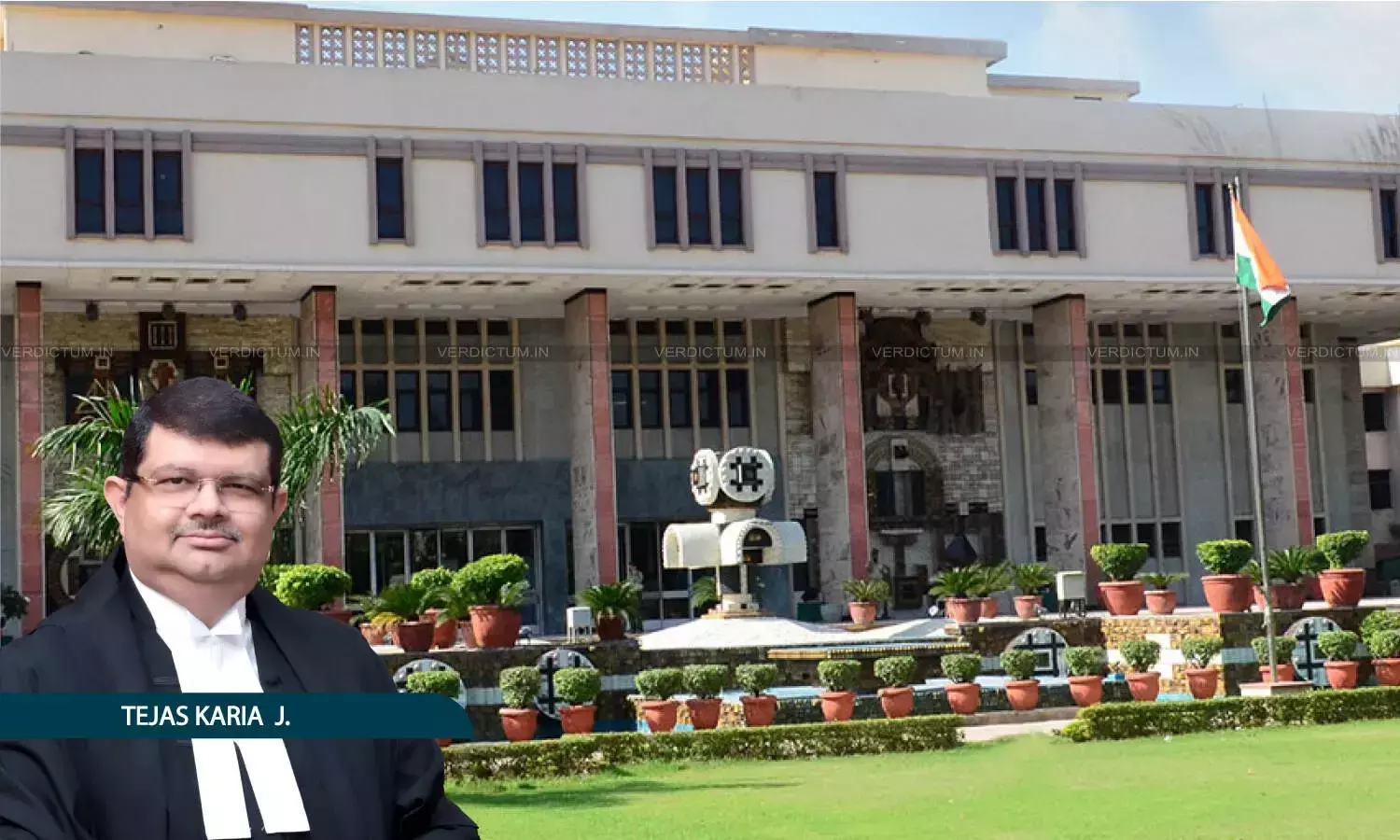
The Vacation Bench comprising Justice Tejas Karia observed, "The Petitioners’ contention that the Final Order cannot supplement or supplant the reasons recorded in the Impugned Order is misconceived. Such contention is contrary to the scheme of Section 69A of the IT Act read with the 2009 Rules, which contemplates that, in cases of emergency such as the present one, an interim blocking direction may be issued upon the satisfaction of the Secretary of Respondent No. 1, as to the existence of the conditions specified under Section 69A of the IT Act. Thereafter, a post-decisional hearing is required to be afforded to the intermediary before a final order is passed, either confirming or revoking the interim blocking direction. In such circumstances, the Petitioners’ insistence that detailed reasons ought to have been supplied in the Impugned Order itself prior to the grant of an opportunity of hearing is without merit."
Senior Advocate Dhruv Mehta appeared for Telegram, while Solicitor General of India Tushar Mehta appeared for the Union of India.
The High Court dealt with two issues: i. Whether the Impugned Order passed by Respondent No. 1 is vitiated by non-application of mind?; ii. Whether the action of Respondent No. 1 in temporarily blocking public access to entire Telegram platform satisfies the requirement of proportionality?
As regards the first issues, the Court observed that the Ministry of Electronics and Information Technology (MeitY) had recorded a valid, independent satisfaction based on extensive material before issuing the interim blocking order.
"There is no cavil that every decision of a statutory or administrative authority must be supported by reasons, which constitute an essential facet of the principles of natural justice. Reasons serve to establish the nexus between the material placed before the authority and the conclusion arrived at by it and further demonstrate that the authority has applied its mind to the relevant facts and circumstances", the Court observed.
The Bench took due notice of the multi-state law enforcement concerns, including specific investigative findings, intelligence inputs from the Indian Cybercrime Coordination Centre (I4C), and multiple arrests made across various states, which collectively elevated the issue to a systemic threat to public tranquility.
The Court further observed that the challenge to the emergency directive on the ground of non-communication of reasons could not be sustained. The Bench held that given the exigent and emergent nature of the situation, the reasons recorded within the interim order were legally sufficient and disclosed a direct, substantial nexus between the material placed on record and the ultimate conclusions arrived at by the state.
It held, "Further, the Petitioners’ contention that Telegram had complied with directions for blocking specific content is not determinative for the purposes of assessing the validity of the directions issued under Section 69A of the IT Act. The blocking of individual content was undertaken pursuant to the 2021 Rules, whereas the Impugned Order under Section 69A of the IT Act was passed upon consideration of the overall architectural features of Telegram, which rendered it impracticable to prevent misuse of the platform through the less restrictive measure of blocking individual items of content alone."
The Bench observed that the personal admissions made by the platform’s Chief Executive Officer regarding the rampant proliferation of "backdating scams" and the structural inadequacy of the application's existing features directly corroborated the state’s apprehensions.
The Court ruled that the platform's prior compliance with individual content-takedown notices under the 2021 Intermediary Rules was not determinative, as the technical architecture of the application—including its automated bot infrastructure, rotated handles, and audience-migration capabilities—rendered isolated, entity-by-entity restrictions entirely ineffective.
Consequently, the Bench answered the issue in the negative, holding that the impugned executive actions did not suffer from the vice of non-application of mind.
The Court, while adjudicating upon the second issue, observed that the Central Government was fully empowered under Section 69A of the IT Act to issue directions for blocking public access to an entire application or platform.
Rejecting a restrictive interpretation, the Bench held that the expression "information" under Section 2(1)(v) of the Act must be construed expansively to include codes, computer programmes, and software, thereby bringing software-based infrastructure within the regulatory ambit of the state.
The Court observed that because an application or platform performs logical, arithmetic, and memory functions through electronic, magnetic, or optical impulses, it falls squarely within the statutory definitions of a "computer resource" and "computer".
Consequently, the Bench took the view that confining the scope of Section 69A exclusively to individual user accounts, channels, or messages would defeat the legislative intent and render the provision otiose, reinforcing that the state possessed the necessary statutory competence to institute platform-wide restrictions.
On the touchstone of constitutional safeguards, the High Court observed that the emergency action withstood judicial scrutiny under the doctrine of proportionality as enunciated by the Apex Court.
The Bench noted that conventional, narrower interventions—such as entity-specific channel takedowns—had proved entirely ineffective because the platform's unique architecture, cloud-based infrastructure, automated bot ecosystems, and audience-migration mechanisms allowed operators to instantly reconstitute networks via mirror channels.
Furthermore, the Court took serious note of the platform's message-editing functionality with timestamp retention, observing that it was highly susceptible to exploitation by miscreants seeking to manufacture fraudulent claims of pre-examination paper leaks by retroactively swapping file attachments.
Concluding that granular filtration was technically unfeasible at such a massive scale during a critical examination window, the Court affirmed that the temporary, event-linked restriction was narrowly tailored and constituted the least restrictive means available to prevent widespread institutional compromise, thereby satisfying the test of proportionality and warranting the dismissal of the petition.
Cause Title: Telegram FZ LLV & Anr. v. Union of India & Ors. [Neutral Citation: 2026:DHC:5145]
Appearances:
Petitioner: Senior Advocate Dhruv Mehta, Advocate Madhav Khosla, Advocate Abhi Udai Singh Gautam, Advocate Roshni Ojha, Advocate Keith Verghese.
Respondents: Solicitor General of India Tushar Mehta, Additional Solicitor General Chetan Sharma, Standing Counsel Sanjay Khanna, Advocate Ashish K. Dixit, Advocate Aman Mehta, Advocate Umar Hashmi, Advocate Amit Gupta, Advocate R.V. Prabhat, Advocate Shubham Sharma, Advocate Yash Wardhan Sharma, Advocate Naman, Advocate Pragya Bhushan, Advocate Jaya Choudhary, Advocate Saurabh Pandey.
Click here to read/download the Judgment