Petitioner Can't Take Benefit Of Part Of Order And Challenge Rest: Supreme Court Sets Aside Bail Order Containing Impugned Condition To Marry Victim
 |
|The Court set aside the order of the High Court, which put the condition that he had to file an affidavit promising to marry the complainant to obtain interim bail, with a mandate to submit the marriage certificate.
The Supreme Court has set aside the order of the Madras High Court that had granted bail to an accused on the condition that he must marry the complainant, in an SLP filed by the accused challenging the condition.
The Court observed that since the High Court was lulled into granting bail based on the accused’s own statement of intent to marry, the Accused could not later seek to set aside the marriage condition while retaining the benefit of the bail.
Consequently, the Apex Court quashed the entire bail order and directed the High Court to hear the bail application afresh on its own merits.
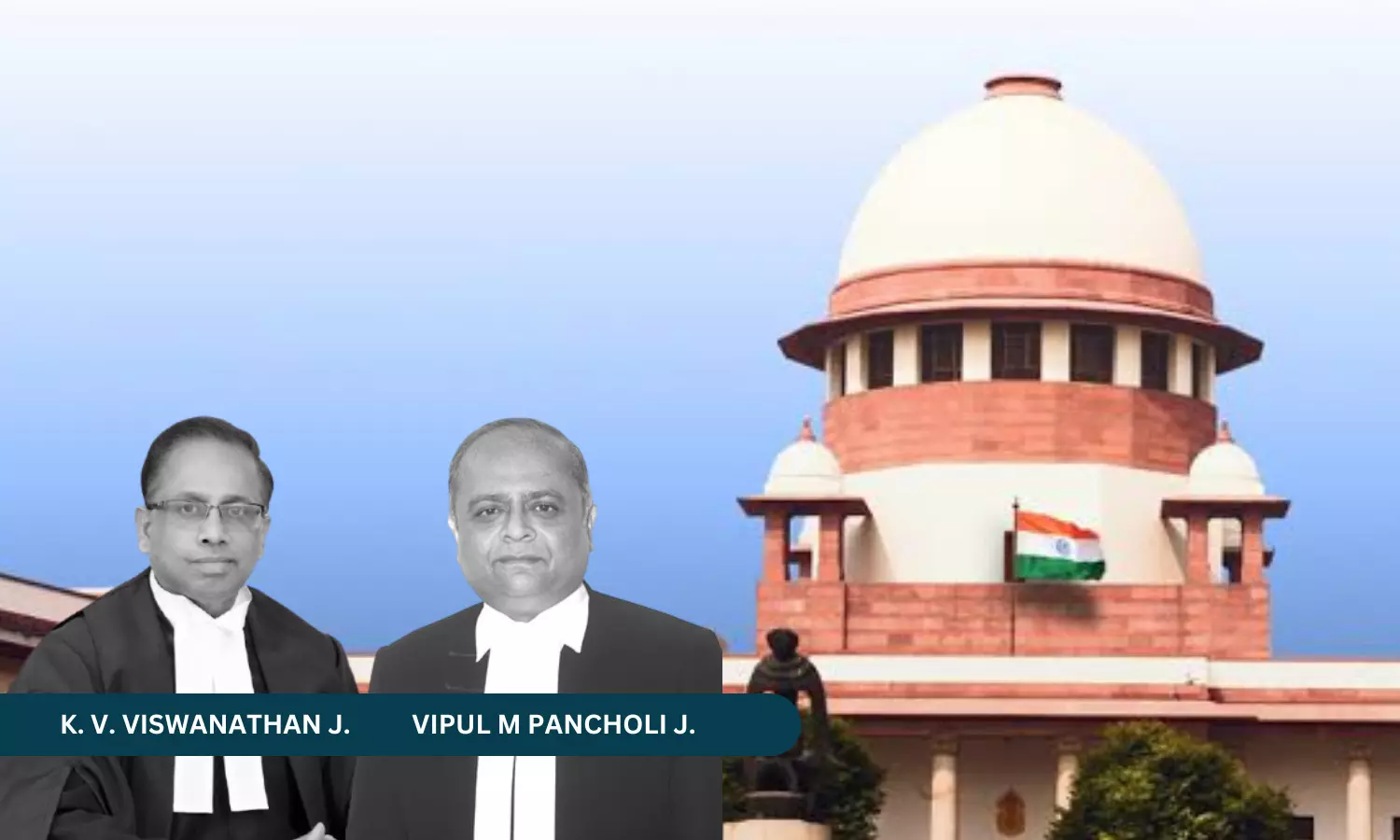
The Bench of Justice KV Viswanathan and Justice Vipul M Pancholi observed, “The above conditions were imposed pursuant to the statement made by the petitioner. The petitioner cannot take benefit of part of the order and say that the other part cannot bind him and needs to be set aside. The correct course of action to follow would be to set aside the entire order since the High Court was lulled into passing the order on the statement of Petitioner…In view of the above, we set aside the order dated 05.01.2026 in Crl.OP(MD) No.23155/2025. The High Court to consider Crl. OP(MD) No.23155 of 2025 on its own merits afresh.”
Advocate G Anto Prince appeared for the Petitioner, while AOR Sabarish Subramanian appeared for the Respondents.
An FIR was registered against the Petitioner/Accused under Sections 296(b), 115(2), 75(1), 75 (i) (ii) & 2 of Bharatiya Nyaya Sanhita, 2023, wherein it was alleged that the Petitioner/Accused falsely promised to marry the Complainant and had a physical relationship and evaded marrying her.
The Petitioner/Accused filed a bail application before the Madras High Court and was enlarged on bail by the impugned order, subject to certain conditions. One of the conditions that was imposed was on account of a statement made by the Petitioner/Accused before the Court. The impugned order said, “This Court, on previous occasion, directed, the prosecution to make the petitioner to appear before this Court through video conference. Today, the accused has appeared through video conference and has accepted and admitted that he would marry the defacto complainant.”
The High Court put the condition that the Petitioner/Accused had to file an affidavit promising to marry the de facto complainant to obtain interim bail, with a mandate to submit the marriage certificate by February 4, 2026. Additionally, the Petitioner/Accused was required to cooperate with police interrogations and was prohibited from tampering with evidence or absconding.
The High Court had ordered, “The petitioner is directed to file an affidavit while producing surety stating that he would marry the defacto complainant. On such filing of affidavit, the petitioner may be released on interimvbail. After registering the marriage, the petitioner shall submit the registration certificate before this Court on 04.02.2026…The petitioner shall report before the respondent police as and when required for interrogation till 04.02.2026…”
The Petitioner/Accused stated in his plea, “Because the impugned condition directing the petitioner to undertake and register marriage as a precondition for release on bail has no nexus with the object of bail, namely securing the presence of the accused, ensuring fair investigation, or preventing tampering with evidence, and i.s therefore arbitrary and without jurisdiction…Because compelling marriage under the threat of continued incarceration violates the petitioner's right to personal liberty, autonomy, and decisional privacy under Article 21 of the Constitution of India, rendering any purported consent Involuntary and illusory.”
The Petitioner/Accused submitted that the High Court erred in imposing conditions ‘B’ and ‘C’. The Petitioner also submitted that he has protection till February 4, 2026, and prayed for leave that the High Court may be requested to consider the matter before the said date.
The Petition also submitted, “Because in a case where the allegation itself concerns an alleged false promise to marry, the direction to solemnise marriage at the stage of bail amounts to prejudging disputed facts and undermines the presumption of innocence…Because a criminal court cannot impose bail conditions that are punitive or that enforce civil or matrimonial consequences, and the impugned condition impermissibly converts criminal proceedings into a mechanism for private settlement.”
The Court ordered, “The learned counsel for the petitioner is granted liberty to bring to the attention of the High Court about the present order passed by us, on Monday, i.e. on 02.02.2026. Till 04.02.2026, the protection granted by the High Court shall continue to operate as an order of interim bail.”
Accordingly, the Court disposed of the Petition.
Cause Title: Balaji v. State of Tamil Nadu & Anr. [Special Leave to Appeal (Crl.) No. 1629 of 2026]
Appearances:
Petitioner: Advocate G Anto Prince, AOR Jose Abraham, Advocates A. gnana Sekar, M.kurus Celine Rani, Neya As, G.anto Robert and Manas P Hameed.
Respondents: AOR Sabarish Subramanian and Advocate Arpitha Anna Mathew.