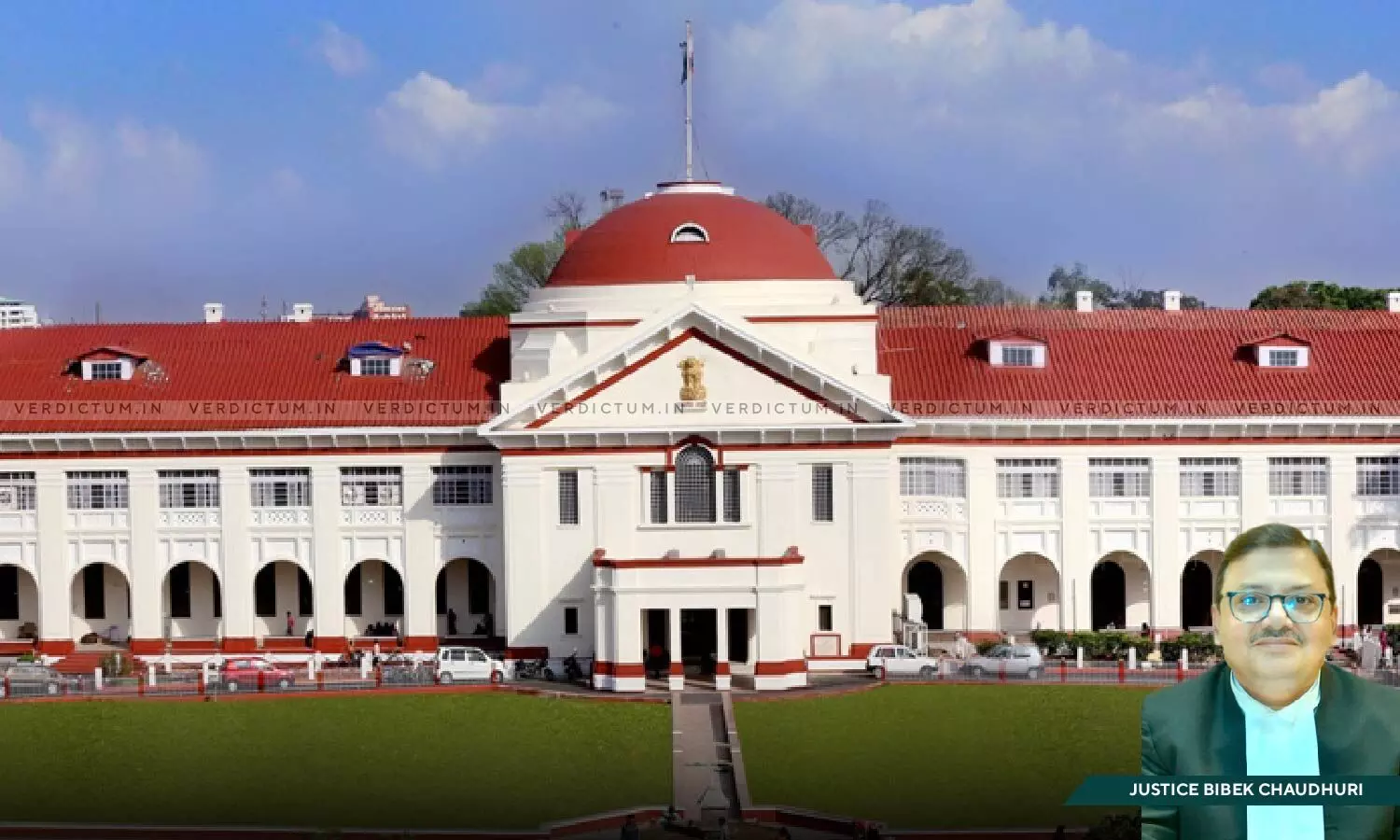
Justice Bibek Chaudhuri, Patna High Court
Waqf Tribunal Appeared Influenced By Community Interests: Patna High Court Holds National Highway Act Prevails Over Waqf Act
 |
|Court set aside Bihar State Waqf Tribunal's order restraining NHAI from carrying out construction on land classified as mosque and Kabristan.
The Patna High Court has set aside an injunction order passed by the Bihar State Waqf Tribunal restraining the National Highways Authority of India (NHAI) from carrying out construction on land classified as mosque and Kabristan, holding that the Tribunal lacked jurisdiction under Section 83 of the Waqf Act, 1995 to interfere in land acquisition for national highways.
The Court noted that the Tribunal failed to appreciate the law and appeared to have been influenced by the interest of a particular community, stressing that such an approach is unacceptable for a member of the Bihar Judicial Service. It directed that the observation be placed before the Chief Justice.
Justice Bibek Chaudhuri observed, “The learned Tribunal failed to consider two Central Legislations, viz., National Highways Act, 1956 and Waqf Act, 1995, subsequently notified as the Unified Waqf Management, Empowerment, Efficiency and Development Act, 1995 have to be construed harmoniously and in the event of any conflict, the National Highways Act, 1956, shall prevail, as qua the construction of national highways, the legislation under Entry 23 of List-I of the Schedule-VII of the Constitution occupied the filed prior to the enactment of the Waqf Act, 1995 and therefore, the latter legislation under Entry 28 of List-III of Schedule-VII shall give way. In any event, the objects of the Waqf Act, 1995 make it clear that the Waqf Act is enacted to provide for the better administration of Waqf properties. Further, the entire scheme of the Waqf Act, 1995 demonstrate that the Act contemplates to govern the aspects relating to dedication, lease, sale, gift, mortgage, exchange or transfer of Waqf property. The relevant provisions are stated in Sections 6, 7 and 51 of the Waqf Act. In this regard, the decision, reported in Ashoka Marketing Ltd. v. Punjab National Bank, reported in (1990) 4 SCC 406 may be relied on”.
“Practically the Tribunal failed to appreciate the law and in my view what matter most in the mind of the learned Chairman of the Waqf Tribunal is the interest of a particular community. This is not acceptable for a Member of Bihar Judicial Service. This observation be brought to the notice of the Hon'ble the Chief Justice”, the Bench categorically noted.
Advocate Maurya Vijay Chandra appeared for the appellant and Ram Tujabh Singh, CGC appeared for the respondent.
In the matter, an appeal challenged the order dated May 15, 2025, whereby the Waqf Tribunal had stayed construction activities on certain plots in Samastipur district, observing that the acquisition process was not in accordance with law and that notice had not been properly served upon the Waqf Board.
The Court emphasised that the National Highways Act, 1956 is a complete code in itself, providing a comprehensive mechanism for land acquisition, including notification, objections, possession, and compensation. It ruled that acquisition of land for public purposes such as national highways cannot be interdicted on the ground that the land is waqf property.
Rejecting the contention that waqf property cannot be acquired, the Court held that Section 91 of the Waqf Act merely requires notice to be given to the Waqf Board and does not prohibit acquisition. At best, it enables the Board or interested persons to participate in compensation proceedings.
The Court further noted that in case of conflict between the two statutes, the National Highways Act would prevail, being a central legislation occupying the field of highway development. It also relied on prior judicial precedents affirming that infrastructure projects cannot be stalled due to the presence of religious structures.
Importantly, the Court observed that a prior order of the High Court had already permitted NHAI to proceed with construction on the disputed plots, effectively nullifying the Tribunal’s stay order.
“…the Division Bench, presided over by Hon'ble the Chief Justice, vide order, dated 26th of February, 2026 has already held that there is no predicament or hindrance in proceeding with the work on the plots in question involved in the instant Appeal. This observation practically nullifies the impugned order of injunction passed by the Chairman, Waqf Tribunal, Patna”, it noted.
Accordingly, the Court allowed the appeal and set aside the Tribunal’s injunction, clearing the way for continuation of the highway project.
Cause Title: National Highways Authority of India v. Syed Mohammad Masood Jawed & Ors. Miscellaneous Appeal No.795 of 2025
Appearances:
Appellant: Maurya Vijay Chandra, Gaurav Govinda, Preety Ranjan, Om Sandliya, Barun Jha, Advocates.
Respondents: Ram Tujabh Singh, CGC, Vivek Prasad, Sanjayy Kumar, AC, Roona, AC, Md. Helal Ahmad, Advocates.