"Bulldozer Justice" Verdict Of Supreme Court Cannot Shield Illegal Constructions: Jharkhand High Court Declines Stay On Jamshedpur Demolitions
 |
|An application sought modification of the High Court’s order, where JNAC was directed to demolish illegal structures raised by private respondents within one month.
The Jharkhand High Court has declined to modify its earlier order directing the demolition of illegal constructions in Jamshedpur, holding that the Supreme Court’s decision in In Re: Directions in Matter of Demolition of Structures does not aid the applicants as it not applicable for illegal structures raised in disregard of the law and town planning norms.
An application sought modification of the High Court’s order, whereby the Jharkhand Notified Area Committee (JNAC), Jamshedpur, was directed to demolish illegal structures raised by private respondents within one month.
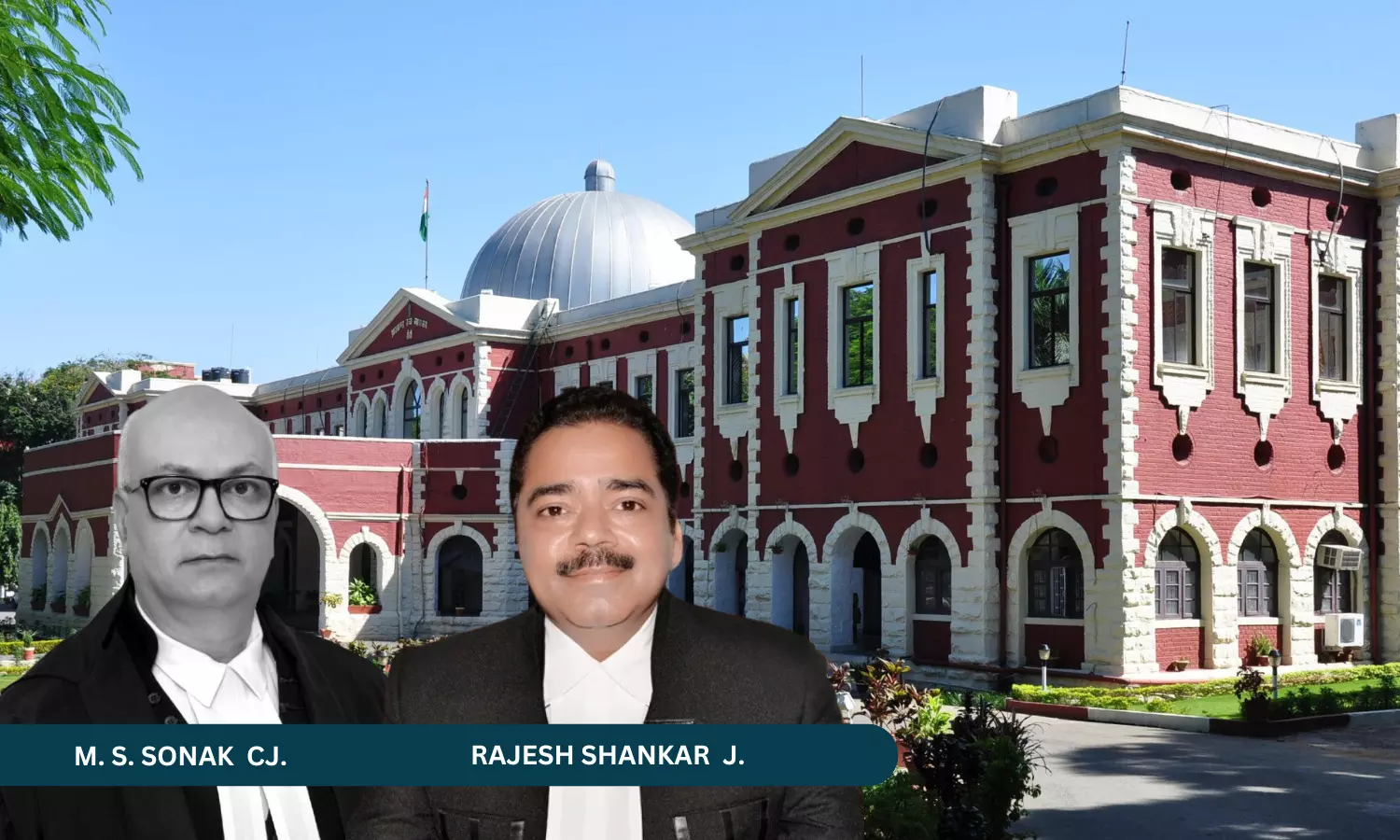
A Division Bench of Chief Justice MS Sonak and Justice Rajesh Shankar noted, “Unfortunately, it has become common practice to obtain permission and then carry out construction in gross deviation from the conditions imposed by such permission. If the deviations are indeed within the permissible limits, then it is the duty of the person putting up such constructions to apply for a completion certificate by disclosing these deviations and demonstrating how these deviations are within the permissible limits. Only then can a completion certificate be issued by the authorities. The absence of a completion certificate indicates that the deviations in these cases exceed the permissible condonable limits.”
Advocate Akhilesh Srivastava appeared for the Petitioner and Advocate Piyush Chitresh appeared for the Respondents.
The Court noted that in the earlier proceedings, the JNAC had admitted that the constructions in question were illegal and had undertaken to demolish them. The Court had also taken note of the report of a three-member committee of advocates, which found that the buildings violated building bye-laws, exceeded sanctioned limits, and were constructed in the absence of effective monitoring by the authorities.
The applicants contended that demolition ought not to have been ordered and that the statement made by the JNAC should not have been treated as an undertaking to the Court, as this would violate the Supreme Court’s directions in In Re: Directions in Matter of Demolition of Structures. They submitted that deviations within permissible limits are capable of regularisation and that, without granting them an opportunity to seek such regularisation, no demolition could have been directed.
It was further argued that if the prescribed statutory procedure were followed, the applicants would have a right to appeal against the demolition orders and demonstrate that their constructions were either lawful or that the deviations were within permissible or condonable limits. On this basis, they sought modification of the order, a stay on demolitions, and a direction to the JNAC to follow due process of law.
The High Court rejected these submissions, observing that even in the present applications, the applicants had failed to place any material on record to show, even prima facie, that their constructions were legal or that the deviations were within permissible or condonable limits. The Court noted that the submissions were unsupported by pleadings or credible material and that none of the applicants had produced a completion certificate, which is mandatory.
The Bench held that the present situation had arisen not only due to rampant illegal constructions by the applicants and others, but also on account of gross dereliction of duty by the JNAC and municipal authorities, it noted, “As observed by the coordinate Bench in the order of 14th January, 2026, it is most difficult to accept that such constructions were possible other than with the active connivance of the authorities or, in any event, on account of gross inaction on the part of the authorities in initiating action. It is this attitude which emboldens the applicants like the ones who are before us today, who raise all kinds of pleas in the name of the Rule of law when they have, themselves, shown the most scant regard to the Rule of law when putting up these constructions or when deviating grossly from the permissions under which such constructions were commenced.”
The Court further held that the directions issued by the Supreme Court in In Re: Directions in the Matter of Demolition of Structures were rendered in an entirely different factual context and were not comparable to the present case. It observed, “The directions in the case of Directions in the Matter of Demolition of Structures, in Re. (Supra) were issued in the context not at all comparable to the gross facts and circumstances of the present case. Here, it is not as if the rule of law has not been complied with. The applicants had a full opportunity to seek completion certificates if they seriously believed that the deviations they undertook were within the condonable limits. The applicants had full opportunity to produce the permissions, licenses or authority under which the constructions were put up. The principles of natural justice cannot be unnaturally expanded.”
The Court observed that regularisation is an exception and not the rule. It noted, "The law regarding the regularisation of patently illegal constructions is quite clear. The regularisation provisions are an exception, not the rule. The Hon’ble Supreme Court has time and again held that regularisation of illegal constructions cannot be claimed as a matter of right."
Accordingly, the High Court dismissed the interlocutory applications seeking modification of the earlier order and upheld the directions for demolition of the illegal structures.
Cause Title: Rakesh Kumar Jha v. The State of Jharkhand & Ors.
Appearance:
Petitioner: Advocate Akhilesh Srivastava
Respondents: Advocates Piyush Chitresh, Krishna Kumar, Umesh Pd. Singh, R. S. Mazumdar, Ajit Kumar, Anil Kumar Indrajit Sinha, Bibhash Sinha, Amit Kumar, J. N. Upadhyay