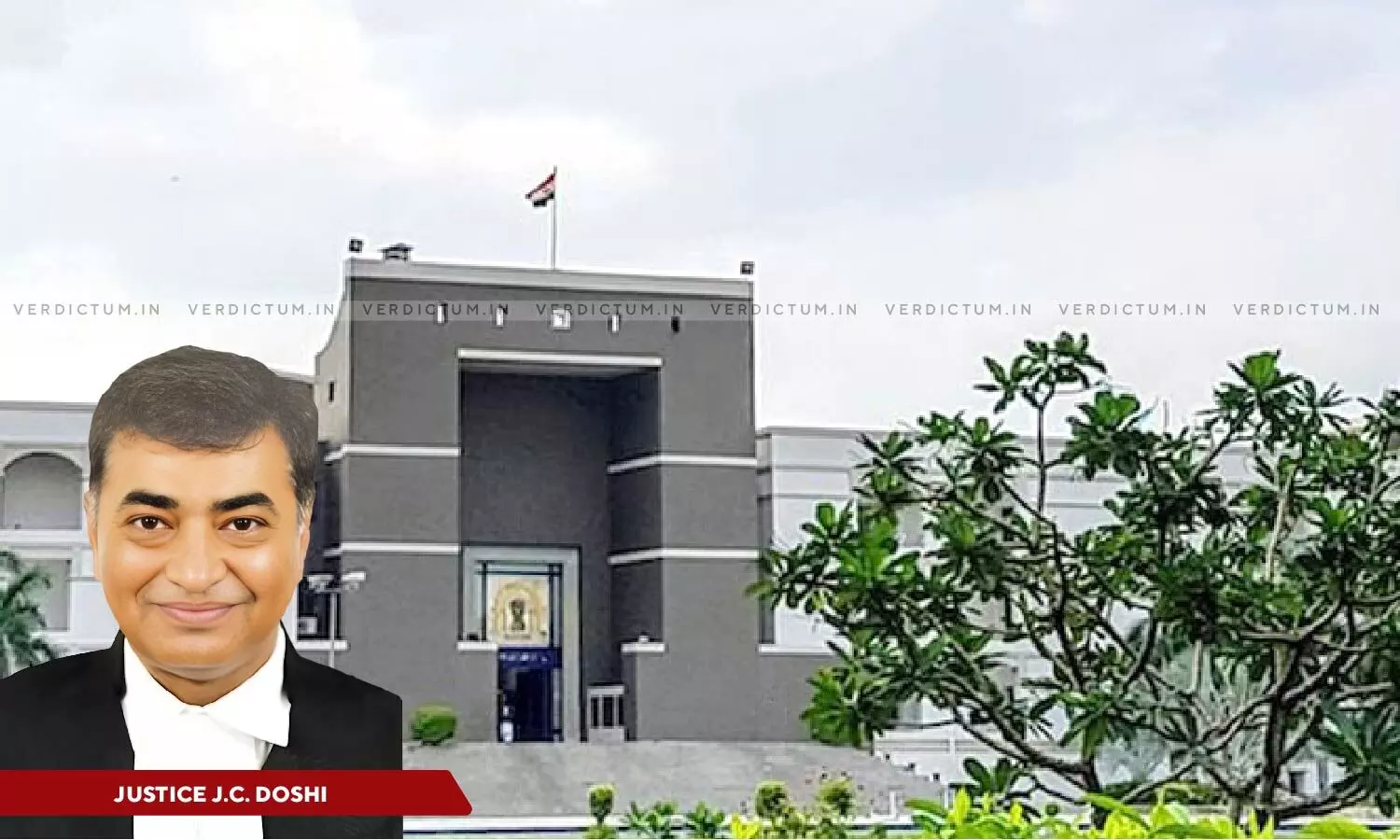
Justice J.C. Doshi, Gujarat High Court
Mortgage By Conditional Sale| Nature of Transaction Must Be Gathered From Entire Document; Mere Description As Sale Not Conclusive: Gujarat HC
 |
|Substance of transaction prevails over form; debtor-creditor relationship and right of redemption upheld
The Gujarat High Court has held that the true nature of a property transaction must be determined from a reading of the entire document and not merely from the description or label assigned to it, observing that a deed styled as a sale may, in substance, amount to a mortgage by conditional sale. Upholding the right of redemption, the Court dismissed a second appeal and affirmed the decree directing reconveyance of the suit property to the plaintiffs upon repayment of the mortgage amount.
The Court held that the transaction created a debtor-creditor relationship, which is a defining feature of a mortgage. Referring to Patel Ravjibhai Bhulabhai (D) Thr. LRS. Vs Rahemanbhai M.Shaikh (D) Thr. LRS. & Ors., (2016 ) 12 SCC 216, it further explained the distinction between a mortgage by conditional sale and a sale with a condition to repurchase, observing that in the former, the debt subsists and the right of redemption continues, whereas in the latter, ownership is fully transferred with only a contractual right to repurchase.
A Single Judge Bench of Justice J. C. Doshi observed, “It is settled principle of law that the document has to be interpreted as it appears on its face with its literal meaning. The document must be interpreted as a whole. Focusing on the plaint, nature and ordinary meaning of its language with clear and unambigous, the primary goal is to ascertain true intention of the parties by reading the document in its entirety rather than focusing on another part. Applying the principle of “literal rule”, the words have to be given their natural ordinary meaning espeacially when the language is unambigous. The words take their colar from the context and the document should be understood based on text and context if the language is clear. On reading the document as a whole, the Court should not attempt to interpret it differently, rather the Court should give substantive intent and to read the document what it reflects and what has been understood between the parties”.
The Bench in the judgment said that the trial court while believing that it is a mortgage by conditional sale where it also referred Section 58(c) of the Transfer of Property Act, “swung its pendulum from one end to another end in the same breath”, where despite its best efforts was in a confusing position, and accordingly dismissed the suit.
“The learned first Appellate Court again ran from North to South but ultimately reached to the rightful conclusion that the plaintiffs are entitled to the decree as it is not outright sale, but the learned Appellate Court failed to understand distinction between “mortgage by conditional sale” and “sale with condition to repurchase..”. the judgment read.
Advocate Hriday Buch appeared for the appellant and Advocate Rahul K Dave appeared for the respondent.
The present matter pertained to a transaction concerning a shop property in Jambusar in the year 1979. The plaintiffs had received ₹13,000 from the defendants and handed over possession of the property under a document which stipulated that upon repayment of the said amount within seven years, the property would be reconveyed to them.
After the stipulated period, the plaintiffs expressed readiness to repay the amount; however, the defendants refused to accept the money and declined to return possession, prompting the plaintiffs to file a suit for redemption and reconveyance.
Thereafter the trial court dismissed the suit despite discussing provisions relating to mortgage and specific performance.
On appeal, the first appellate court reversed the decision and decreed the suit in favour of the plaintiffs, directing them to deposit the mortgage amount and requiring the defendants to execute the sale deed and hand over possession.
Before the High Court in second appeal, the principal issue was the true nature of the transaction that whether it was a mortgage by conditional sale, a sale with a condition to repurchase, or an outright sale.
The appellant contended that the appellate court erred in granting relief without properly examining the requirement of readiness and willingness, which is essential in cases of specific performance. It was also argued that the document reflected an absolute sale.
Therefore, concluding that no substantial question of law arose in the matter, the Bench refused to interfere under Section 100 of the Code of Civil Procedure, 1908 and dismissed the second appeal. The decree in favour of the plaintiffs was accordingly upheld.
Cause Title: Patel Hasanbhai Alibhai Aadambhai v. Patel Jayeshkumar Ishwarbhai & Ors. [Neutral Citation: 2026:GUJHC:13084]
Appearances:
Appellant: Hriday Buch, Advocate.
Respondent: Rahul K Dave, Advocate.