Common SSC Recruitment, Similar Duties, Historical Parity Doesn’t Guarantee Equal Pay: Delhi High Court
 |
|Court noted that the Sixth Central Pay Commission had consciously limited complete parity between such cadres only up to a certain level.
The Delhi High Court has dismissed a writ petition claiming pay parity between Private Secretaries and Senior Private Secretaries serving in the Income Tax Department under the Central Board of Direct Taxes, Ministry of Finance and their counterparts in the Central Secretariat Stenographers’ Service (CSSS), holding that such claims cannot be granted merely on the basis of historical parity, common recruitment or similar duties.
The Court further held that the distinction between Secretariat and non-Secretariat (field) offices is a well-recognised classification, consistently maintained and endorsed by successive Pay Commissions. It noted that the Sixth Central Pay Commission had consciously limited complete parity between such cadres only up to a certain level, beyond which differentiation was justified on administrative and structural grounds.
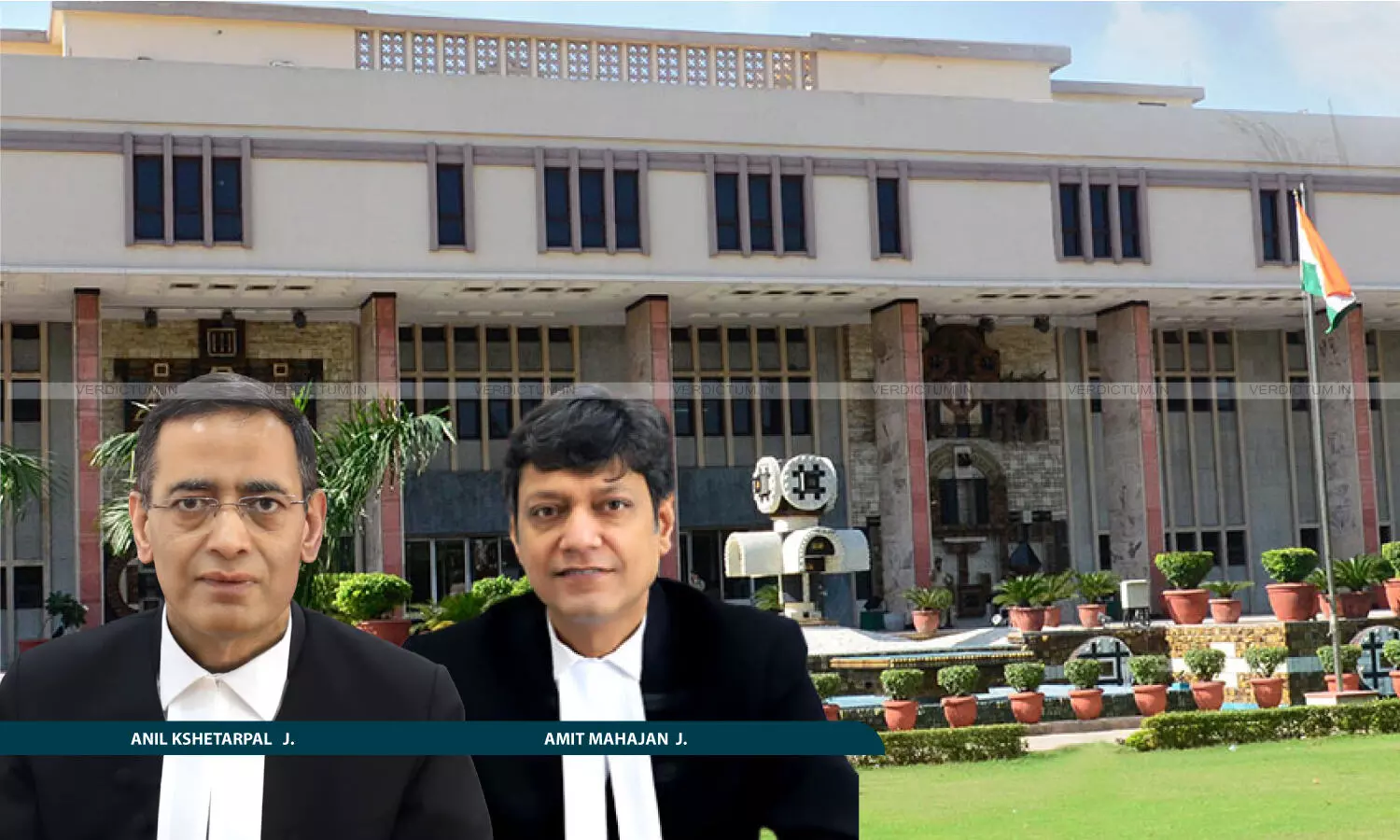
Justice Anil Kshetarpal and Justice Amit Mahajan observed, “The central difficulty in the Petitioners’ case lies in the fact that the distinction between Secretariat establishments and non-Secretariat or field formations is not shown to have been introduced casually, nor devised merely to defeat the present claim. The material noticed by the Tribunal indicates that this distinction formed the subject of express consideration before the Sixth Central Pay Commission. The Pay Commission in its report observed that while field establishments operate at the cutting edge of administration, parity between Secretariat and field offices would remain absolute only up to the grade of Assistant, and that beyond that level, complete parity might neither be possible nor justified, having regard to hierarchy, career progression, and service relativities… The Petitioners cannot be permitted to selectively appropriate the Commission’s observations favourable to field offices while disregarding the specific limitation by which those observations were expressly qualified”.
“Historical parity is not an irrelevant circumstance; it may furnish contextual background and may justify scrutiny where the departure appears arbitrary. However, past parity does not operate as an immutable command. Historical parity cannot be invoked to fossilize a pay structure or to preclude a conscious re-evaluation by an expert body on altered service conditions or broader administrative considerations. The true inquiry is not whether divergence has occurred, but whether that divergence is legally arbitrary…By seeking continuation of parity beyond the level consciously recognised by the Pay Commission, the Petitioners essentially invite this Court to substitute its own evaluation for that of the expert body. Such an invitation must be declined in the interest of judicial restraint”, it noted further.
Advocate Nitesh Kumar Singh appeared for the petitioner.
In the matter, it was argued that both cadres were recruited through a common examination conducted by the Staff Selection Commission and performed similar duties, making the differential pay structure arbitrary.
Rejecting these contentions, the Court emphasised that the doctrine of “equal pay for equal work” cannot be applied mechanically. It observed that pay parity depends on multiple factors including nature of duties, responsibilities, hierarchical structure, and avenues of promotion, and not merely on similarity in designation or recruitment process.
“Examined in the above doctrinal setting, the Petitioners’ case rests on three principal circumstances: historical parity, common recruitment, and asserted functional overlap. These circumstances do not, by themselves, furnish a sufficient legal basis for directing parity of pay between two distinct categories of employees, namely, Headquarters/Secretariat employees and non-Secretariat employees”, the Bench noted.
Importantly, the Bench clarified that historical parity cannot be treated as a permanent entitlement. While it may provide context, it does not prevent the government or expert bodies from revising pay structures based on evolving service conditions and administrative needs.
Reinforcing judicial restraint in service matters, the Court held that pay fixation falls primarily within the domain of expert bodies and the executive. “There is a further limitation which must govern the exercise. Matters relating to pay fixation and equation of posts lie preeminently within the domain of expert bodies and the executive. A writ court does not function as a pay-fixation authority. Judicial review in such matters is confined to examining whether the classification adopted is manifestly arbitrary, founded on no intelligible criterion, or otherwise vitiated by patent illegality. Where the distinction drawn rests on relevant service considerations and bears a rational nexus to the object sought to be achieved, judicial restraint is not merely a matter of prudence but a doctrinal necessity”, the Bench noted.
The Court on finding no illegality in the Tribunal’s order or the government’s decision rejecting the representation for parity, dismissed the petition.
Cause Title: ITGOA & Ors. v. Union Of India & Ors. [Neutral Citation: 2026:DHC:2303-DB]
Appearances:
Petitioners: Nitesh Kumar Singh, Mangesh Nayak & Devender Singh, Advocates.
Respondent: -