DSSSB Recruitment| Candidature Cannot Be Cancelled Without Effective Communication; Mere Website Notice Insufficient: Delhi High Court
 |
|Court says rejection for failure to upload e-dossier invalid if proper communication is not proved.
The Delhi High Court has held that rejection of candidature for failure to upload an e-dossier within the prescribed timeline cannot be sustained unless the recruiting authority establishes that the candidate was effectively informed through all prescribed modes of communication, and not by merely issuing a notice on website.
Upholding the principle of “effective communication”, the Court observed that administrative decisions carrying civil consequences become legally enforceable only when properly conveyed to the affected individual. It held that the Government must prove that candidates were duly informed through SMS, email, and website notifications, especially when such multi-channel communication is part of the recruitment scheme itself.
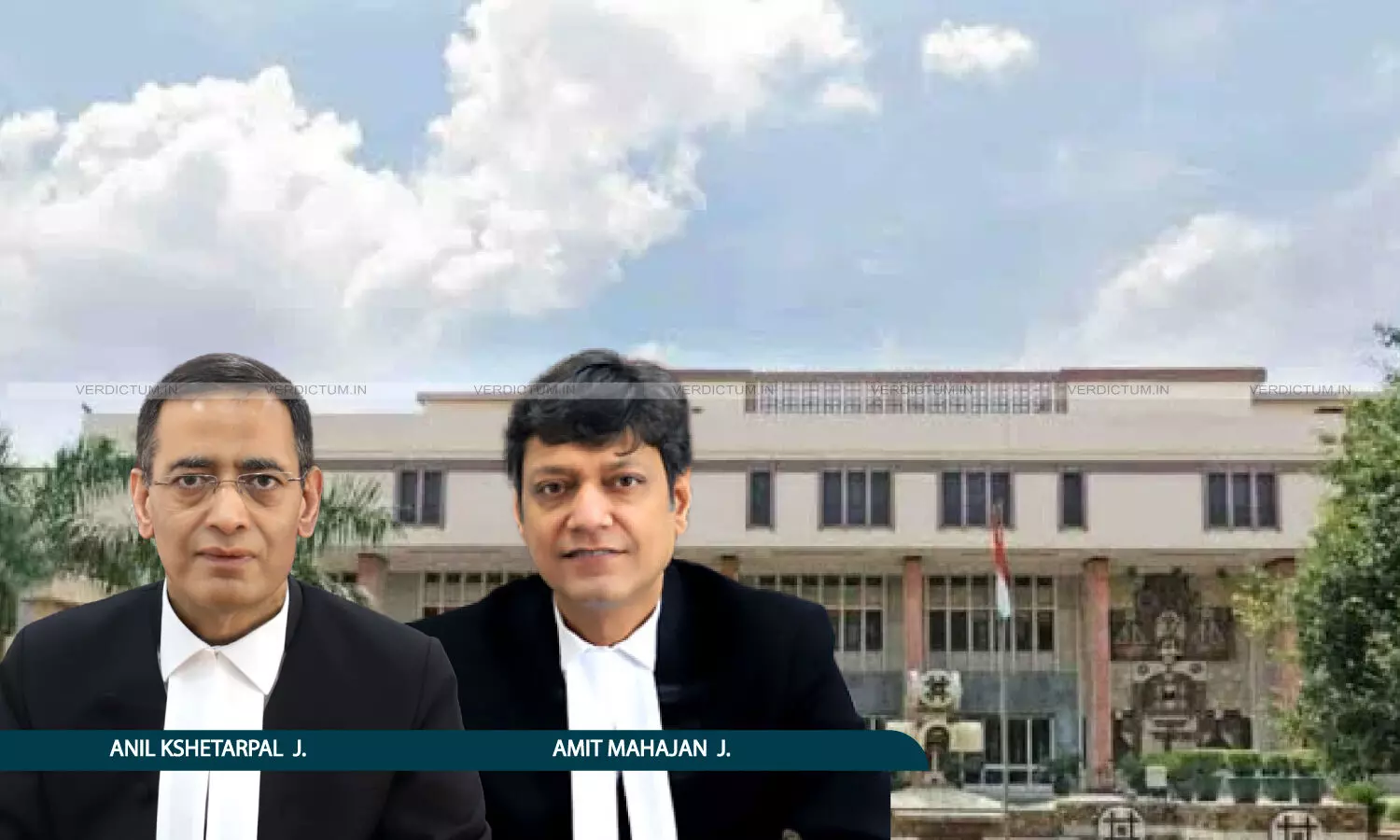
Justice Anil Kshetarpal and Justice Amit Mahajan observed, “…the Admit Card, under the head ‘Instructions for Candidates’, categorically mandated that each candidate must ensure the uploading of her or his mobile number and e-mail address. Moreover, it was also stipulated therein that all future updates pertaining to the examination would be communicated through three distinct modes, namely: (i) mobile number, (ii) e-mail address, and (iii) the official website. A purposive and conjoint reading of the said stipulation makes it clear that intimation of subsequent developments was not intended to be confined merely to a website notification but was also required to be affirmatively communicated through electronic mail and telephonic messaging”.
“A cumulative and harmonious construction of the Advertisement Notice, the Admit Card, and the Result Notice, renders it explicit that the recruitment process, as originally conceived, was to be undertaken offline. Whereas the requirement of uploading documents in the form of an e-dossier emerged, subsequently, through the result notice. Significantly, during the course of arguments, and even in the pleadings placed before this Court, the Government has failed to discharge the burden cast upon it to demonstrate that any prior or specific intimation was furnished to the candidates apprising them of the alteration in the mode of submission, i.e., from offline to online”, the Bench further observed.
Advocate Gaurav Dhingra appeared for the petitioner and Advocate Anil Mittal appeared for the respondent.
As per the facts, several candidates, who had cleared written examinations conducted by DSSSB, were disqualified for not uploading their e-dossiers within the stipulated time. The Tribunal, in multiple cases, had granted relief to candidates by directing reconsideration of their candidature, noting deficiencies in communication by the authorities.
Therefore, deciding a batch of 21 petitions filed by the Government of NCT of Delhi and others challenging orders of the Central Administrative Tribunal (CAT), the Court emphasised that mere uploading of notices on a website does not amount to valid communication when the recruitment framework itself promises intimation via SMS and email.
The Court held that once the authority undertakes to communicate through multiple modes, it cannot later rely solely on website publication. The Bench observed, “…Once the Government undertakes to use SMS and email as a mode of prior intimation, it cannot approbate and reprobate from its own procedural architecture devised by the Government itself. Moreover, the Government cannot selectively enforce only those components which operate against the candidate, while disregarding those which imposes duties upon itself”.
Importantly, the bench stressed that while adherence to timelines in public recruitment is crucial for maintaining fairness and equality under Articles 14 and 16 of the Constitution of India, procedural rigidity cannot override substantive justice. Rejection at the final stage, particularly after a candidate has qualified the examination, has “grave and irreversible consequences” and must therefore be exercised cautiously.
On facts, the Court undertook a case-by-case analysis of all petitions. It allowed four petitions where the Government successfully demonstrated timely and proper communication through records such as SMS/email logs. However, it dismissed the majority of petitions, finding that the authorities either failed to prove communication, sent delayed intimation, or created confusion through errors in result notices.
“…if a Recruiting Authority intends to rely exclusively on general notifications, it must do so clearly and unequivocally. The relevant documents should explicitly state that no separate or individual communication will be issued, and candidates are required to remain vigilant, thereby complying strictly within the stipulated timelines…”
“…since an administrative convenience cannot override principles of natural justice, thereby penalizing the candidate for non-compliance with a requirement of which she or he was never effectively informed”, it noted further.
The Court concluded that a fair recruitment process must harmonize efficiency with equity, reiterating that while candidates must comply with deadlines, the State must first ensure that those deadlines are meaningfully communicated.
However, the Bench even remarked, “…We deem it necessary to highlight that rejection of candidature for failure to complete documentation carries grave and often irreversible consequences, especially when the candidate has duly qualified the written examination. For many aspirants, a government job represents years of preparation, financial investment, and personal sacrifice. Thus, disqualification at the final stage, particularly on technical grounds, not only significantly impact the professional prospects but also the psychological and economic stability of the candidate. Therefore, such rejection must be exercised with caution and only after the authority reaches a firm and reasoned conclusion that, the requirement was clearly communicated…”
Cause Title: Government Of NCT Of Delhi & Anr. v. Sehdev & Anr. [Neutral Citation: 2026:DHC:2306-DB]
Appearances:
Petitioners: Gaurav Dhingra, Shashank Singh and Bhupendra Singh, Avnish Ahlawat, SC, Uday Singh Ahlawat, Tania Ahlawat, Nitish Kumar Singh, Sujeet Kumar Mishra and Harsh Kumar Pandey, Advocates.
Respondents: Anil Mittal, Shaurya Mittal, Anuj Aggarwal, Divya Aggarwal, Pradeep Kumar, Shubham Bahl, Tanya Rose, Siddhant Gautam, Vivek Vishal Gautam, Anil Singal, Nandita Sharma, Saurabh Seth, Himank Pal, Proxy Counsel, Yudhvir Singh Chauhan, Advocates.
Click here to read/download the Judgment