Recitation Of Saraswati Vandana & Gayatri Mantra In Schools’ Morning Assembly Does Not Violate Any Fundamental Right: Chhattisgarh High Court Dismisses Ex-Waqf Board Chairman's Plea
 |
|The Petition was dismissed as premature since impugned order disclosed no coercive direction compelling students to act contrary to their faith and petitioners failed to demonstrate any actual injury, with liberty reserved to approach afresh if exigency arises.
The Chhattisgarh High Court has held that a government circular directing state-funded schools to have students recite the Deep Mantra, Saraswati Vandana, Guru Mantra, Gayatri Mantra and Shanti Mantra as part of morning and closing assembly routines does not, on its face, contain any mandatory or coercive direction compelling students to act contrary to their religious beliefs, conscience or faith, and dismissed a challenge to the circular as premature.
The Court further held that the expression "religious instruction" under Article 28(1) of the Constitution of India carries a restricted meaning, prohibiting only the teaching of religious customs, rituals, practices and modes of worship in institutions wholly maintained out of State funds, but does not extend to moral instruction disassociated from denominational doctrines, which remains a legitimate component of training in citizenship and fostering social cohesion.
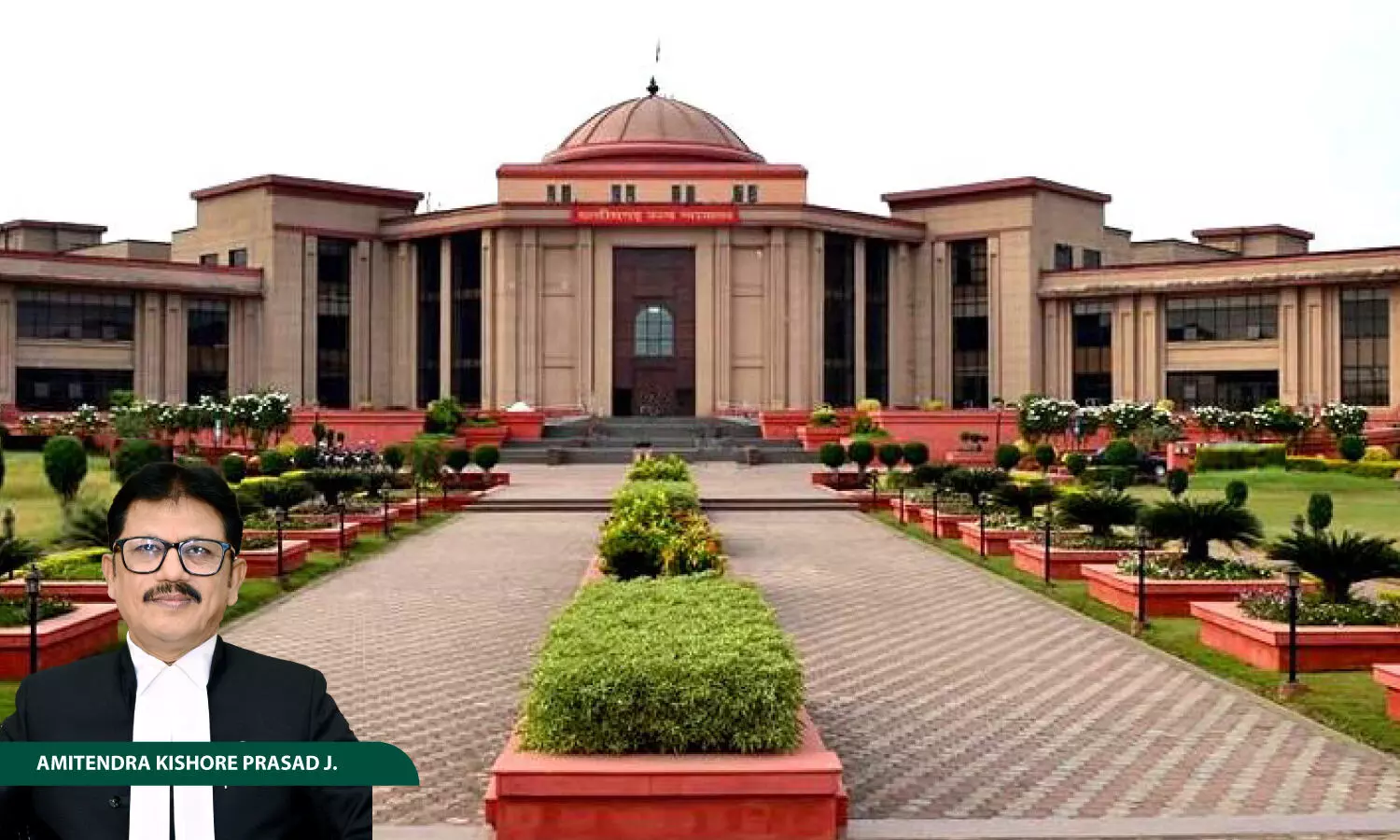
Justice Amitendra Kishore Prasad observed, “A careful perusal of the impugned order dated 12.6.2026 reveals that it does not contain any mandatory or coercive direction compelling students to act in a manner contrary to their respective religious beliefs, conscience or faith. The contents of the impugned order, read as a whole, do not disclose any express requirement obligating students to participate in any activity that would interfere with their constitutionally protected freedom of religion or freedom of conscience. Furthermore, the petitioners have completely failed to place any relevant material on record to show violation of any fundamental rights as no individual or direct injury has been shown”.
Advocate Dr. Aamir Khan appeared for the petitioners and Anand Dadariya, Deputy Advocate General appeared for the respondent.
The petitioners, including a former Chairman of the State Waqf Board, a former minority department minister, and the district president of a religious action trust, challenged a circular dated June 12, 2026 issued by the Additional Secretary, School Education Department, Chhattisgarh.
It mandated that from Academic Session 2026-27, students in all Department-run schools recite the National Anthem, National Song, Deep Mantra, Saraswati Vandana, Guru Mantra, Shanti Mantra and accounts of great personalities at the start of the school day, and the Rajya Geet, Gayatri Mantra and Shanti Mantra at dismissal.
The petitioners contended this violated Articles 14, 21, 25, 28(1), 29 and 30 of the Constitution of India, arguing it compelled minority students to participate in religious practices foreign to their faith and amounted to impermissible religious instruction in State-funded institutions.
The writ petition was filed directly before the High Court under Article 226, seeking quashing of the circular, a declaration that compulsory recitation of such prayers was unconstitutional, and an interim stay on the circular's operation pending disposal.
The State contended the circular was aligned with the National Education Policy, 2020's mandate to integrate Indian Knowledge Systems, characterised the invocations as secular expressions of ecological ethics, gratitude and universal well-being rather than sectarian doctrine, and stressed that no punitive consequence attached to non-participation, with the policy having been implemented without a single complaint since rollout.
“…the expression ‘religious instruction’ used in Article 28(1) has a restricted meaning. It signifies that the teaching of religious customs, rituals, practices and modes of worship is strictly prohibited in educational institutions wholly maintained out of State funds. However, a plain reading of clause (1) of Article 28 makes it clear that the provision does not ban moral instruction, disassociated from any denominational doctrines, which remains an essential part of training in citizenship, maintenance of law and order in the State and growth of social cohesion”, the Bench observed.
Accordingly, the writ petition was dismissed as premature, with liberty reserved to the petitioners to approach the Court afresh with an appropriate petition supported by cogent material should any exigency arise in future.
Cause Title: Abdul Salam Rizvi and Others v. State of Chhattisgarh and Others (Neutral Citation: 2026:CGHC:27135)
Appearances:
Petitioners: Dr. Aamir Khan, Advocates.
Respondents: Anand Dadariya, Deputy Advocate General, Anadi Sharma, Advocate.