Financier’s Transactions Entered Into In Course Of Its Activities Are "Ordinary Transactions" Under Commercial Courts Act: Calcutta High Court
 |
Disagreeing with Ladymoon Towers to the extent it treats a mercantile document as an indispensable condition, the Court set aside a Rs. 83.97 lakh decree passed on admission on the regular side.
The Calcutta High Court has held that all transactions of a financier entered into in the course of its activities are “ordinary transactions” within Section 2(1)(c)(i) of the Commercial Courts Act, 2015. It also held that a loan advanced as part of a pleaded business activity, with interest as the return for which the funds were deployed, falls within that expression.
Disagreeing with Ladymoon Towers Private Limited v. Mahendra Investment Advisors Private Limited (2021), to the extent it treats a mercantile document as an indispensable condition, the Bench set aside a decree of Rs. 83,97,808 passed on admission by a Single Judge on the regular side. It directed the plaint to be returned for presentation before the Commercial Division.
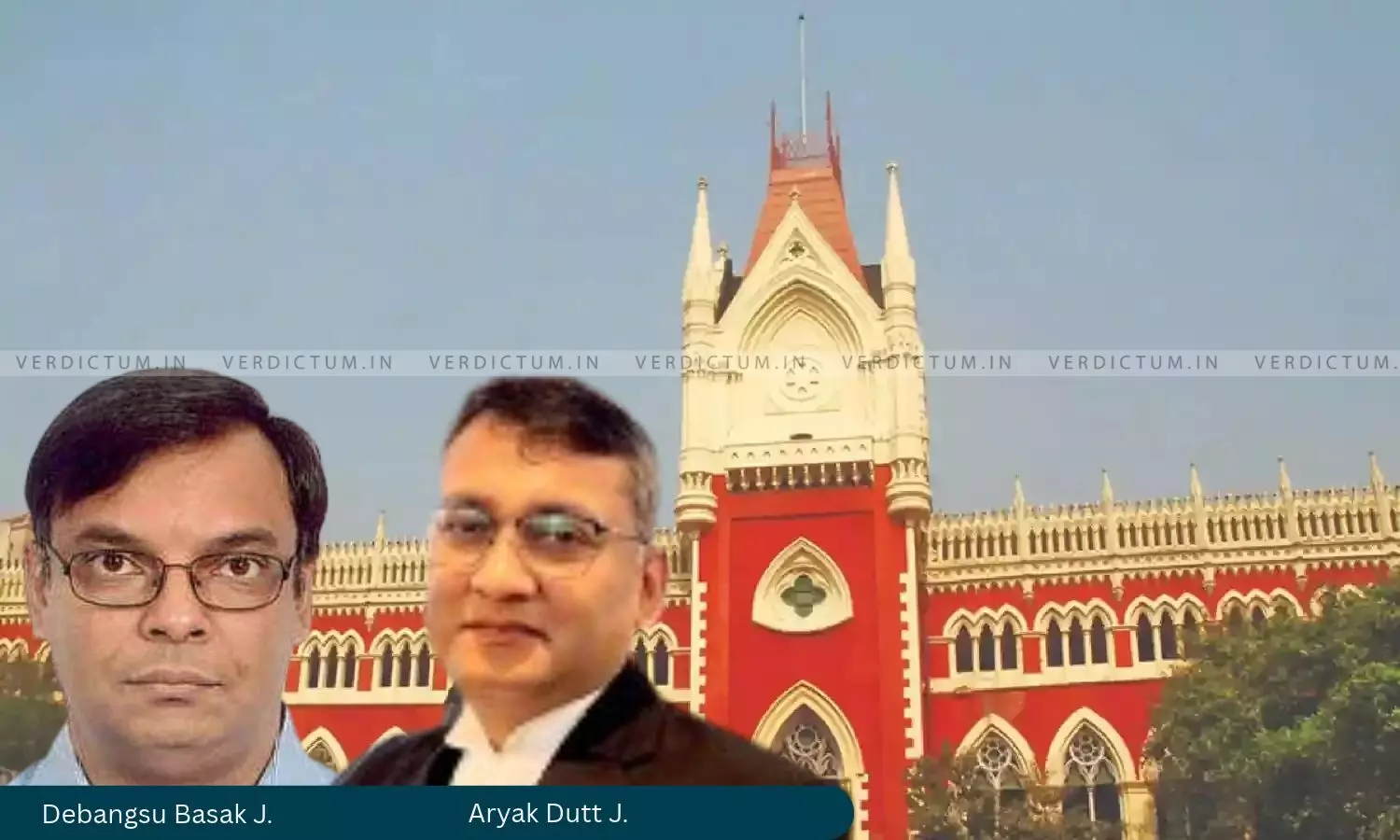
A Division Bench of Justice Debangsu Basak and Justice Aryak Dutt observed, “’Ordinary transactions’ are the transactions which a person normally or usually enters into, in the regular course of the activity in which it is engaged. Read with the four classes of persons named in Section 2(1)(c)(i), namely merchants, bankers, financiers and traders, we hold that all transactions of each of these four categories of persons, entered into in the course of their respective activities, are ordinary transactions within the meaning of Section 2(1)(c)(i). The plaint pleads a decision, taken in the course of the plaintiff’s business, to lend to others for their businesses. The loan in suit is an instance of that activity”.
Advocate Debrup Bhattacharjee appeared for the appellant, while Senior Advocate Krishnaraj Thaker appeared for the respondent.
The respondent, a Hindu Undivided Family, sued for Rs. 1,07,97,808, comprising Rs. 80,00,000 lent in 2008 and 2009 to the appellant’s late husband at 15% annual interest, and interest up to March 31, 2020. The borrower died in 2013 and the appellant agreed to repay. Interest was paid until November 2017.
The appellant admitted the loan in her written statement but pleaded that, for want of a licence under the Bengal Money Lenders Act, 1940, no decree could be passed in view of Section 13. On June 8, 2026, the Single Judge decreed Rs. 83,97,808 with 15% interest from December 1, 2017 on the respondent’s Order XII Rule 6 application, without dealing with that defence.
Before the Division Bench, the appellant argued for the first time that the suit was a commercial dispute. Holding that a new plea involving only a question of law may be permitted at the appellate stage, the Bench entertained it.
Following Ambalal Sarabhai Enterprises, the Bench decided the question on the plaint’s pleadings. The plaint pleaded that, in the course of its business, the respondent decided to lend money to others for their businesses. The Court preferred the wider meaning of “financier” as a capitalist over the older sense of one managing public money. It held that interest was not incidental, as it was “the very return for which the funds were deployed”.
The Bench also rejected the view in Ladymoon Towers that the dispute must arise from a formalised mercantile document. It reasoned that the words “such as” introduce examples and add no further condition, and that the observation was made where only an oral understanding was pleaded. It noted that Varanium Cloud and Glasswood Realty rest on the same reasoning, involving a single assignment of debt and a solitary friendly loan. Section 7 being mandatory, the fact that the decree was passed on admission made no difference, since the question was one of forum and not of merits.
The Bench set aside the decree and expressed no opinion on the merits, including the 1940 Act defence. The plaint is to be returned under Order VII Rule 10 within one week of the respondent applying for it. The respondent may claim the benefit of the time spent on the regular side. The injunction of March 22, 2021, by which the appellant agreed to be bound, continues for four weeks.
Cause Title: Sudha Kankaria v. Krishna Kumar Bhatter (HUF), APD No. 8 of 2026
Appearances:
Appellant: Debrup Bhattacharjee, Subrota Goswami, Advocates.
Respondent: Krishnaraj Thaker, Sr. Adv., Chayan Gupta, Samriddha Sen, Kaushik De, Raghav Munshi, Mohini Majumdar, Ayelita Ghosh, Adrish Chatterjee, Advocates.