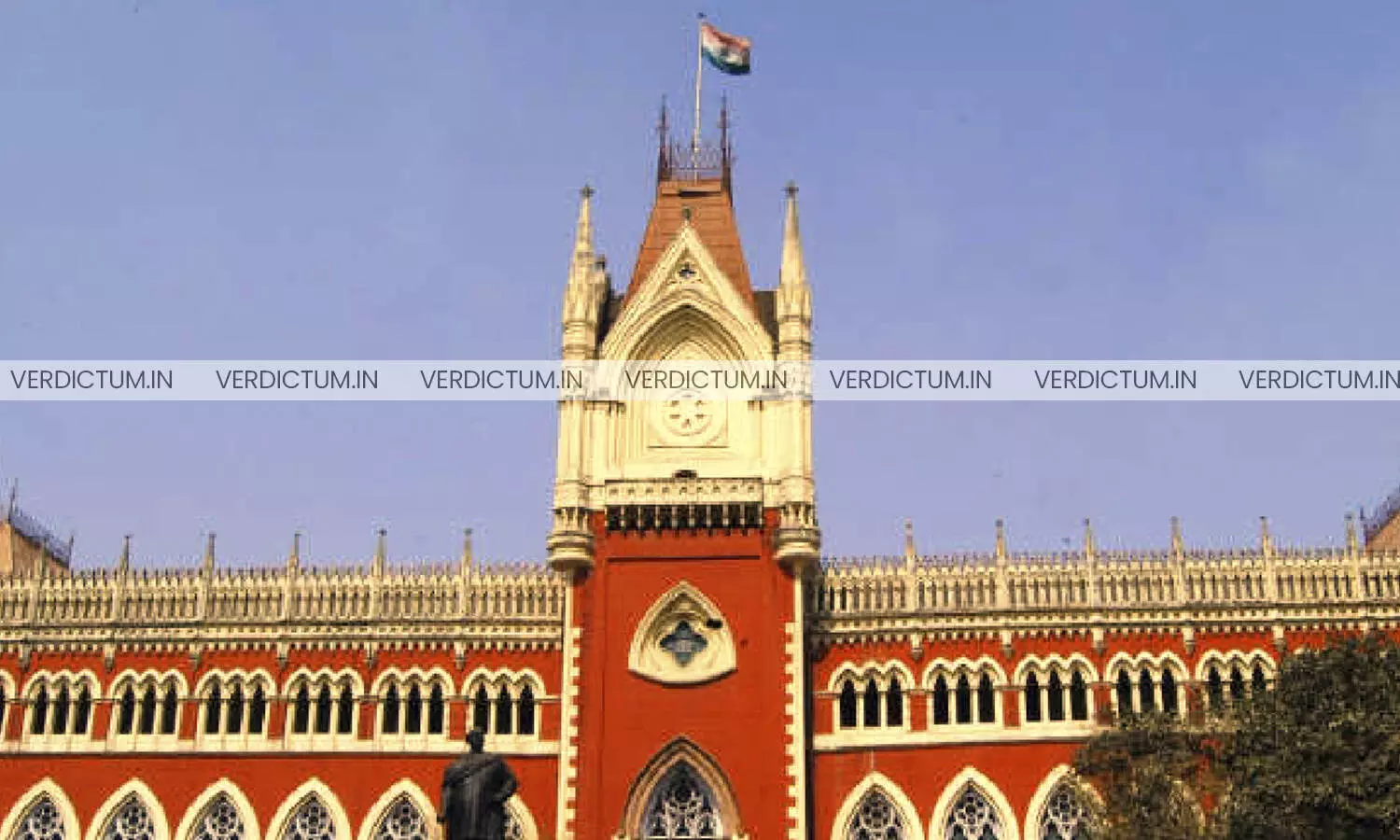
State Hospital Negligence Causing Vision Loss Is Constitutional Tort: Calcutta High Court Awards ₹5 Lakh Compensation To Patient
 |
|The High Court held that the right to eyesight flows from Article 21 and that compensation can be awarded in public law instead of relegating the injured citizen to a civil forum.
The Calcutta High Court has held that negligent cataract surgery at a State hospital, performed without ensuring proper infrastructure and resulting in loss of vision, amounted to a constitutional tort.
Setting aside the Single Judge’s order to the extent it relegated the appellant to another forum, the Court directed the State to pay ₹5 lakh compensation within eight weeks, with 6% simple interest in case of delay.
The Court was hearing an appeal against an order passed in a writ petition, where the Single Judge had recorded the Director of the Regional Institute of Ophthalmology’s view on contamination or faulty sterilisation but directed the appellant to approach the appropriate forum for compensation or damages.
A Bench of Justice Shampa Sarkar and Justice Arjun Ray Mukherjee observed: “The principle on which we can award compensation without referring the appellant to the civil forum is based on a public law remedy. The principle of strict liability for violation of the fundamental right of the appellant is applicable. Right to life and livelihood includes right to live with dignity and enjoy good health. Good quality of life is embedded in right to life. Loss of eye sight has affected the quality of the life of the appellant. The State has a vicarious liability for the actions of the hospital. The report of the medical board clearly indicates infrastructural gaps and we are of the opinion that the risks which the hospital had taken to perform the surgeries on the poor citizens demonstrates rash and negligent actions. The State hospitals are to be run with the basic infrastructural facilities and in this case, the lack of supervision as also the callousness with which the surgery was performed without ensuring proper infrastructure, had put the lives of the citizens at stake. This is an act of constitutional tort. State is duty bound to provide all infrastructural facilities to run the State hospitals.”
Advocate Jhuma Sen appeared for the appellant. Government Pleader D.N. Roy appeared for the State.
Background
The appellant had undergone cataract surgery at a government hospital and later suffered serious complications affecting his eyesight. The Director of the Regional Institute of Ophthalmology recorded that the incident may have occurred due to contamination of micro-organisms in operative devices, solutions or fluids, or due to faulty sterilisation of instruments.
The appellant submitted that compensation for such medical negligence by a government hospital formed part of the constitutional framework, and that the State could not claim immunity where fundamental rights were violated by its instrumentalities. The appellant relied on victim compensation principles, the medical board report and the written opinion of the Director.
The State submitted that the incident had taken place earlier and that the recommendations of the medical board regarding remedial measures were being followed. The Court, however, noted that the appellant was a self-employed electrician and the sole earning member of his family, and that other patients had also suffered after undergoing surgery at the same hospital.
Court’s Observations
The Court linked the appellant’s loss of vision to the right to life under Article 21 of the Constitution, while noting the effect of the injury on his livelihood and quality of life.
The Bench observed, “Undoubtedly, right to eye sight flows from the right to life guaranteed under Article 21 of the Constitution of India. The appellant was an electrician by profession. He was self-employed and the sole earning member of his family. He availed of the treatment at a government hospital. Apart from the appellant, other similar victims underwent the same fate. The cataract surgery led to complications, infections and series of treatments.”
The Court recorded that the medical board recommended several corrective measures relating to the operation theatre, trained staff, sterilisation and patient preparation, even though it concluded that no medical negligence had occurred.
The Bench noted, “The nature of the recommendations clearly indicate that the hospital was neither ready nor equipped to treat any surgical case for the eye. Whereas 44 people of the locality had undergone treatment in the said hospital, out of which 22, suffered visual impairment.”
The Court declined to accept the medical board’s conclusion that there was no negligence, finding it inconsistent with the Director’s report and the patient’s medical records.
The Bench held, “Under such circumstances, we do not accept the casual observation of the medical board that there was no medical negligence. The said observation is bereft of any reason and not supported by any contemporaneous documents. It is strange that the same medical board which advised autoclaving, sterilization, foot wash, foot cover, orientation programme for the staff and placement of dedicated staff and nurses at the OT, held that there was no negligence in the treatment had been undertaken in the hospital, which did not have trained OT staff, nurses and necessary infrastructure.”
The Court found “sheer negligence” on the part of the hospital authorities and the State Government in allowing surgery without proper checks and measures. It also noted that the hospital had later referred the appellant to the Regional Institute of Ophthalmology and that records showed loss of vision rendering him partially blind.
The Court held that the appellant’s loss of vision caused serious monetary loss and affected his future prospects, as he could not sustain himself and his family with a steady income.
The Bench observed, “Constitutional courts have an obligation to protect and uphold the fundamental rights of citizens. The courts have a duty to do complete justice and on such principle, we are empowered to award monetary compensation as a mode of redressal and a balm to the wound.”
The Court relied on D.K. Basu v. State of W.B. (1997), Nilabati Behera v. State of Orissa and Ors. (1993), Achutrao Haribhau Khodwa v. State of Maharashtra (1996), and Paschim Banga Khet Mazdoor Samity v. State of W.B. (1996) while discussing public law compensation, sovereign immunity, vicarious liability and the State’s obligation to provide medical facilities.
Referring to Achutrao Haribhau Khodwa (1996), the Court noted the Supreme Court’s view that running a hospital is a welfare activity and not an exercise of sovereign power, making the State vicariously liable for negligence of its doctors or employees.
Conclusion
The High Court allowed the appeal and set aside the Single Judge’s order to the extent it directed the appellant to approach another forum. It directed payment of ₹5 lakh compensation within eight weeks by account payee cheque, demand draft or RTGS. If the amount is not paid within the stipulated time, the appellant will be entitled to simple interest at 6% per annum from the date of the order till actual payment. There was no order as to costs.
Cause Title: Gobinda Chandra Debnath v. The State of West Bengal & Ors.
Appearances
Appellant: Advocates Jhuma Sen, Yuvraj Chatterjee and Samsul Laskar
Respondents: Government Pleader D.N. Roy, Additional Government Pleader Susmita Saha Dutta, Advocates Madhu Jana and Tanushree Ghosh