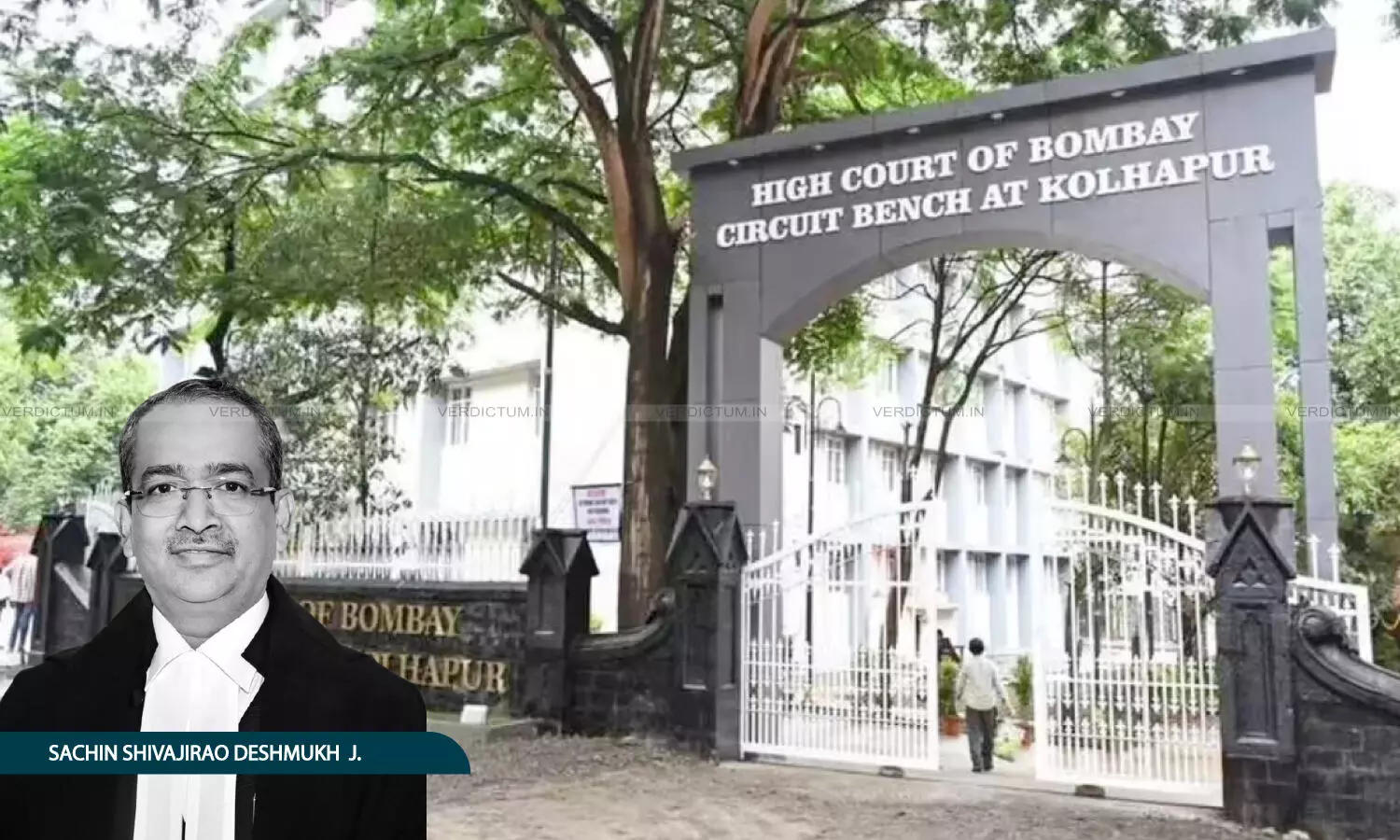
Subsequent Payment Of Maintenance Does Not Cure Breach That Triggered Revocation Of Property Transfer U/S 23 Senior Citizens Act: Bombay High Court
 |
|The Court held that payment of maintenance does not erase the consequences of having failed to care for a senior citizen after obtaining property transfers covered under Section 23 of the 2007 Act.
The Bombay High Court has held that subsequent payment of maintenance does not cure or negate the breach of care obligations which initially triggered the Tribunal’s power under Section 23 of the Maintenance and Welfare of Parents and Senior Citizens Act, 2007, to declare property transfers’ void.
The Court observed that the statutory obligation to maintain parents operates independently of the consequences attached to the misuse of property transfers obtained from senior citizens.
The Court was hearing a writ petition challenging concurrent orders passed by the Senior Citizens Welfare Tribunal and the Appellate Authority, cancelling relinquishment deeds executed by an elderly mother in favour of her son and directing payment of maintenance under the 2007 Act.
A Bench of Justice Sachin S. Deshmukh observed: “Section 23 is a statutory safeguard designed to restore the property to a senior citizen when a transfer has been misused to leave them destitute or vulnerable. Therefore, the subsequent payment of a monthly sum does not "cure" or negate the underlying breach of the condition of care that initially triggered the Tribunal’s power to declare the relinquishment deeds void. To accept the Petitioner's argument would allow a transferee to strip a parent of their life’s assets and then seek to "buy off" the statutory protection of the parent's property rights”.
Advocate Prashant Bhavake appeared for the petitioner. Advocate Suryajeet P. Chavan appeared for the respondent.
Background
The dispute arose between a senior citizen mother and her son in relation to several properties left behind by the deceased patriarch of the family. Following his death, the son’s sisters executed registered relinquishment deeds in his favour, after which the mother also executed relinquishment deeds in favour of the petitioner in 2015 and 2018.
Subsequently, the petitioner transferred part of the property in favour of his wife pursuant to a maintenance decree passed by the Family Court. Meanwhile, the mother instituted a civil suit seeking cancellation of the relinquishment deeds on grounds of fraud and simultaneously approached the Senior Citizens Welfare Tribunal under the 2007 Act seeking maintenance and cancellation of the deeds.
The Welfare Tribunal allowed the application, cancelled the relinquishment deeds and directed the petitioner to pay monthly maintenance of ₹10,000 to the respondent-mother. The Appellate Authority dismissed the petitioner’s appeal and affirmed the Tribunal’s findings.
Before the High Court, the petitioner argued that the relinquishment deeds were voluntarily executed and did not contain any express condition regarding maintenance. It was further contended that since maintenance was being paid pursuant to a Family Court decree and the Tribunal’s order, Section 23 could not be invoked to cancel the transfers.
Court’s Observation
The High Court observed that Section 23 of the Maintenance and Welfare of Parents and Senior Citizens Act, 2007, incorporates a statutory “deeming fiction” whereby transfers made by senior citizens become liable to be declared void where the transferee fails to provide basic amenities and physical needs.
The Court held that the provision is intended to ensure that property rights do not supersede the fundamental right of senior citizens to survival and dignity.
The Bench rejected the contention that pendency of a civil suit barred recourse to Section 23 proceedings, observing that the 2007 Act provides a special, expeditious and remedial mechanism intended to secure immediate protection for elderly citizens.
The Court referred extensively to the Supreme Court judgment in Urmila Dixit v. Sunil Sharan Dixit (2025), observing that beneficial legislation must receive a liberal and purpose-oriented interpretation in consonance with its social objectives.
The Bench also relied upon S. Vanitha v. Deputy Commissioner (2021), wherein the Supreme Court recognised the vulnerabilities faced by elderly persons due to the breakdown of traditional joint family structures.
The Court observed that the petitioner’s attempt to rely upon the absence of an express maintenance clause in the relinquishment deeds was misconceived in light of the beneficial object of the statute.
Referring specifically to the argument regarding payment of maintenance, the Bench held that the obligation to maintain parents and the statutory consequences of property transfers under Section 23 operate in separate but parallel fields.
The Court observed: “The statutory obligation to provide maintenance is a distinct and continuous duty that runs parallel to the consequences of property transfers contemplated under the Act.”
The Bench held that subsequent payment of maintenance could not “cure” the original breach of the obligation of care which had triggered the Tribunal’s jurisdiction to declare the relinquishment deeds void.
The Court further observed that the petitioner had dragged his aged mother into “protracted and multi-layered litigation” despite his statutory and moral obligations toward her.
Conclusion
The Bombay High Court dismissed the writ petition and upheld the concurrent orders passed by the Senior Citizens Welfare Tribunal and the Appellate Authority, cancelling the relinquishment deeds executed by the respondent-mother in favour of the petitioner.
The Court held that subsequent payment of maintenance does not erase or negate the statutory consequences under Section 23 of the Maintenance and Welfare of Parents and Senior Citizens Act, 2007, where a senior citizen has been neglected after transferring property.
Observing that the petitioner had abused the legal process and caused harassment to his aged mother through persistent litigation, the Court imposed exemplary costs of ₹50,000 upon him payable within four weeks.
The Court also rejected the petitioner’s request for continuation of interim relief.
Cause Title: Shambhaji Balakrishna Zambre v. Chayya Balakrishna Zambre (Neutral Citation: 2026:BHC-KOL:3563)