Merit Can Never Be Compromised Nor Can Be On Second Pedestal: Bombay High Court Slams State's "Pick And Choose" Method In Medical Fee Reimbursement Scheme
 |
|The Court ordered reimbursement with interest to meritorious students denied benefit under 2019 Government Resolution, imposed exemplary costs on the state authorities.
The Bombay High Court has held that meritorious students who lost admission to government or aided medical colleges due to the application of EWS and SEBC reservation cannot be arbitrarily excluded from a fee-reimbursement scheme meant to compensate them, particularly where students ranked lower in merit were extended the very same benefit. The Court held that merit is a non-negotiable parameter in the admission and reimbursement process and cannot be relegated to a secondary consideration through opaque or shifting justifications by the State.
Expressing serious displeasure at what it termed a "pick and choose" method of implementing a benevolent one-time scheme, the Court directed the State to reimburse the petitioners with interest, while also imposing exemplary costs on the authorities for their non-transparent conduct and repeated failure to produce relevant records despite multiple directions over several years of litigation.
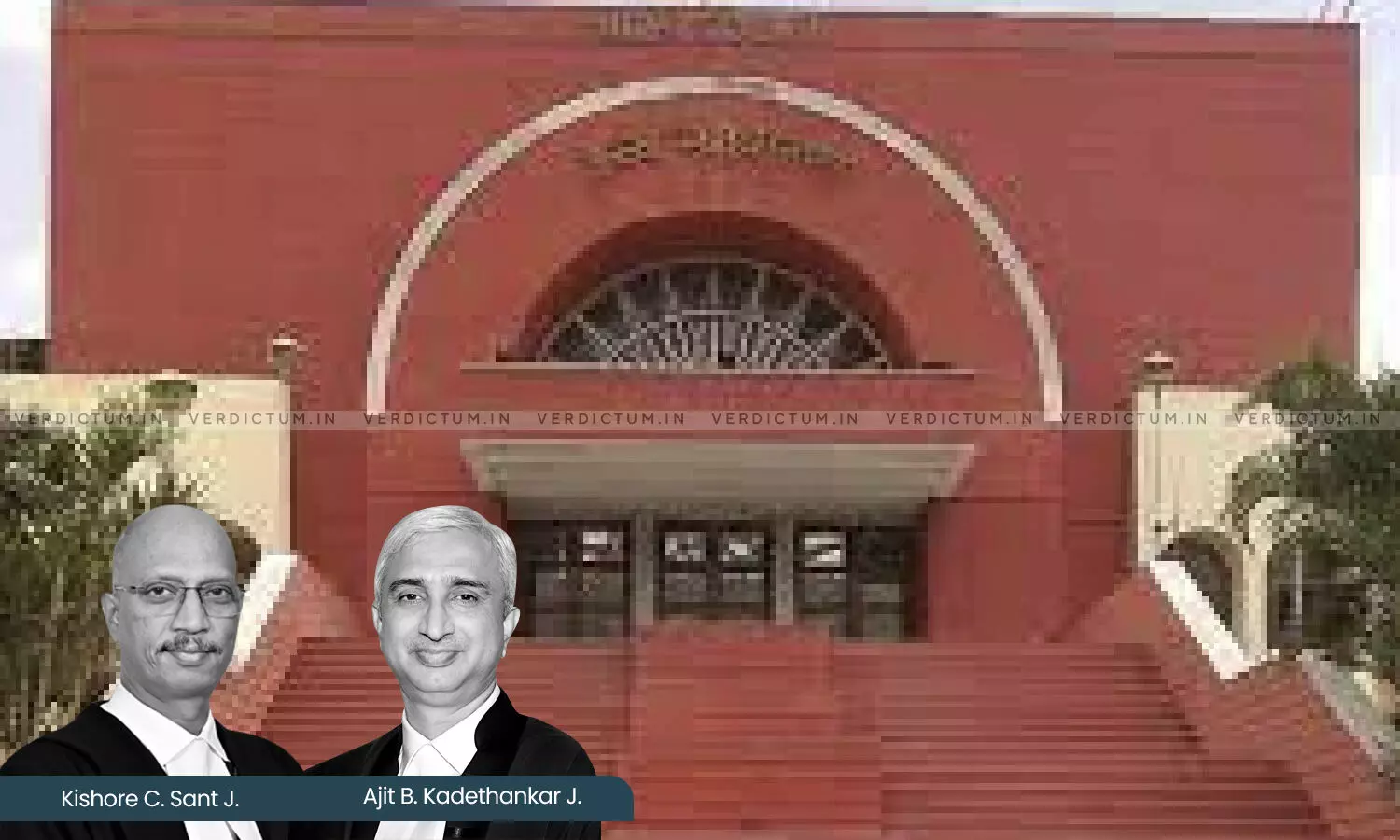
A Division Bench comprising Justice Kishore C. Sant and Justice Ajit B. Kadethankar observed, “…Merit can never be compromised nor can be on second pedestal. If the Petitioner was on higher rank, he could not have been denied such admission. The questioned admissions is of 2019-2020. The Writ Petition was filed in 2021 itself. The matter remained pending on account of the time expended by the respondent authorities on one or the other count. By now when we prevailed upon the respondent authorities to work out the matters, the Medical course is over. It is accordingly suggested by the respondent authorities that going further on the point of correctness of admissions in government or aided medical colleges would of no avail to anybody….”.
Advocate Akshay D. Kulkarni appeared for the petitioner and A.R. Kale, Additional Government Pleader appeared for the respondent.
Following the enactment of the Maharashtra SEBC Act, 2018 and the introduction of EWS reservation, several general-category students who would otherwise have secured admission to government or aided medical colleges for the 2019-2020 academic year were displaced by reserved-category candidates and compelled to enrol in costlier private medical colleges. To offset this hardship, the State issued a Government Resolution dated September 20, 2019 promising reimbursement of the fee differential to affected students. The petitioners, despite having secured competitive NEET ranks, were excluded from the list of 106 beneficiaries, even as several students with lower merit ranks were granted the benefit.
The petitions, filed in 2020 and 2021, remained pending for several years amid the State's persistent failure to produce records or ensure attendance of responsible officers despite repeated court directions. The Court recorded that on one occasion a junior professor was deputed instead of a senior officer, and on another, officers made false statements regarding availability of records, prompting the Court to initiate suo motu contempt proceedings, which were later recalled upon unconditional apology, subject to costs of Rs. 10,000 each being imposed on the erring officers.
The Court found the State's shifting justifications, first claiming the petitioners lacked merit for admission, then attributing the discrepancy to a 70:30 regional-quota formula, to be internally inconsistent and unsupported by authenticated records, observing that documents produced to justify the exclusions bore "no signature, no seal, no name of the issuing or certifying authority" and were accordingly discarded.
Using a vivid analogy, the Court likened the petitioners' predicament to a fielder who takes a difficult catch only to be told the boundary line has been "silently shrunken or bartered", observing that such conduct "extirpate" public trust in the fairness of government schemes.
“There is an important aspect in these matters, which we feel it necessary to discuss. In our society, still we believe and trust if we get admission in Government colleges for professional courses, we have proven our mettle. This makes us proud of the rigorous efforts we took for the achievement. It further encourages us and boosts our confidence to do even better. Needless to mention, the study and exercises are focused predominantly with this object. Not everyone can reach to this goal. Disappointment is often seen on falling short to reach the goal. This remains personal affair so long as really the shortfall in touching the line is concerned. But when it is realized that despite having crossed the finish-line, you are not recognized to be a successful finisher, it deeply and adversely affects not only the career but the temperament of such finisher. It is just like a fielder succeeds for a difficult catch, but is shown to have caught beyond the border. The surprise turns into agony when the fielder learns that the borderline is silently shrunken or bartered. The agony multiples when it is realized that it is done lacking of transparency. It is the foremost duty of the executives to souse trust deep in the minds of the citizen about transparency of the system. The conduct of the executives in the cases like in hand, unfortunately extirpate such trust despite novel and benevolent objects are framed by the government”, the Bench said.
“We record our serious displeasure on the administration and conduct of medical admission at the hands of the respondent authorities as observed above. We find that the admission process and implementation of fees reimbursement scheme utterly lacked of transparency and accuracy. The then admission authorities interfered with career of students for the reasons best known to them, and atleast on wrongful application of quota system”, the Bench further said.
The writ petitions were allowed. The petitioners were declared entitled to reimbursement under the Government Resolution, to be claimed within four weeks with supporting fee receipts, and disbursed by the Director of Medical Education and Research within eight weeks, together with 6% simple interest, escalating to 9% in case of delay. The respondents were directed to pay costs of Rs. 50,000 each to the petitioners within eight weeks, failing which the amount would be recovered as land revenue.
Cause Title: Prajwal Tukaram Kasbekar v. State of Maharashtra & Ors. (Neutral Citation: 2026:BHC-AUG:32965-DB)
Appearances:
Petitioners: Akshay D. Kulkarni, Advocate, Milind Madhukar Patil, Advocate.
Respondent: A.R. Kale, Additional Government Pleader, M.D. Narwadkar, Advocate, A.V. Hon, Advocate.