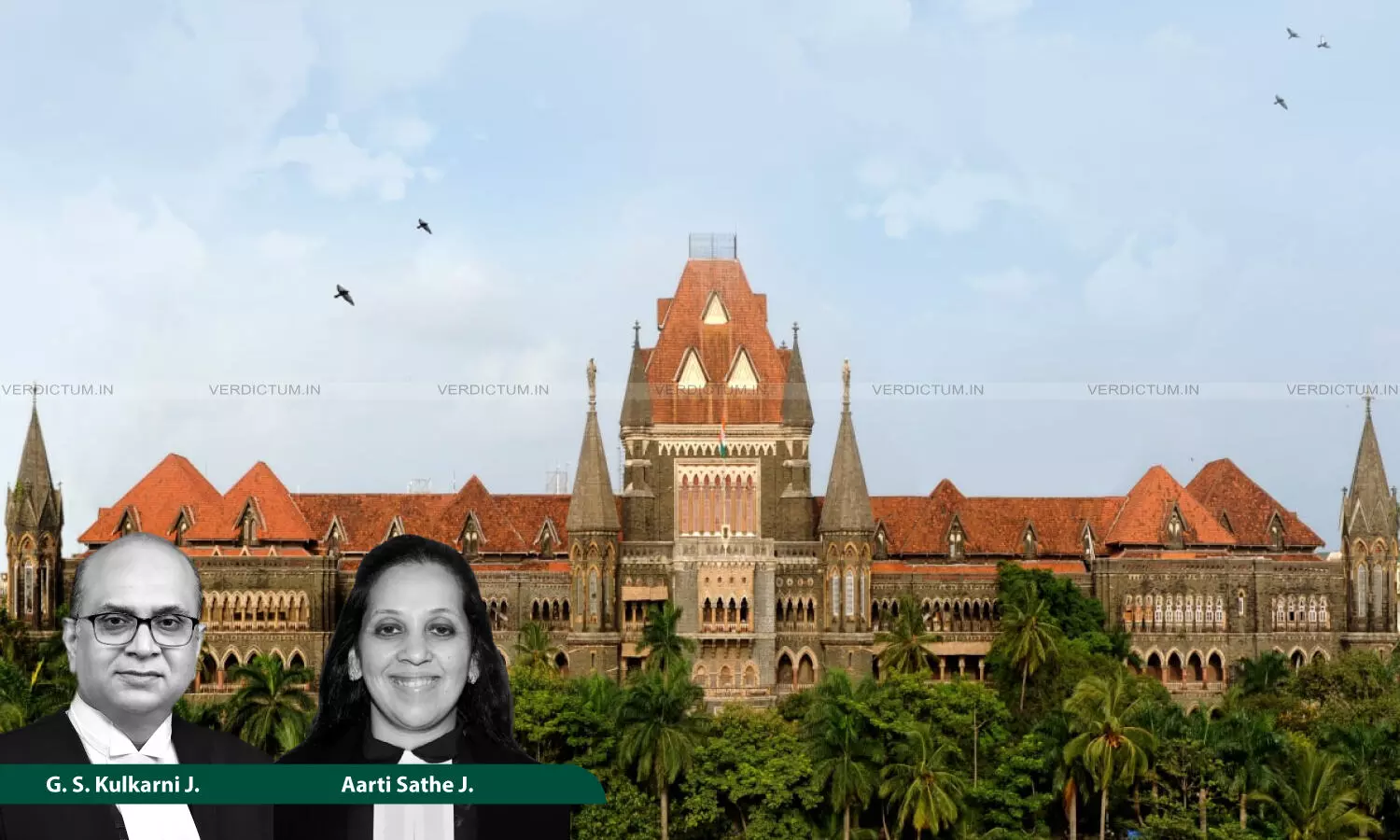
Justice G. S. Kulkarni, Justice Aarti Sathe, Bombay High Court
Appointments Are Irregular But Not Illegal: Bombay High Court Orders Regularization Of Tribal School Teachers
 |
|Quashing administrative orders denying permanency to staff serving over 10 years in remote Ashram schools, the High Court held that the non-publication of public advertisements cannot be cited to deny regularization.
The Bombay High Court has quashed administrative orders issued by the Tribal Development Department rejecting the regularization of teaching and non-teaching staff across Government Ashram Schools in Thane district. The Bench held that where appointments are not illegal but possibly irregular, and where employees have served continuously against the backdrop of sanctioned functions for a considerable period, the need for a fair and humane resolution becomes paramount. The Court affirmed that engaging qualified staff in difficult terrains where regular candidates refuse to serve cannot be termed an illegal entry, and any procedural irregularity stands cured upon completing ten years of continuous service.
Expanding on the obligation of the government to act as a model employer, the Bench observed that keeping staff on meagre honorariums with artificial yearly service breaks amounts to systemic exploitation incompatible with a welfare state. Further, it noted that initial engagements were made to prevent Ashram schools from closing and to safeguard tribal children’s fundamental right to education. Holding that prolonged ad-hoc service on sanctioned posts warrants regularization, the Court directed the State to regularize all petitioners who completed ten years of service and grant them regular pay-scale benefits.
A Division Bench comprising Justice G. S. Kulkarni and Justice Aarti Sathe observed, “…where appointments are not illegal but possibly irregular, and where employees had served continuously against the backdrop of sanctioned functions for a considerable period, the need for a fair and humane resolution becomes paramount”.
“As rightly found by the learned Tribunal, the petitioners have voluntarily participated in the process pursuant to Annexure A1, to be found not qualified; and it is at that stage, that they suddenly spring up and project a contention that, had the reservation policy of the Government of India been applied by the 1st respondent, they would have been included”, the Bench said.
Advocate Pradnya Talekar appeared for the petitioner and B.V. Samant, Additional Government Pleader appeared for the respondent.
The petitioners were appointed as primary and secondary school teachers, as well as Class III and Class IV non-teaching staff, in Government Ashram Schools operated by the Tribal Development Department in remote, hilly villages of Shahapur, Thane. Facing a severe vacancy crisis and the unwillingness of candidates to work in these remote areas, the department appointed qualified candidates on daily-wage, clock-hour, or honorarium bases after conducting interviews.
Despite rendering continuous service for 10 to 13 years, the petitioners were subjected to yearly appointment orders with artificial breaks and forced disclaimers. On January 13 and 14, 2026, the Additional Commissioner of Tribal Development rejected their regularization requests, citing non-publication of advertisements prior to recruitment and non-possession of entrance qualifications.
Aggrieved by the rejection orders, the petitioners filed a writ petition under Article 226 of the Constitution of India seeking quashing of the administrative orders, regularization of their services, and payment of 7th Pay Commission pay scales.
Reviewing the record, the High Court observed that the grounds given in the rejection orders were unsustainable. The Bench noted that the petitioners were interviewed prior to selection, possessed the necessary qualifications, and served continuously against sanctioned posts when the State could not secure staff for remote tribal areas. The Court held that forcing staff to work for over a decade on meagre honorariums constitutes exploitation not expected from a welfare state.
Reaffirming the binding precedent in Madhukar Bhavanrao Sadgir and Others v. The State of Maharashtra and Others Writ Petition No.5867 of 2015, decided on 31-10-2018, the Court observed that the non-publication of public advertisements was previously considered and does not bar regularization once ten years of service are completed.
Allowing the writ petition, the Court quashed the rejection orders dated January 13 and 14, 2026. The Court directed the respondents to regularize the services of petitioners who completed ten years of service from the date of completion or from the date of filing the writ petition, whichever is later, and reinstate any staff terminated during the pendency of the petition.
The Bench further ordered financial benefits to be released from the date of completing ten years or from the filing date of the earlier petition, whichever is earlier, to be fully implemented within three weeks.
Cause Title: Namdeo Tukaram Dhonnar & Ors. v. The State of Maharashtra & Ors. (Neutral Citation: 2026:BHC-AS:36184-DB)
Appearances:
Petitioners: Advocates Pradnya Talekar, Madhuri Ayyapan, Arushi Keniya i/by Talekar & Associates.
Respondents: B.V. Samant, Additional Government Pleader, M.P. Thakur, Assistant Government Pleader.