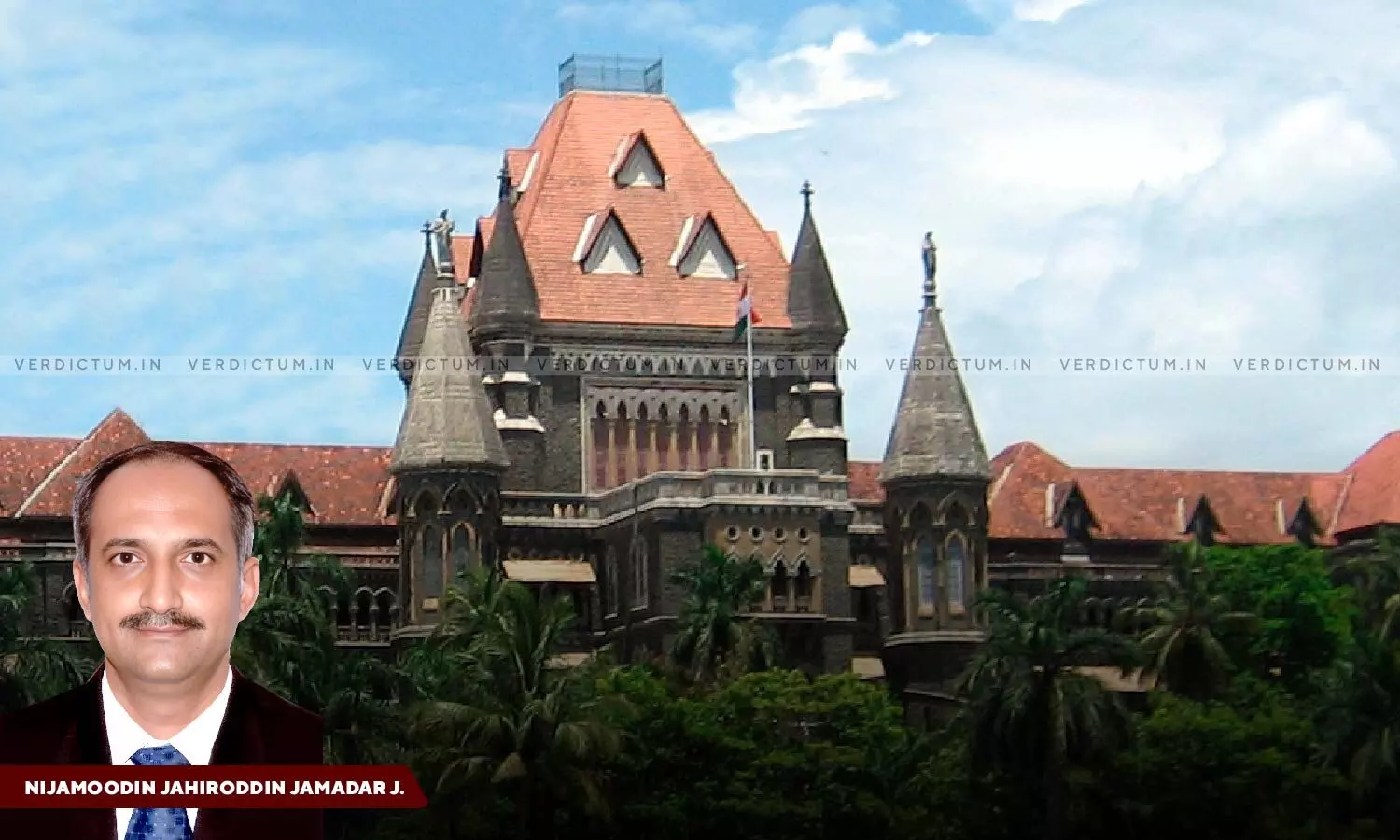
Justice N.J. Jamadar, Bombay High Court
Vehicle Carrying Illegal Forest Produce Need Not Be Seized On Government Land To Attract Confiscation Under Forest Act: Bombay High Court
 |
|The High Court observed that once a forest offence is established in relation to forest produce, the forest produce and the vehicle used in committing the offence become liable to confiscation under the statutory scheme.
The Bombay High Court has upheld the confiscation of a vehicle used for transporting charcoal without a valid transit pass, holding that a forest offence was prima facie established under the Indian Forest Act, 1927 and the Maharashtra Forest Rules, 2014.
The Court rejected the contention that confiscation proceedings could be initiated only where the forest produce or vehicle was seized from Government property, observing that no such requirement is borne out from the language of Section 55 of the Act.
The Court was hearing a writ petition challenging orders passed by the Authorised Officer and the Sessions Court confiscating a vehicle found carrying 60 bags of charcoal. The petitioner contended that the confiscation proceedings were illegal as no conviction had been recorded for a forest offence and that the alleged offence had not been committed on Government land.
A Bench of Justice N.J. Jamadar observed: “Section 55 of the Indian Forest Act, 1927 renders all timber or forest-produce which is not the property of Government and in respect of which a forest-offence has been committed, and all tools, boats, carts and cattle used in committing any forest-offence, liable to be confiscated. Thus, the further submission of Mr. Bhoite that the forest-produce or vehicle must be found and seized on a government property is not at all borne out by the plain text of Section 55 of the Act.”
“Equally fallacious is the submission that the seizure and confiscation of the forest-produce and the vehicle in exercise of the power under Section 52 of the Act, 1927 must be preceded by a conviction for an offence in respect of the forest-produce”, the Bench added.
Advocates Pranav H. Bhoite and Pratik Dalimbe appeared for the petitioner. R.S. Tendulkar, APP, appeared for the State.
Background
According to the prosecution, forest officials intercepted a Tata 909 vehicle while patrolling. The driver allegedly fled from the spot, abandoning the vehicle. Upon inspection, forest officials found 60 bags of charcoal loaded in the vehicle and registered a forest offence under the Indian Forest Act, 1927. The vehicle and the charcoal were subsequently seized.
Following the seizure, confiscation proceedings were initiated under Section 61-A of the Indian Forest Act, 1927, as applicable to the State of Maharashtra. After hearing the registered owner and another person claiming possession of the vehicle, the Authorised Officer ordered the confiscation of both the charcoal and the vehicle. The order was affirmed in appeal by the Sessions Court, leading to the filing of the present writ petition.
Court's Observations
The Court examined the scheme of the Indian Forest Act, 1927 and the Maharashtra Forest Rules, 2014, governing transit of forest produce.
The Court noted that Rule 31 of the Maharashtra Forest Rules prohibits movement of forest produce without a valid transit pass and Rule 82 prescribes punishment for its contravention. Charcoal is expressly included within the definition of “forest produce” under the Act.
The Bench observed: “A cumulative reading of the aforesaid provisions leads to an inescapable inference that the transit of forest-produce without a valid pass becomes punishable under the rules. Once an act or omission is made an offence under any rule made under the provisions of the Act, 1927, it amounts to a forest-offence within the meaning of Section 2(3) of the Act, 1927.”
The Court found it undisputed that the charcoal was being transported without a valid transit pass.
Rejecting the petitioner's argument that confiscation could only follow a criminal conviction, the Court held that the Maharashtra amendments to the Forest Act create an independent confiscation mechanism.
The Bench observed: “Sub-section (3) of Section 61-A specifically empowers the Authorized Officer to seize forest-produce and order confiscation of all tools, boats, vehicles and cattles used in committing such offence, notwithstanding whether or not a prosecution is instituted for the commission of such offence.”
The Court therefore held that conviction for a forest offence is not a condition precedent for confiscation proceedings under Sections 61-A to 61-G.
The Court then considered the petitioner's submission that confiscation provisions apply only where the forest produce is found on Government land.
Rejecting the contention, the Bench held that Section 55 of the Indian Forest Act, 1927, renders all timber or forest-produce which is not the property of the Government and in respect of which a forest-offence has been committed, and all tools, boats, carts and cattle used in committing any forest-offence, liable to be confiscated.
The Court emphasised that forest legislation serves an important constitutional purpose and must be interpreted in a manner that advances environmental protection.
Referring to decisions of the Supreme Court, the Bench observed: “The legislature has inserted the aforementioned provisions with a laudable object. Forest is a national wealth which is required to be preserved.”
The Court also quoted the Supreme Court's observation that: “Statutes which provide for protection of forest to maintain ecological balance should receive liberal construction at the hands of the superior Courts.”
According to the Court, confiscation provisions were enacted as deterrent measures to prevent illegal exploitation of forest produce and therefore require purposive interpretation.
The Court also rejected the challenge based on an alleged violation of natural justice.
The Bench noted that the Authorised Officer had obtained details of the registered owner, issued notices, and provided opportunities for a hearing both to the petitioner and the person to whom the petitioner claimed to have transferred possession of the vehicle.
The Court observed: “The Petitioner appeared before the Authorized Officer through legal practitioner and canvassed submissions. Therefore, the Petitioner cannot be heard to urge that the Petitioner was not provided an efficacious opportunity of hearing.”
Conclusion
Holding that charcoal, a forest product, was being transported without a valid transit pass and that a forest offence was prima facie established, the Bombay High Court upheld the confiscation of the vehicle and forest produce.
The Court found no infirmity in the orders passed by the Authorised Officer and the Sessions Court and accordingly dismissed the writ petition. It also rejected the petitioner's oral request for continuation of interim protection.
Cause Title: Mahendra Dharmaji Papal v. State of Maharashtra & Ors. (Neutral Citation: 2026:BHC-AS:22912)