Borrower’s Delay In Seeking Title Documents Deposited As Security Does Not Absolve Bank Of Duty To Preserve Them: Bombay High Court
 |
|The High Court also held that the ₹1 lakh deposited pursuant to the Banking Ombudsman’s advisory did not exhaust the borrower’s remedy and was directed to be adjusted against the compensation payable by the bank.
The Bombay High Court has held that a borrower who has fully repaid a loan may legitimately expect the bank to preserve and return the original title documents deposited as security and that his delay in demanding their return does not absolve the bank of that obligation.
The Court directed the State Bank of India to pay compensation of ₹5,000 per day from December 1, 2023 until it provides certified copies and reconstructs the title record relating to both properties.
The Court was hearing a writ petition filed by a partnership firm seeking compensation for the loss of original title documents deposited with the bank and directions for procuring legally valid certified copies with the endorsements and supporting documents necessary to reconstruct its title.
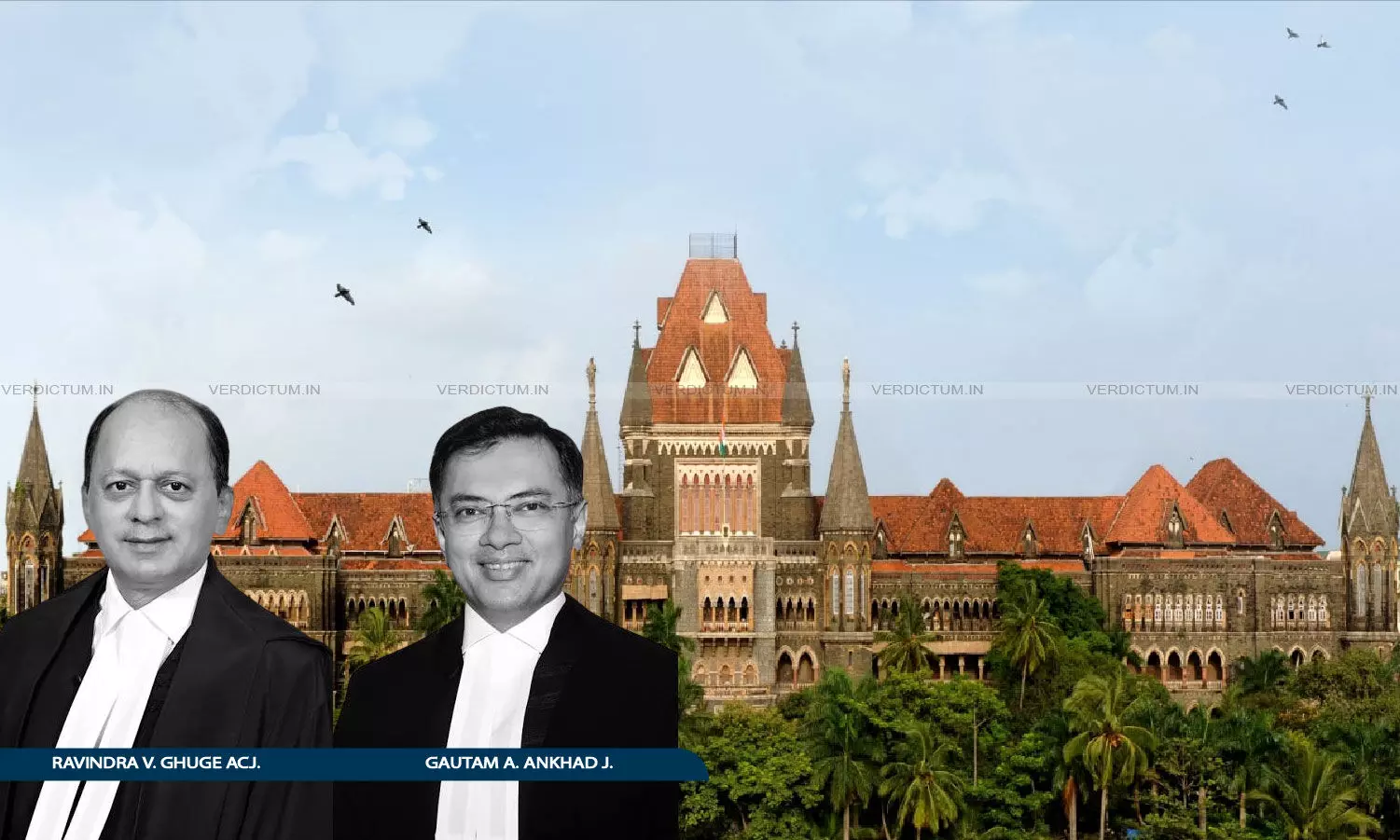
A Bench of Acting Chief Justice Ravindra V. Ghuge and Justice Gautam A. Ankhad observed: “The Respondent contends that there was a substantial delay of almost two decades by the Petitioner in demanding its title documents. During this period the Branch premises were shifted and, despite efforts made subsequently, the title documents could not be traced. We are unable to accept this contention. The fact that the Petitioner may not have immediately approached the Respondent after repayment of the loan seeking return of the original documents cannot absolve the Respondent of its obligation to preserve the title documents.”
The Bench further added: “In our view, a borrower who has fully discharged the loan is entitled to proceed on the legitimate assumption that the Bank or a Financial Institution entrusted with the custody of valuable original title documents, will maintain proper custody of those documents and return them upon discharge of the secured liability. The burden of maintaining a proper system for preservation, identification, retrieval and return of documents is solely on the Respondent. It cannot be shifted to the borrower merely because the borrower did not immediately seek their return. The Petitioner has nothing to do with the change in Branch premises, internal transfer of records or change of personnel. These are all matters falling within the Respondent’s exclusive internal administrative domain. The obligation to preserve title documents and to return them upon discharge of the underlying liability cannot depend upon the borrower reminding the Bank to perform that obligation. To hold otherwise would mean that a Bank could lose original title documents in its custody and thereafter seek to avoid responsibility merely because the borrower did not demand their return immediately upon repayment of the loan. Such a proposition cannot be accepted.”
Advocate A.M. Saraogi appeared for the petitioner. Advocate Bidan Chandran appeared for the State Bank of India.
Background
The petitioner had purchased two industrial properties during the 1970s. The agreements, share certificates and registered lease deed relating to those properties were deposited with the State Bank of India in 1979 as security for credit facilities.
The loan was repaid in full in 2003. The bank subsequently issued a no-dues certificate confirming that it had no claim or mortgage over the properties. It nevertheless failed to return the original title documents and later acknowledged that they could not be located.
The bank asked the cooperative society and the Maharashtra Industrial Development Corporation to issue certified or true copies of the documents. Certain copies relating to the industrial plot were obtained and supplied, but the petitioner maintained that they were incomplete and did not adequately address matters such as the stamp duty paid on the properties.
The petitioner lodged a police complaint, published a notice concerning the missing documents and approached the Banking Ombudsman. The Ombudsman advised the bank to pay ₹1 lakh as compensation. Although the petitioner declined to accept the amount, the bank deposited it into the petitioner’s account.
The petitioner thereafter approached the High Court, stating that the absence of the original documents prevented it from selling or otherwise effectively dealing with the properties. It sought compensation under the Reserve Bank of India Circular titled “Responsible Lending Conduct – Release of Movable/Immovable Property Documents on Repayment/Settlement of Personal Loans”, along with directions for reconstruction of the title record.
The bank admitted that the original documents could not be traced but contended that the petitioner had waited for more than 15 years after repaying the loan before demanding their return. It relied on the intervening shifting of its branch premises and the measures subsequently taken to obtain replacement documents. It also argued that the RBI Circular could not operate retrospectively and that the petitioner’s remedy stood exhausted by the Ombudsman proceedings.
Court’s Observations
The Court noted that the original title documents had been deposited with the bank as security and that the loan had been fully repaid. After repayment, the bank had no subsisting right or justification to retain them.
The bank had admitted through its correspondence and affidavit before the Court that the documents were no longer traceable. The Court accordingly found that their loss while in the bank’s custody stood established.
The Court rejected the bank’s contention that the petitioner’s delay in demanding the documents relieved it of responsibility. Preservation, identification, retrieval and return of documents entrusted as security were matters within the bank’s exclusive administrative control.
The borrower had no role in the shifting of branch premises, internal movement of records or changes in bank personnel. The bank’s obligation arose upon discharge of the secured liability and did not depend upon the borrower issuing a reminder immediately after repayment.
The Court acknowledged that the bank had lodged a police complaint, published newspaper notices, procured certain copies and communicated with the cooperative society and the Maharashtra Industrial Development Corporation.
These measures could mitigate the consequences of the loss but could not erase the bank’s primary default. The Court observed: “The Respondent’s steps, of filing an FIR, issuing newspaper advertisements and procuring copies from M.I.D.C. etc, in assisting the Petitioner may assist in mitigating the consequences of the loss. They do not, however, erase the primary default of the Bank.”
The continued absence of the documents prejudiced the petitioner’s ability to deal with the properties. The Court underscored: “The original title documents are important in the chain of title and are ordinarily required when the owner seeks to sell, mortgage, transfer or otherwise deal with the property.”
The bank was therefore required to obtain duplicate or certified copies and complete the reconstructed title record with all necessary endorsements, declarations, affidavits, indemnities, certifications and supporting documents required to confirm the petitioner’s title.
The petitioner sought compensation of approximately ₹3.93 crore by applying the RBI Circular’s rate of ₹5,000 per day from the date of repayment in 2003. The Court accepted the bank’s objection to this extent.
The RBI Circular expressly applied to cases in which the obligation to release original property documents fell due on or after December 1, 2023. It could not be applied retrospectively for the period beginning in 2003.
The Court held: “We agree with the Respondent to the limited extent that the Circular cannot be applied retrospectively for a period starting from 2003. The Circular itself specifies its applicability to cases where release of the original documents falls due on or after 1st December, 2023. Hence, having regard to the admitted loss of the documents and the continuing prejudice caused to the Petitioner, the rate prescribed by the Circular will have to be paid by the Respondent from 1st December, 2023 onwards.”
The Court noted that the RBI Circular required regulated entities to release original movable and immovable property documents within 30 days after full repayment or settlement of a loan. Where delay was attributable to the regulated entity, compensation of ₹5,000 per day was prescribed.
In cases involving loss or damage to original documents, the Circular also required the regulated entity to assist the borrower in obtaining duplicate or certified copies and bear the associated costs.
The Bench observed: “The Circular is significant not merely because it prescribes a monetary consequence for delay. The Reserve Bank of India has expressly recognized that release of original title documents after repayment of a loan is an important aspect of responsible lending and has prescribed a quantified compensation of Rs.5,000/- per day where the delay is attributable to the bank.”
The Court treated the prescribed rate as an objective and rational measure of the prejudice caused by a regulated entity’s failure to discharge its obligation concerning original property documents.
The Court rejected the argument that the petitioner could not seek further relief after approaching the Banking Ombudsman. It held that the Ombudsman proceedings and the writ petition operated in different fields.
The Court observed: “The Ombudsman’s advisory to pay Rs.1 lakh was made in the context of the complaint before it. The same does not, in the circumstances of the present case, prevent this Court from examining the admitted loss of the original title documents, the continuing prejudice suffered by the Petitioner and the adequacy of the remedial measures undertaken by the Respondent.”
The RBI Circular itself stipulated that the compensation contemplated under it was without prejudice to the borrower’s right to seek other compensation available under applicable law. The ₹1 lakh already deposited by the bank was therefore directed to be adjusted against the compensation awarded by the Court.
Conclusion
The Bombay High Court allowed the writ petition and directed the State Bank of India to pay compensation of ₹5,000 per day from December 1, 2023, after adjusting the ₹1 lakh already deposited pursuant to the Banking Ombudsman’s advisory.
The compensation would remain payable until the bank provides certified copies of the documents relating to both properties and reconstructs the title record with the endorsements, affidavits, indemnities and other supporting documents reasonably required by the statutory authorities, cooperative society or a prospective transferee.
The petitioner was directed to issue notices to the authorities responsible for income tax, stamp duty and registration concerning the reconstructed documents. The entire exercise was ordered to be completed within 12 weeks. The Court granted liberty to apply.
Cause Title: In Vogue Creations v. State Bank of India (Neutral Citation: 2026:BHC-AS:36037-DB)
Appearances
Petitioner: Advocate A.M. Saraogi; Advocates Prajot H. Jaggi, Prashant J. Rai and Amrita Singh
Respondent: Advocate Bidan Chandran; Advocate Nukshinaro; M.V. Kini and Co.