Every Commercial Electricity Bill Cannot Be Treated As Proof Of Commercial Eligibility: Bombay High Court Rejects Slum Dweller’s Claim Under SRA Scheme
 |
|Affirming the SRA order, the Bench held that separate trade permits like a Gumasta license are mandatory to prove non-residential user.
The Bombay High Court has held that producing a commercial electricity bill alone is insufficient to establish a slum dweller's entitlement to a commercial rehabilitation tenement under the Slum Rehabilitation Authority (SRA) scheme.
The Bench affirmed that while an electricity record serves as proof of a hutment's physical existence prior to the qualifying date, establishing a specific claim for commercial protection strictly requires the documentary evidence prescribed under Serial No. 7 of the Government Resolution dated May 16, 2015, such as a Gumasta (trade) permit, restaurant license, or business tax receipt.
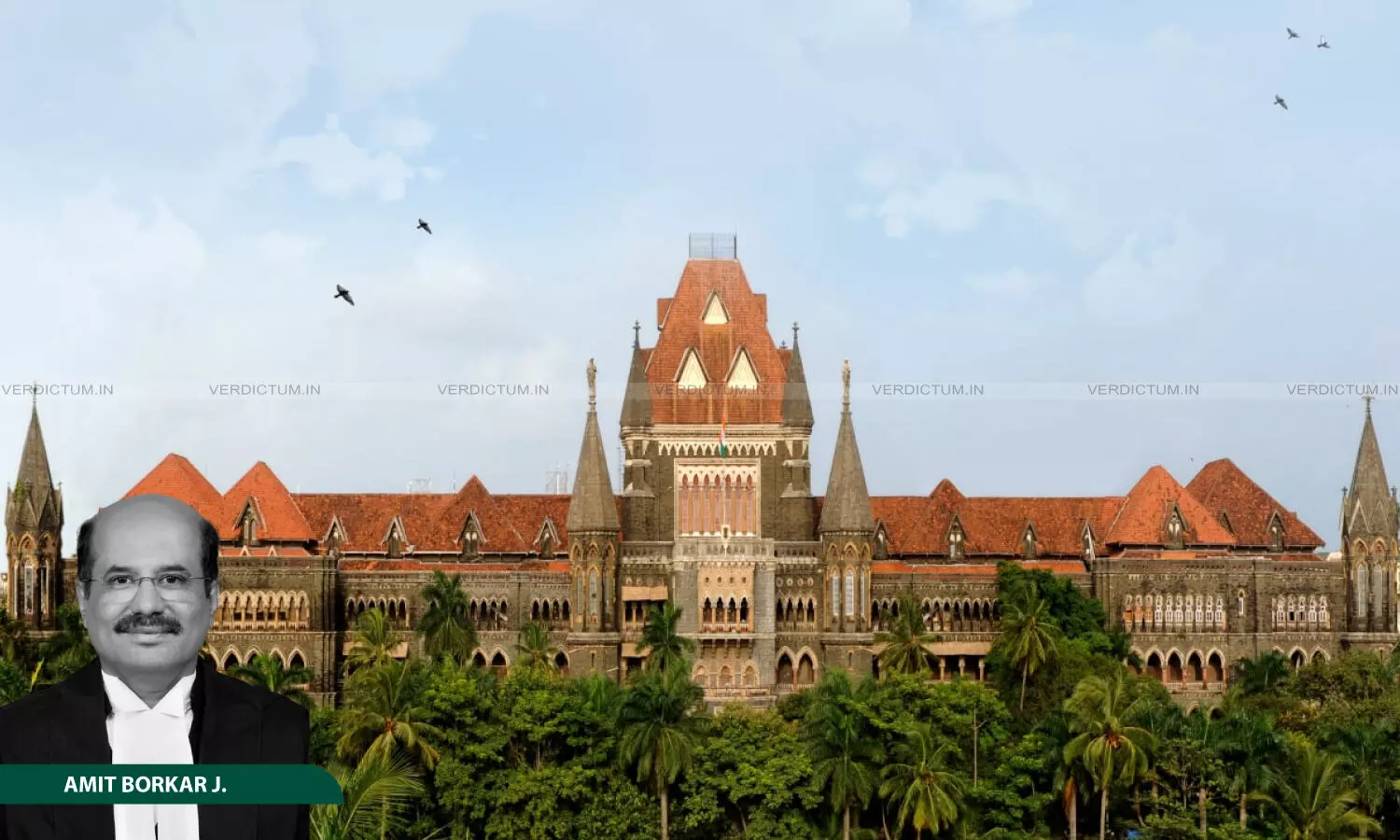
A Single Bench of Justice Amit Borkar observed, “The Government Resolution does not provide that every electricity bill, even if it is for a commercial connection, will become final proof of commercial use…If the petitioner's submission is accepted, then every electricity bill showing a commercial connection would have to be treated as proving commercial eligibility. Such interpretation cannot be taken from the language of the Government Resolution. The seven documents cannot be treated as if each one of them proves all the requirements. The document at Serial No. 2 may show the existence of the hutment on the relevant date. But when a specific commercial entitlement is claimed, the proof regarding commercial or professional use becomes important. Serial No. 7 has been separately provided for that purpose and its requirement cannot be made ineffective”.
“…The claim for commercial eligibility cannot be granted merely because a commercial electricity connection was existing. The Government Resolution requires the proof regarding existence of the hutment and the proof regarding its commercial or professional use to be considered in their proper manner. The material produced by the petitioner does not satisfy the requirement for proving commercial use. The petition, therefore, cannot succeed on merits”, the Bench noted.
Advocate Ashutosh M. Kulkarni appeared for the petitioner and Advocate D. R. Kawale appeared for the respondent.
In the matter, the petitioner, Ganpat Krishna Parte, claimed to have resided in Hut No. 478 since 1985 and simultaneously operated a canteen business in Hut No. 85/6 (later assigned Annexure-II Sr. No. 55) in 'N' Ward, obtaining a commercial electricity connection for the latter in 1992. However, in the Annexure-II issued under the SRA scheme, Hut No. 55 was categorized for residential use rather than commercial use.
The petitioner’s repeated appeals to the Assistant Commissioner ('N' Ward), the Secretary of the Slum Rehabilitation Authority, and subsequently the High Power Committee (HPC), Government of Maharashtra, were rejected. The authorities found that municipal records and income tax returns listed the premises as residential, and the applicant failed to submit trade licenses or tax receipts proving commercial operations. Aggrieved by the HPC’s order dated August 1, 2015, the petitioner filed a writ petition before the High Court seeking commercial eligibility.
The High Court observed that while an electricity bill serves as valid proof to establish the physical existence of a hutment prior to the qualifying date under Serial No. 2 of the Government Resolution dated May 16, 2015, it does not automatically prove the actual nature of its use.
The Court held that a commercial electricity connection alone cannot be treated as conclusive proof of commercial eligibility under the SRA scheme. Accepting such an argument would render Serial No. 7 of the Government Resolution, which specifically requires documents like a Gumasta license, restaurant permit, or tax receipt to establish non-residential user, redundant and ineffective.
The Bench highlighted that official municipal records and income tax filings had consistently categorized the premises as residential. In the absence of any prescribed trade licenses or tax receipts to displace these official entries, the authorities were justified in rejecting the claim for a commercial rehabilitation unit.
The Court further noted that under Paragraph 7 of the May 16, 2015 Government Resolution, settled eligibility claims cannot be reopened to alter rehabilitation rights once the construction of rehabilitation buildings is complete and the project has reached an advanced stage of implementation.
Holding that the authorities' findings were neither perverse nor unsupported by material, the High Court dismissed the writ petition, discharged the rule, and upheld the High Power Committee's order dated August 1, 2015.
Cause Title: Ganpat Krishna Parte v. High Power Committee, Govt. of Maharashtra & Ors. (Neutral Citation: 2026:BHC-AS:35268)
Appearances:
Petitioner: Ashutosh M. Kulkarni i/b V. S. Daware, Advocate.
Respondents: J. G. Aradwad (Reddy), D. R. Kawale, Riya Thakkar i/b Mr. Tushar Goradia, Advocates.