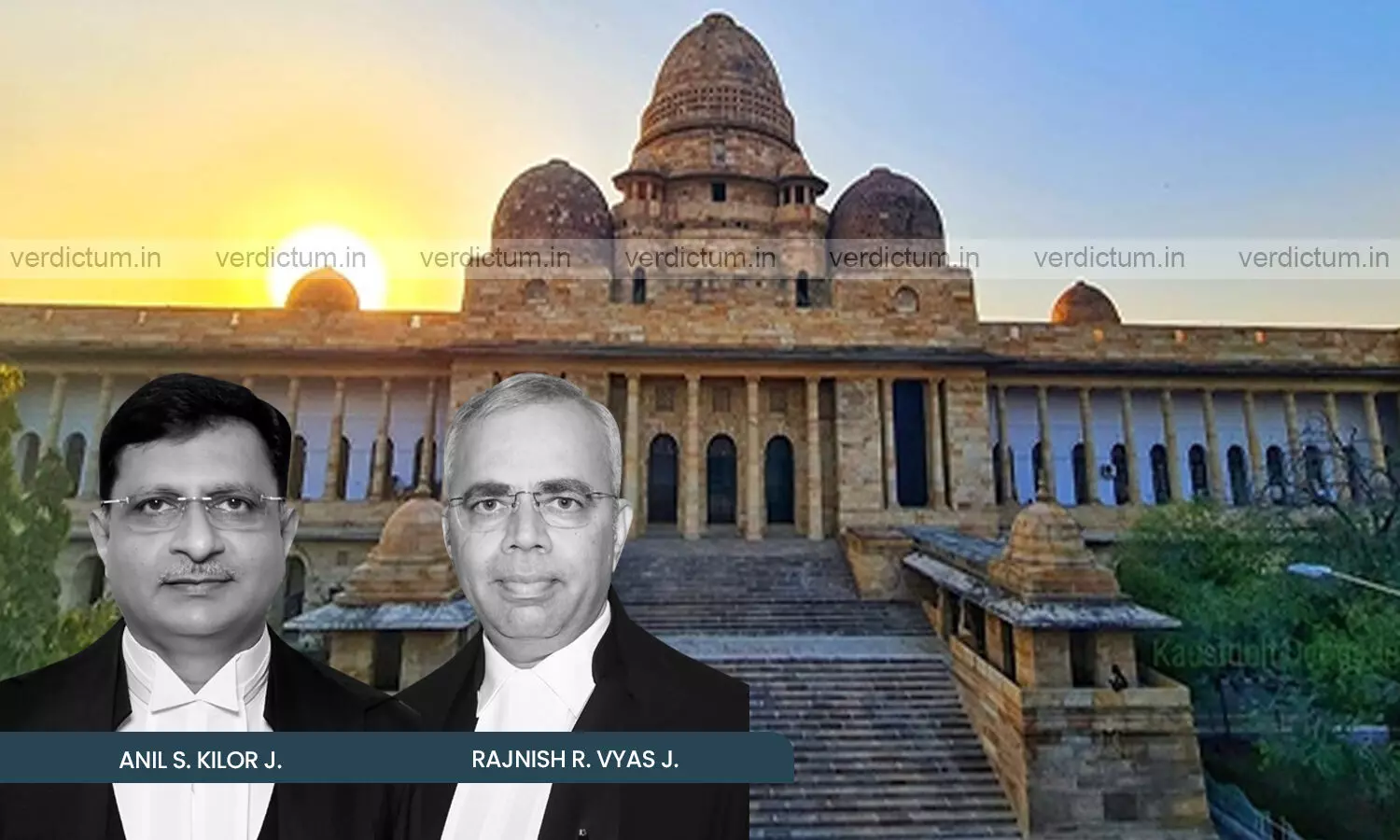
Fundamental Right To Practice Religion Subject to Public Order: Bombay High Court On Plea Against Earmarking Of Religious Procession Routes By Police
 |
|It also held that the exercise of the right to practice one’s religion is one thing and to practice it in a particular way is another.
The Bombay High Court held that while citizens have the right to practice their religion, they do not possess an absolute right to insist on a specific route for religious processions like a Kavad Yatra.
The Court clarified that modifying a route based on adverse police reports and geographical sensitivities does not violate religious freedom, emphasizing that public order and collective interest outweigh individual route preferences.
The Division Bench of Justice Anil S. Kilor and Justice Rajnish R. Vyas held, "it is evident that the right guaranteed by the Constitution of India under Article 25, to practice one's religion is certainly subject to larger interest of law and order, public order and the needs of other sections of the population, that might be adversely affected, if the exercise of the right in a particular manner is insisted upon and permitted...The exercise of the right to practice one’s religion is one thing and to practice it in a particular way is another."
Advocate Sahil Mate appeared for the Petitioner, while Senior Advocate D.V. Chauhan appeared for the Respondents
It held, "The earmarking of routes to take out processions, that involve a multitude of people, is a matter that essentially relates to law and order, for which the civil and the police administration bear responsibility. If, upon assessment of the situation, physical and geographical, and opinions of members of other communities, the respondents have taken a decision that a new route, as proposed by the petitioners, cannot be permitted to take out the procession, then there is no right inhering in the petitioners to take out the procession along the particular route."
Brief Facts
The petitioner was the organizer of Bharat Mata Sewa Sangathan, Nagpur, an organization engaged in religious and social activities. It was the case of the petitioner that in past, the petitioner had organized several religious programs which were conducted peacefully. In the said backdrop, the petitioner applied for permission to take out a procession of about 3.5 k.m., during which consecrated water drawn from Mahadeo Ghat would be carried in a Kanwar for performing Jalabhishek, the ritual bathing of the Shivling.
The present petition was filed assailing the order passed by the Deputy Commissioner of Police refusing permission to take out the Kavad Yatra.
Contentions of the Parties
The petitioner submitted that the permission for the Kawad Yatra was refused without calling a single member from the petitioner's side, without notice, and without giving him a hearing or discussing any adverse material with him.
It was submitted that India is a Secular Country and any procession, including a religious procession, can be conducted through all roads and streets without any restriction. It was also submitted that any procession, including the other procession, cannot be prohibited or denied merely because any other religious group is residing or doing business in the area predominantly.
The Respondents clarified that there was no refusal to carry out the procession by the petitioner. It was pointed out that it is not the case that the petitioner was asked not to take out the procession at all. It was also not the case that the right to practice religion or any particular part of it has been prohibited. The impugned communication was issued to refuse the use of a particular route for taking out the Kavad Yatra.
It was also argued that there were adverse police reports and there was every likelihood of a breach of law and order situation if permission is granted to the petitioner.
Observations & Findings of the Court
The Court said that the contention of the Petitioner that Respondent No. 3 refused the permission to take out the Kavad Yatra was misconceived. It was added that the insistence of the petitioner was to allow the organizer to take out the procession from the route as suggested by the petitioner and not from the route advised by the police administration.
It was observed, "Thus, it is evident that there is no refusal of permission from the respondent-authority, on the contrary, the respondent No.3 agreed to grant permission with a modification in the route suggested by the petitioner. It is further important to note that when the petitioner is insisting for a particular route and when there are adverse police reports, the petitioner is duty bound, considering the antecedents relating to the law and order situation, to provide all the necessary details to the police to satisfy the police that the organizers have taken care of every mandating aspects."
The Court also added that, considering the location of the temple, which was a part of the procession for performing the pooja by the organizers, the above-referred details ought to have been submitted to the police.
After referring to legal precedents, the Court observed that normally the courts should not interfere with matters relating to law and order, which is primarily the domain of the concerned administrative authorities.
"They are by and large the best to assess and to handle the situation depending upon the peculiar needs and necessities, within their special knowledge. Past conduct and antecedents of a person or group or an organisation may certainly provide sufficient material or basis for the action contemplated on a reasonable expectation of possible turn of events, which may need to be avoided in public interest and maintenance of law and order. Thus, by applying the above referred principles, we cannot interfere with the police reports placed before the respondent No.3 in the present matter", it observed.
The Court held that the petitioner has no right to compel the respondents to give him permission to take out the procession from the route, as proposed by the petitioner only.
It was added that whenever there is an apprehension of danger to “greater community interest” or “interest of the collective or social order”, it is the situation which threatens the public order which warrants the abridgement of right to take out the procession.
Accordingly, the Court held that there was no illegality committed by Respondent No. 3 in not allowing the petitioner to take out the procession from the route as suggested by the petitioner and further suggesting the alternate route to take out the procession.
Consequently, the petition was dismissed.
Cause Title: Deepak v. State of Maharashtra and Ors. [Neutral Citation:2026:BHC-NAG:10559-DB]
Appearances:
Petitioner: Advocates Sahil Mate and Nikhil Waghmare
Respondents: Senior Advocate D.V. Chauhan and AGP NS Rao