Appointing Authority Can’t Terminate Employees Solely On State Government’s Direction Without Applying Its Mind: Allahabad High Court
 |
|The High Court found that the petitioners were not accused of any illegality and that the eligibility qualification had been changed by the competent authority before the selection process was completed.
The Allahabad High Court has set aside the termination of Assistant Managers appointed to the Uttar Pradesh Co-operative Bank, holding that the appointing authority acted solely on the directions of the Principal Secretary without independently applying its mind.
The Court directed that the employees be permitted to resume their duties but applied the principle of “no work, no pay” to the period following their termination.
The Court was hearing two writ petitions filed by Assistant Managers challenging the decisions of the State authorities, the U.P. Co-operative Societies Institutional Service Board and the U.P. Co-operative Bank that culminated in the cancellation of their appointments.
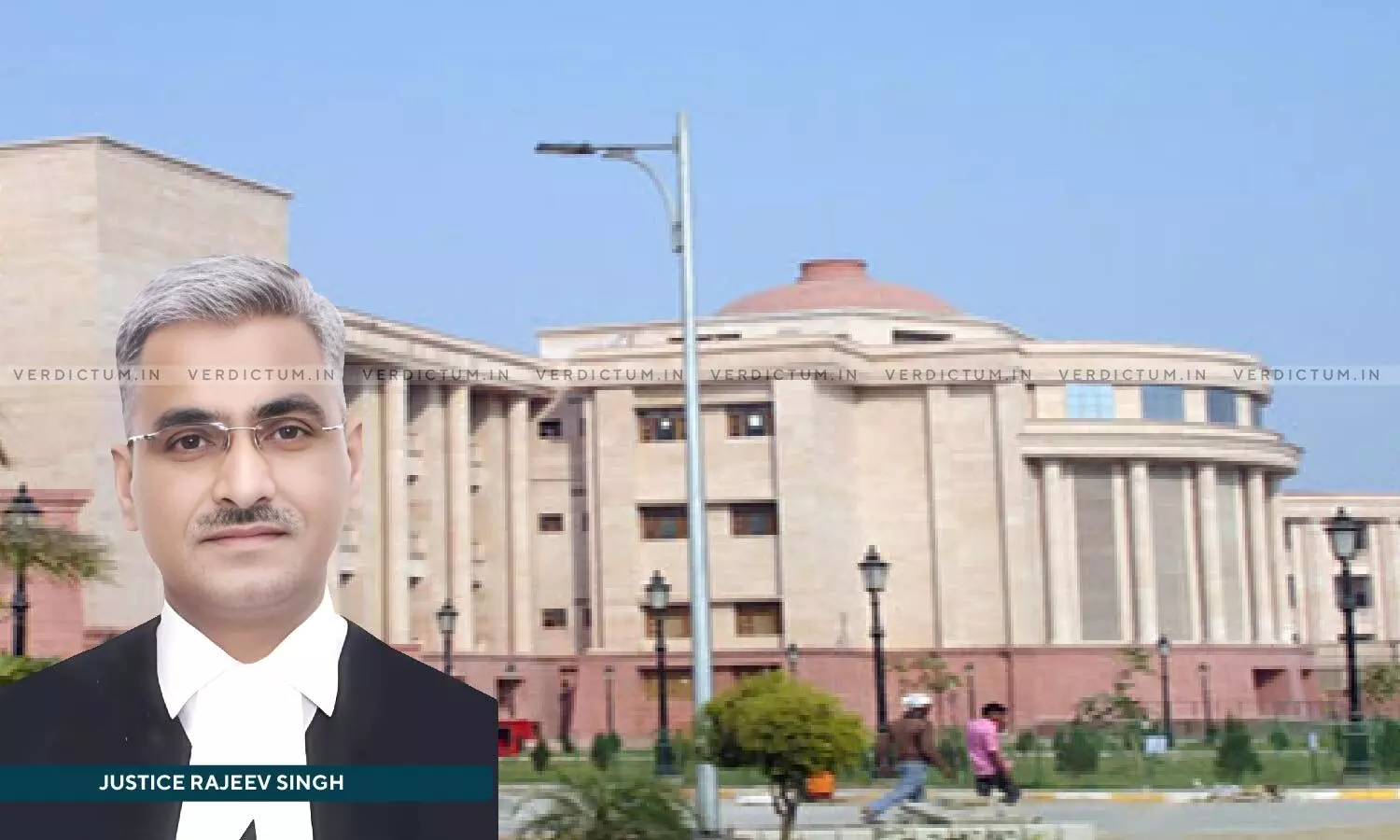
A Bench of Justice Rajeev Singh observed: “Therefore, this Court is of the view that impugned termination orders have been passed by the Appointing Authority only on the direction of the Principal Secretary of the concerned department. The resolution was passed by the Managing Committee, then the formal order was passed by the Managing Director. However, there is no application of mind of the Managing Committee as well as the Managing Director while passing the impugned orders. In the identical matter, Hon’ble Supreme Court in the case of M.P. State Cooperative Bank Limited, Bhopal Vs. Nanuram Yadav and others (supra) observed that merely on the basis of recommendation of any authority, termination of the employee cannot be done, if the proper application of mind was not applied.”
Senior Advocate Gaurav Mehrotra appeared for the petitioners; Senior Advocates Pritish Kumar and D.K. Pathak appeared for the respondents.
Background
The U.P. Co-operative Bank is an apex cooperative society governed by the U.P. Co-operative Societies Act, 1965, the U.P. Co-operative Societies Rules, 1968, the U.P. Co-operative Societies Employees Service Regulations, 1975 and the U.P. Co-operative Bank Staff Service Rules, 1981.
The Bank initially requested the U.P. Co-operative Societies Institutional Service Board to recruit Assistant Managers with qualifications in specified disciplines or postgraduate qualifications in banking and finance. The Bank’s Managing Committee subsequently proposed widening the eligibility condition to include graduates in any discipline with at least 50% marks. According to the petitioners, the Registrar approved this qualification before the last date for applications, following which a corrigendum was published and the application deadline was extended.
The petitioners participated in the written examination and interview and were selected as Assistant Managers. Their appointments were made subject to the outcome of writ petitions filed by unsuccessful candidates challenging the recruitment process. One such challenge was subsequently dismissed in 2023 after the Court noted that the unsuccessful candidate had participated in the process and had not challenged the selections themselves.
The petitioners served the Bank for around three and a half years before their appointments were cancelled. The cancellation followed a complaint and an inquiry alleging irregularities in the recruitment process, including alteration of the eligibility criteria to favour persons connected with members and office-bearers involved in the selection.
The respondents contended that the inquiry and criminal investigation disclosed manipulation of the recruitment process, including the alleged appointment of relatives of persons involved in the examination and interview process. They did not, however, dispute that the petitioners had not been charge-sheeted in the criminal case.
The petitioners argued that the qualification had been changed by the competent authority before the application process concluded and that the authorities had earlier defended the recruitment before the High Court. They contended that their services were terminated merely because the Principal Secretary directed the cancellation of the appointments, without an independent assessment by the appointing authority.
Court’s Observations
The Court examined the statutory framework governing recruitment and service conditions in cooperative societies. It noted that the U.P. Co-operative Societies Act, 1965 authorised the constitution of the Institutional Service Board for recruitment, training and disciplinary control over employees of cooperative societies.
The Court recorded: “Section 122 of the Act confers the power to the State Government to constitute an authority known as U.P. Co-operative Societies Institutional Service Board for the purposes of recruitment, training and disciplinary control over the employees of the Co-operative Societies and also empowers the said authority to frame regulations regarding recruitment, enrollment and terms and conditions of the service including disciplinary control over such employees working in the Co-operative Societies within the State of U.P.”
The Bank had framed its Staff Service Rules, 1981 under the U.P. Co-operative Societies Employees Service Regulations, 1975. The record further showed that the Registrar-cum-Commissioner possessed authority under the governing statutory framework to prescribe the qualifications for the post.
The Court noted that the Principal Secretary’s communication directing cancellation of the appointments did not accuse the petitioners themselves of committing any illegal act. It also found that the eligibility qualification had been changed by the competent authority before the selection process was completed.
The Court observed: “There is no whisper in the order of Principal Secretary, Cooperative, about the illegal act of the petitioners. The qualification was changed by the competent authority and Registrar-cum-Commissioner was empowered under the provisions of the Act. Thereafter, selection process was completed.”
The Court distinguished the allegations concerning the conduct of officials involved in the recruitment process from any wrongdoing attributable to the selected Assistant Managers.
After examining the correspondence between the State Government and the appointing authority, the Court found that the Principal Secretary’s communications formed the basis of the termination orders. The Principal Secretary had directed the competent authorities to cancel the appointments and file caveats before the High Court.
The Court noted: “In pursuance of the aforesaid directions of the Principal Secretary of the concerned department, Board of Directors conducted a meeting on 30.05.2019 by issuing a formal resolution for cancellation of the appointment of 50 Assistant Managers and also resolved for filing of caveat as directed by the Principal Secretary and the Managing Director was also authorized to pass formal order. Thereafter, the impugned orders were passed.”
The Managing Committee passed a resolution implementing those directions, after which the Managing Director issued the formal termination orders. The Court found no independent application of mind by either authority.
Relying on M.P. State Cooperative Bank Limited, Bhopal v. Nanuram Yadav and Others (2007), the Court held that an employee’s services could not be terminated merely on another authority’s recommendation without the competent authority independently applying its mind.
Conclusion
The High Court allowed both writ petitions and set aside the decisions and orders that culminated in the petitioners’ termination. It directed that the petitioners be permitted to resume the duties they had been performing before their services were terminated.
The Court, however, ordered that the intervening period from termination until the judgment would be governed by the principle of “no work, no pay”.
Cause Title: Manish Kumar and 25 Others v. State of U.P. through Principal Secretary, Cooperative, Lucknow and Others (Neutral Citation: 2026:AHC-LKO:60489)
Appearances
Petitioners: Senior Advocate Gaurav Mehrotra, assisted by Advocates Utsav Mishra, Harsh Vardhan Mehrotra and Kshitij Mishra
Respondents: Senior Advocate Pritish Kumar, assisted by Advocate Ran Vijay Singh; Senior Advocate D.K. Pathak, assisted by Advocate Vijay Pratap Singh; Advocate Mayank Pathak; Advocate Prashasth Puri