SC/ST Act| Special Courts Not Passive Recipients Of Admin Reports: Allahabad High Court Directs State-Wide Probe Into Repeated Claims & Misuse Of Funds
 |
|The Bench said that a special court cannot treat itself as powerless under Rule 12(7) to examine adequacy of compensation while remitting matter for fresh determination of quantum.
The Allahabad High Court has held that Special Courts under the Scheduled Castes and Scheduled Tribes (Prevention of Atrocities) Act, 1989 are not passive recipients of administrative reports on relief disbursed to victims, but are statutorily empowered under Rule 12(7) of the Rules of 1995 to actively scrutinise whether such relief was paid in time and in adequate measure, and to direct payment of the balance amount where it is not so satisfied. The Court further directed a time-bound administrative enquiry after noting that an advocate and his family members had cumulatively received ₹23,36,250 in relief across numerous criminal cases, with 10 to 12 further claims stated to be pending.
The Court held that the Special Judge had misconstrued the scope of his jurisdiction by treating any inquiry into the nature of the offence or quantum of compensation as impermissible. It clarified that Rule 12(7) provides a judicial check against under-payment, delayed payment, or arbitrary curtailment of statutory relief by administrative authorities.
The DM, Jhansi, and SSP were directed to conduct a three-month enquiry into the claims, while the Uttar Pradesh Government was ordered to undertake a state-wide review and strengthen verification mechanisms for repeated claims. Authorities were directed to ensure genuine victims receive benefits and comply with Rule 12(7).
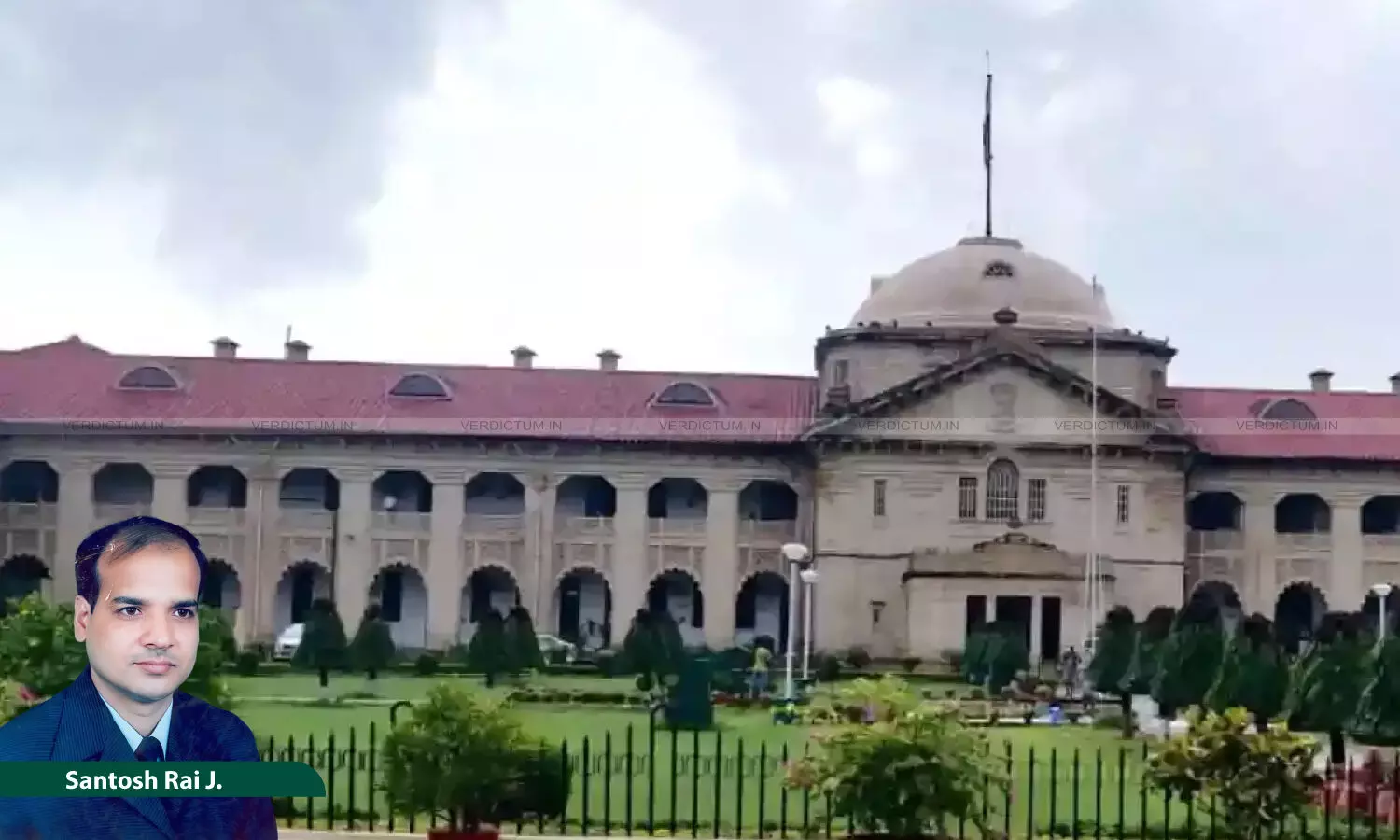
A Bench of Justice Santosh Rai observed, “…On a plain reading, the provision is not merely enabling but is couched in terms that contemplate active judicial scrutiny by the Special Court of the adequacy and timeliness of relief disbursed. The Special Court is thus not a passive recipient of the administrative report. It is the statutory authority entrusted with satisfying itself, upon the material placed before it, whether the relief paid meets the standard prescribed under the Schedule to Rule 12(4) read with the applicable Government Orders, and, where it is not so satisfied, to issue appropriate directions for payment of the balance amount”.
“The learned Special Judge, in the impugned order, appears to have proceeded on the footing that any exercise of determining the nature of the offence or the quantum of assistance, or any direction to the District Level Committee, would be impermissible and not sanctioned by law. This approach, with respect, does not correctly appreciate the text and purpose of Rule 12(7), which was specifically engrafted into the scheme of the Rules of 1995 to provide a judicial check against under-payment, delayed payment or arbitrary curtailment of statutory relief by the administrative authorities. The impugned order, being founded on a misconstruction of the Special Court's own jurisdiction under Rule 12(7), cannot be sustained”, it further noted.
Advocate Braj Mohan Singh appeared for the appellants and Rajesh Kumar Shukla, AGA appeared for the respondent.
In both underlying criminal cases, chargesheets were filed under Sections 3(1)(r), 3(1)(s) and 3(2)(va) of the SC/ST Act read with various IPC provisions and Section 67 of the Information Technology Act. The investigating officer had proposed relief of ₹2,00,000 to each victim under Item 41 of the Schedule to Rule 12(4), payable in stages, 25% at the FIR stage, 50% on filing of the chargesheet, and the remaining 25% on conviction.
At the chargesheet stage, a cumulative sum of ₹1,50,000 per victim had thus become due. However, the District Social Welfare Officer, Jhansi, released only ₹75,000 to each victim, restricting payment to 37.5% instead of the mandated 75%, and did not release the balance despite repeated representations.
The appellants moved applications before the Special Judge under Rules 12(4) and 12(7) of the Rules of 1995 seeking release of the balance amount.
The Special Judge, relying on a report of the District Social Welfare Officer indicating that the District Level Committee had itself independently assessed the admissible relief at ₹1,00,000 (of which 75% had already been paid), held that it was not open to the Court to determine the nature of the offence, fix or enhance the quantum of assistance, or issue directions to the District Level Committee, and rejected both applications by order dated July 23, 2024. Aggrieved, the appellants approached the High Court.
“…this Court cannot be oblivious to the disclosure made by the State, duly supported by the record annexed with the counter affidavit, that the applicant and his family members have, over a period of time and across multiple criminal cases, received relief amounting to Rs. 23,36,250/-, with a further 10 to 12 cases stated to be pending before the concerned Committee. The above facts have not been denied by the appellants before this court. The scheme of relief and rehabilitation under the Act and the Rules of 1995 is a benevolent and protective measure intended for genuine victims of caste-based atrocities, and its integrity must be zealously safeguarded…”, the Bench said.
“…Recurrent registration of criminal cases followed by claims for relief, without more, does not by itself establish misuse; nonetheless, the scale and frequency disclosed in the present proceedings are such that they cannot be left unexamined, lest the object of the beneficent legislation be defeated by its exploitation”, the Bench further said.
Accordingly, the Court set aside the July 23, 2024 orders and remitted both matters to the Special Judge, SC/ST Act, Jhansi, for fresh decision within six weeks, directing a specific finding on the applicable Schedule entry. The District Welfare Committee was then directed to determine whether compensation of ₹1 lakh or ₹2 lakh was payable.
Cause Title: Arvind Kumar and 2 others v. State of U.P. and 2 others (Neutral Citation: 2026:AHC:167807)
Appearances:
Appellants: Braj Mohan Singh, Advocate.
Respondent: Rajesh Kumar Shukla, A.G.A., and Shikhar Tandon, Advocate.