

Andhra Pradesh High Court Invokes Concept of ‘Ardhangini’ To Allow Appointment Of Wife As Guardian Of Comatose Husband’s Bank Account
The Court held that in the absence of a statutory mechanism, High Courts can exercise parens patriae jurisdiction to appoint guardians for persons in a comatose state, recognising the wife as the most natural guardian.
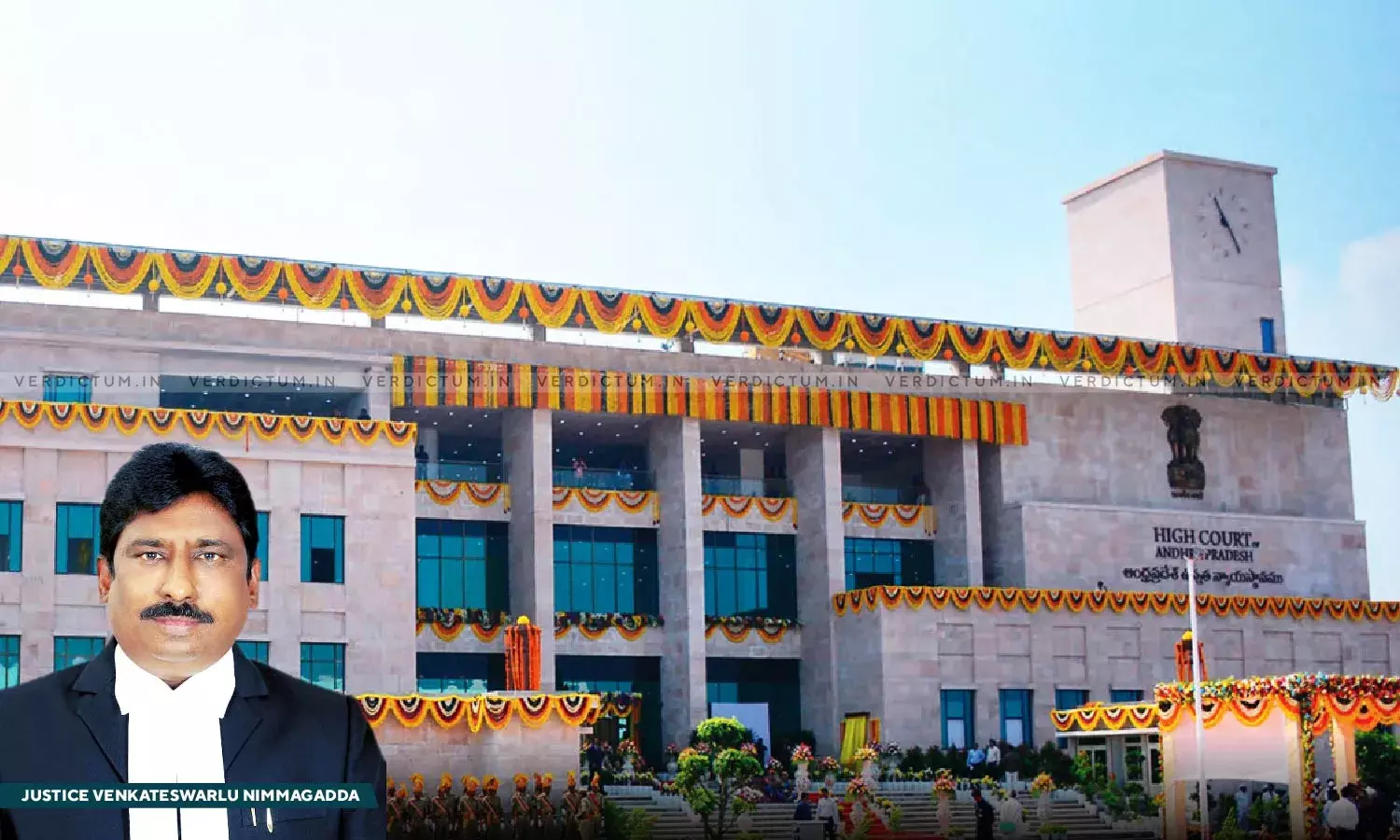
Justice Venkateswarlu Nimmagadda, Andhra Pradesh High Court
The Andhra Pradesh High Court has invoked the ancient Indian philosophical concept of “Ardhangini” to hold that a wife is the most appropriate person to act as guardian of her husband who is in a comatose or vegetative state, and accordingly permitted her appointment as legal guardian for the limited purpose of operating his bank account to meet medical expenses.
The Court was hearing a writ petition seeking the appointment of a legal guardian for a person lying in a vegetative/comatose state, to enable the operation of his bank account for meeting medical expenses, in the absence of any statutory mechanism providing such relief.
A Bench of Justice Venkateswarlu Nimmagadda observed, “when a husband fully falls into a comatose or vegetative state, losing the ability to exercise reason, make a decision or act on his own behalf, there can be no person more naturally, morally or legally suited than the wife to act as his guardian, considering the Indian ancient philosophical concepts of ‘Ardhangini’.”
Advocate D. Vigneshwar Reddy appeared for the petitioners.
Background
The petition was filed seeking the appointment of one of the petitioners as guardian of a person who had been diagnosed with severe neurological conditions and remained in a persistent vegetative state following surgery, requiring continuous medical care and support.
It was submitted that the patient had funds in his bank account which were required for his treatment, but due to his condition, he was unable to operate the account, and there existed no statutory mechanism to appoint a guardian for such purposes.
The respondents opposed the petition, contending that the relief sought was civil in nature and that the petitioners ought to approach a civil court for appropriate relief.
Court’s Observation
The Court examined the scope of its jurisdiction under Article 226 and noted that in cases where no statutory mechanism exists for the appointment of a guardian for a person in a comatose state, the High Court can exercise its parens patriae jurisdiction to protect the interests of such individuals.
Relying on precedents including Professor Alka Acharya v. GNCTD (Delhi High Court), Shobha Gopalakrishnan v. State of Kerala (2019), and Rajni Hariom Sharma v. Union of India (2020), the Court observed that such jurisdiction is invoked to act in the best interest of persons incapable of protecting their own rights.
The Court noted, “since there is no specific provision available in any statute to deal with such appointment of guardian to the victim lying in ‘comatose state’… this Court find it appropriate to fix norms and guidelines as a temporary measure.”
It further observed that the condition of the patient was duly established through medical records and that the petitioners were the legal heirs with a genuine need to access funds for treatment.
Emphasising the relational and legal proximity of the spouse, the Court recognised that the wife, being the closest person in such circumstances, is best suited to act in the interest of the patient.
“This Court is of the considered view that the present case in hand is similarly situated and mandates the exercise of jurisdiction of ‘parens patriae’ under extraordinary jurisdiction of this Court”, the Court concluded.
Conclusion
The Court held that the petitioners were justified in invoking the jurisdiction of the High Court and allowed the writ petition by appointing the wife as the legal guardian of the person in a comatose state for the limited purpose of operating his bank account.
The Court directed periodic submission of account statements and compliance reporting to ensure proper utilisation of funds and safeguard the interests of the patient.
Cause Title: Singavaram Nagamma v. State of Andhra Pradesh & Ors.
