

Appeal U/S 19 Contempt Of Courts Act Is Maintainable Only Against Order Imposing Punishment: Andhra Pradesh High Court
The Court sustained the Registry’s objection, holding that an order closing a contempt case upon compliance cannot be challenged under Section 19, but granted liberty to convert the plea into a Letters Patent appeal.

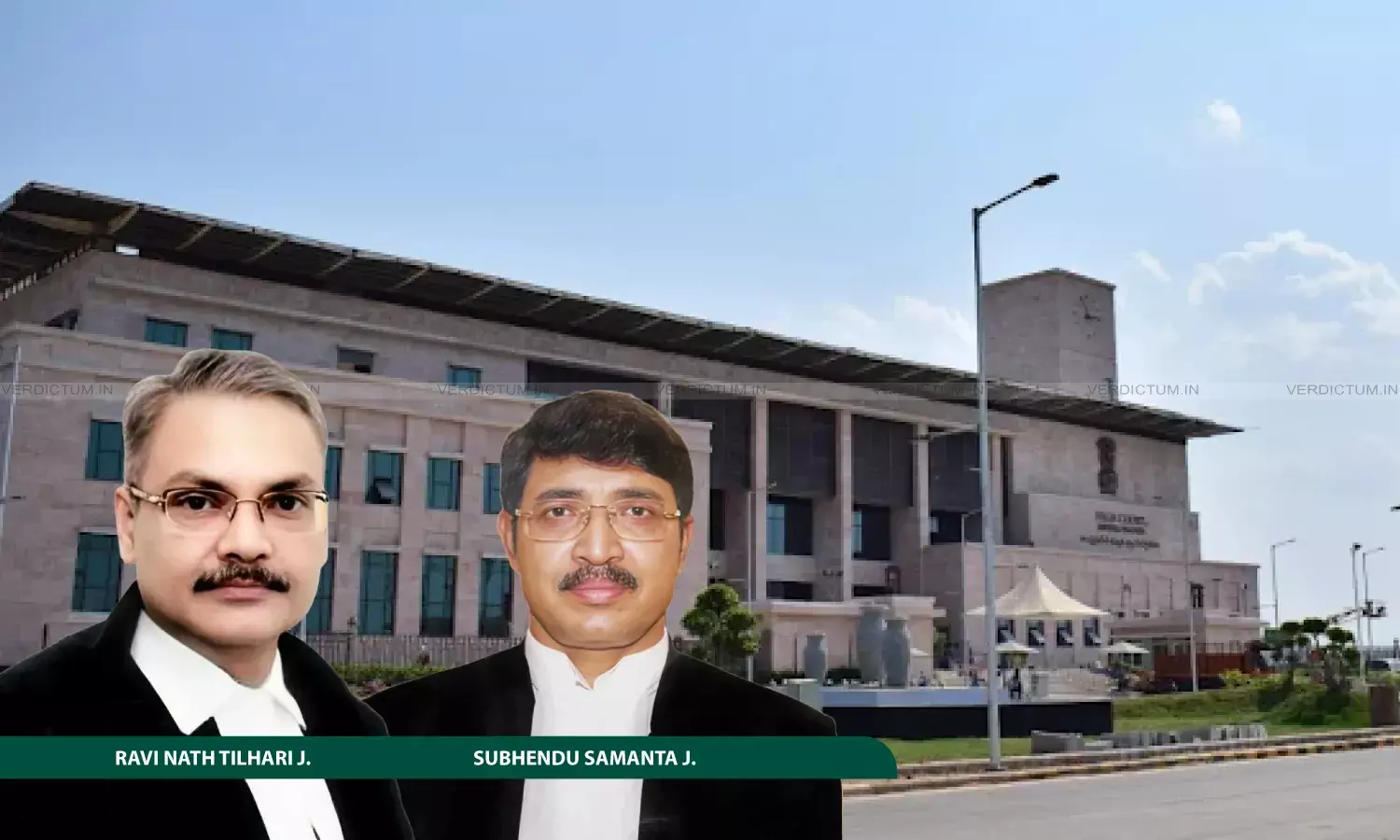
Justice Ravi Nath Tilhari, Justice Subhendu Samanta, Andhra Pradesh High Court
The Andhra Pradesh High Court has held that an appeal under Section 19 of the Contempt of Courts Act, 1971, is strictly maintainable only against an order or decision where the court has actively exercised its jurisdiction to punish for contempt by imposing a penalty. The statutory right of appeal does not extend to orders that merely drop, close, or exonerate a party from contempt proceedings, as such actions do not constitute an exercise of the jurisdiction to punish.
Consequently, the court sustained the office objections raised by the Registry regarding the maintainability of a contempt appeal filed against a Single Judge's order closing a contempt case. However, recognizing that an aggrieved party must not be left without a remedy if the merits of a dispute are affected, the court granted liberty to the appellants to convert their statutory contempt appeal into an intra-court appeal under Clause 15 of the Letters Patent.
A Division Bench comprising Justice Ravi Nath Tilhari and Justice Subhendu Samanta passed the order while determining the maintainability of the appeal, and observed, “A bare perusal of Section 19(1) of the Act, 1971, shows that the appeal shall lie as of right from any order or decision of High Court in the exercise of its jurisdiction to punish for contempt. Clause (a) provides that where the order or decision is that of a single Judge, appeal lies to a Bench of not less than two Judges of the High Court”.
“The order under challenge is not one imposing punishment upon the respondents in the contempt proceedings… We are of the considered view that an appeal would not lie under Section 19(1)(a) of the Contempt of Courts Act, 1971, against the order under challenge”, the Bench noted further.
Advocate Surepalli Madhava Rao appeared for the appellants.
In the matter, dispute arose after the respondents allegedly disobeyed an order passed by a Single Judge directing them to include the temporary service of the petitioners for computing pensionary benefits and gratuity.
The appellants subsequently initiated contempt proceedings, which the Single Judge ultimately closed upon recording that the directions stood complied with. When the appellants attempted to challenge this closure order under Section 19(1)(a) of the Act, the Registry returned the matter, noting that no finding of guilt had been recorded and no punishment had been imposed. The appellants re-presented the matter, arguing that Section 19 does not explicitly require an active finding of guilt or the imposition of punishment to trigger the right of appeal.
In its reasoning, the Division Bench relied heavily on the landmark Supreme Court precedent in Midnapore Peoples’ Coop. Bank Ltd., and Others v. Chunilal Nanda and Others (2006) 5 SCC 399, which clarified that the expression "in the exercise of its jurisdiction to punish for contempt" is the sole determinant of maintainability under Section 19.
Since the impugned order merely recorded compliance and closed the case rather than penalizing the respondents, it fell entirely outside the scope of Section 19.
Addressing the appellants' alternative submission regarding Clause 15 of the Letters Patent, the Bench noted that whether the closure order constitutes an appealable "judgment" depends on the nature of the order, which remains open for scrutiny before the appropriate Bench once a Letters Patent appeal is properly instituted.
The Registry was directed to place the matter before the appropriate Bench upon such conversion, failing which the Contempt Appeal would stand dismissed as not maintainable at the SR stage.
Cause Title: Kasi Raju (Died) & Ors. v. Arun Kumar & Anr. (Contempt Appeal (SR) No. 4482 of 2026)