

Appeal Against Acquittal U/S 138 NI Act Can Be Dismissed For Non-Prosecution If No Steps Taken To Serve Notice On Accused: Andhra Pradesh HC
The Court held that it cannot convict an accused without serving notice on him, and dismissed a complainant bank’s appeal pending since 2009 for non-prosecution.

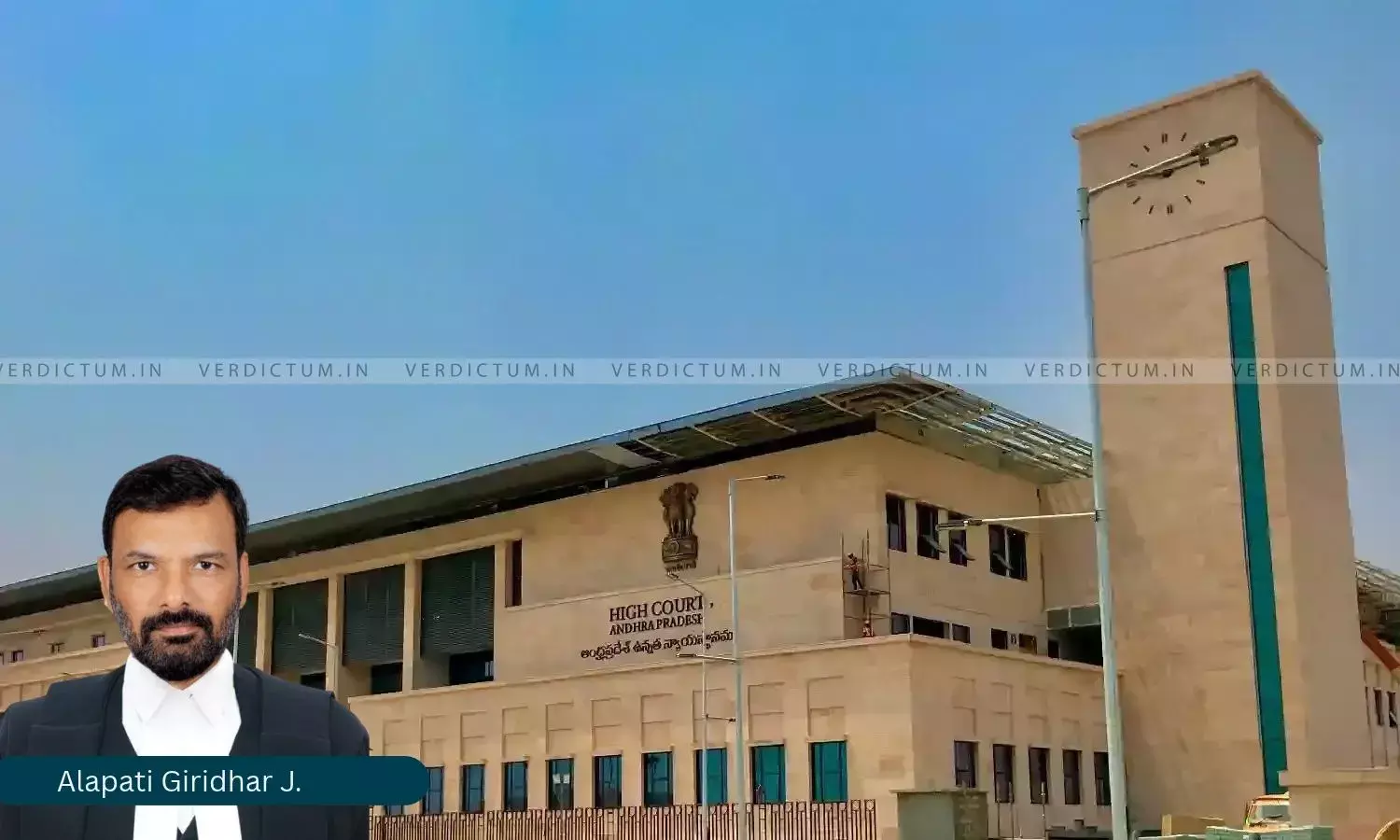
The Andhra Pradesh High Court has held that when an appeal against acquittal under Section 138 of the Negotiable Instruments Act, 1881 is filed by the complainant, and the complainant consistently fails to take steps to serve notice on the accused despite several opportunities, the High Court can exercise its inherent powers and dismiss the appeal for non-prosecution.
The Court observed that although the settled law is that a criminal appeal cannot be dismissed for non-prosecution or default and must be decided on its merits, the Court cannot allow an appeal against acquittal and convict the accused without serving notice on him.
The Court dismissed the appeal filed by the complainant bank, which had been pending since 2009, after noting that the Appellant could not serve notice on the accused for all these years despite many opportunities.
The Bench of Justice Alapati Giridhar observed, “This Court is of the humble view that when the Appeal is filed by the Complainant challenging an order of acquittal, and the Complainant consistently did not pursue the Appeal to take steps to serve notice on the Accused despite being granted several opportunities, this Court has no option except to exercise its inherent powers and dismiss the Appeal for non-prosecution.”
Advocate K.V. Akhileswra Reddy appeared for the Appellant, while the Public Prosecutor appeared for the Respondents.
Brief Facts
The Appellant, National Cooperative Bank Ltd., filed a complaint against the accused under Section 138 of the Negotiable Instruments Act. On 01.09.2008, the Trial Court acquitted the accused under Section 256 of the Code of Criminal Procedure, 1973, recording that the complainant was absent and the counsel was also absent.
An appeal was filed assailing the said order. The record revealed that the Appellant could not serve notice on the accused for all these years despite many opportunities, and that on some dates none appeared for the Appellant. The appeal remained on the old pendency list.
Contentions of the Parties
The Appellant submitted that the Appellant was not in touch with the counsel and that he had no instructions. The Court noted that the same had also been represented on 21.08.2025.
Observations/Findings of the Court
The Court framed the short question for consideration as “whether this Court can decide the Appeal on merits against acquittal under Section 138 of the Negotiable Instruments Act, even without serving notice on the Respondent/Accused and without giving him an opportunity to be heard.”
The Court referred to the decision of the 3-Judge Bench of the Supreme Court in Bani Singh and Others v. State of U.P., wherein it was held that the law does not envisage the dismissal of a criminal appeal for default or non-prosecution but only contemplates disposal on merits after perusal of the record. The Court noted that the said judgment was rendered in an appeal filed by the accused against the State, challenging his conviction.
The Court also referred to Associated Cement Co. Ltd. v. Keshvanand and National Small Industries Corporation Limited v. State (NCT of Delhi), wherein the Supreme Court recognised the jurisdiction of the Magistrate to dismiss a complaint where the complainant is absent.
Distinguishing an appeal against conviction from an appeal against acquittal in complaint cases, the Court held, “The answer is in the negative, as the Complainant has to take steps to serve notice on the Accused and assist the Court for disposal of the Appeal, the Court cannot proceed to decide the Appeal on merits as the Court cannot allow the Appeal and convict the accused even without serving notice on him.”
The Court clarified that if the notice is served on the accused and he does not appear, does not engage a counsel, or the counsel engaged by the accused does not appear, the Court shall dispose of the appeal on merits in accordance with the law laid down in Bani Singh.
The Court further observed, “If this course is not followed, the Appeal would remain pending for years, as in this case even when the Complainant has failed to appear and even to take steps to serve notice on the Accused despite opportunities, where the Appeal cannot be disposed of on merits without giving the Accused an opportunity to be heard, which amounts to burdening the Courts by adding these Appeals to the existing list of cases of old pendency.”
Accordingly, the Court dismissed the appeal for non-prosecution.
Cause Title: National Cooperative Bank Ltd. v. S. Mary Joyice and Anr. [Criminal Appeal No. 1022 of 2009]
Appearances:
Appellant: Advocate K.V. Akhileswra Reddy (on behalf of Advocate N. Ravi Prasad)
Respondents: Public Prosecutor