Disputed Easementary Right Requiring Oral & Documentary Evidence Can’t Ordinarily Be Decided In Writ Jurisdiction: Andhra Pradesh High Court
The alleged pathway's existence, location, continuous use and necessity all involved disputed factual questions.
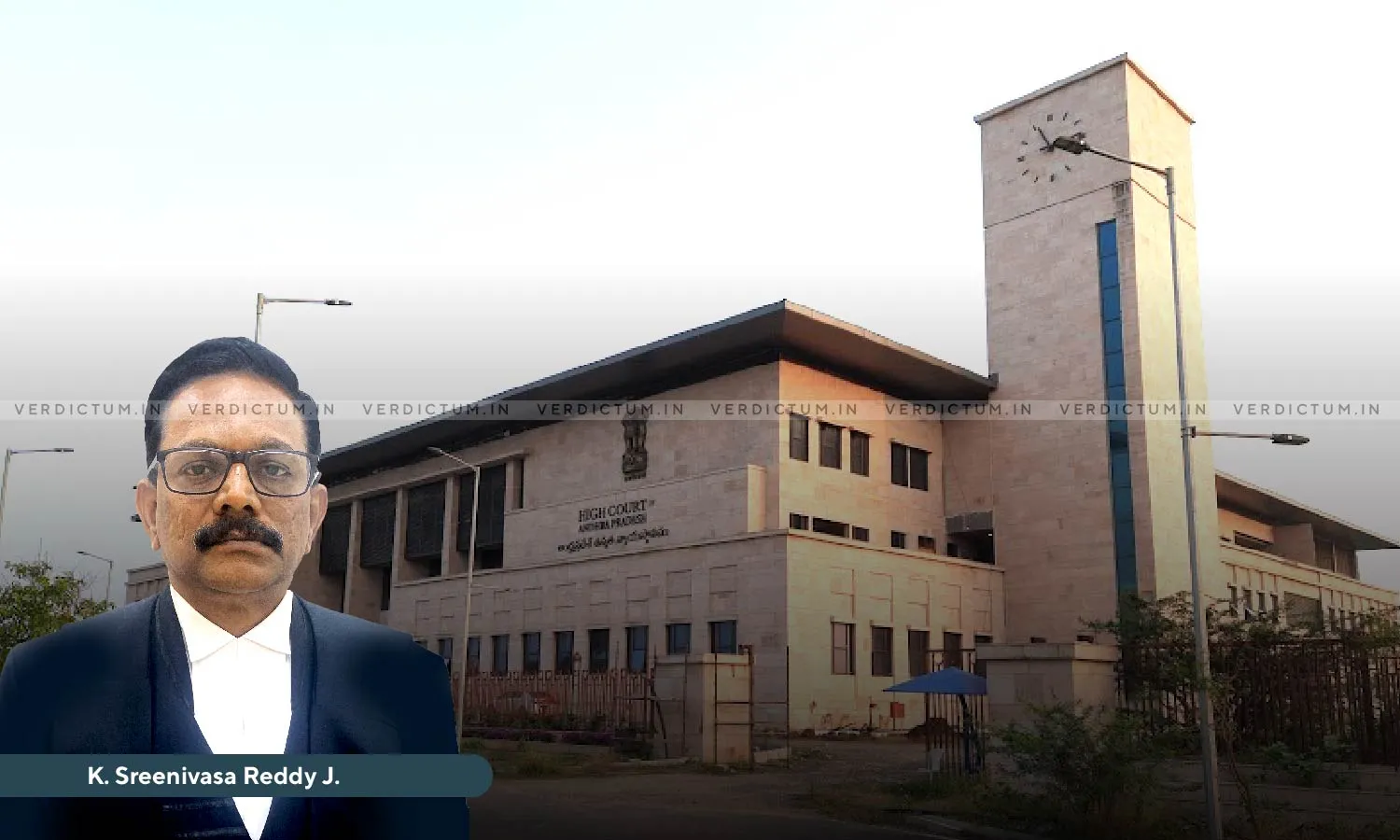
Justice K Sreenivasa Reddy, Andhra Pradesh High Court
The Andhra Pradesh High Court has held that a disputed claim of an easementary right cannot ordinarily be conclusively adjudicated through affidavits under Article 226 when determination of its location, continuous use, nature and necessity requires oral and documentary evidence.
The Court dismissed a petition seeking protection of an alleged pathway claimed as the only access to the petitioners' lands, holding that no enforceable easementary right had been established in the writ proceedings.
The Court was hearing a petition under Article 226 challenging the authorities' alleged permission to remove a pathway and merge an existing village tank with adjoining land donated for a new water-storage facility. The petitioners sought protection of the alleged pathway used to access their properties.
A Bench of Justice K. Sreenivasa Reddy observed: “… the petitioners‟ assertion that they have been using the alleged pathway from time immemorial and have thereby acquired an easementary right over it raises questions that require factual determination. The respondents have specifically disputed the existence of the pathway in the manner pleaded by the petitioners and have asserted that alternative access to their lands is available. The existence of an easementary right, particularly when its location, continuous user, nature and necessity are disputed, requires adjudication on the basis of appropriate oral and documentary evidence”.
The Bench added: “Such competing claims cannot ordinarily be conclusively determined merely on the basis of affidavits in proceedings under Article 226 of the Constitution of India. The jurisdiction under Article 226 is primarily intended to examine the legality of governmental or statutory action and is not ordinarily suited to the adjudication of disputed questions relating to title, possession, easementary rights or the physical features of land, particularly where their determination requires an evaluation of oral and documentary evidence. In the circumstances of the present case, the disputed claim of an easementary right cannot be conclusively adjudicated in these writ proceedings.”
Advocate Venkateswara Rao Gudapati appeared for the petitioners, and Advocate Harish Kumar Rasineni appeared for the respondents.
Background
The petitioners claimed that a pathway beside an existing village tank had been used from time immemorial and was their only access to their lands. They alleged that it was being removed or submerged to integrate the existing tank with a proposed new tank.
According to the respondents, the voluntary organisation purchased an adjoining private parcel and donated it to the Gram Panchayat for establishing an additional water-storage facility. The Panchayat proposed integrating it with the existing tank.
The authorities disputed the pathway's existence and location. They maintained that the tank stood on canal-poramboke land classified as a water body and asserted that roads on three sides provided alternative access.
An interim order had preserved the existing position and permitted a pipeline between the tanks without disturbing the track. The petitioners maintained that the bund could not be altered without following the statutory procedure.
Court's Observations
Alternative Access Undermined Claim Of Exclusive Necessity
The Court sought clarification about the additional distance involved if the petitioners used the alternative road network. The Government Pleader stated that the route would be approximately half a kilometre, which the Court did not consider substantial.
It observed: “In view of the said submission, it appears that alternative access to the petitioners‟ lands is available and that the distance involved is not substantial. In these circumstances, this Court is of the view that the petitioners cannot insist upon the use of the alleged pathway in R.S.No.187/2 solely on the ground that they have been using it, particularly when the respondents dispute its existence in the manner alleged and the availability of alternative access has been asserted.”
Public-Land Decisions Did Not Establish The Claimed Right
The petitioners relied on an earlier High Court order concerning Donka poramboke land used for village access. The Court distinguished it because the present dispute did not concern assignment of public land to a private person.
The Court stated: “However, the facts of the present case are distinguishable from those of the case relied upon. In the present case, the respondents contend that alternative access to the petitioners‟ lands is available through the existing road network. Further, the present case does not concern the assignment of Donka poramboke land to a private individual or a third party. Rather, respondent No.6 is stated to have purchased the land in R.S.No.187/5 and gifted it to respondent No.5-Gram Panchayat for the stated public purpose of establishing a water storage facility. Therefore, the decision relied upon by the petitioners does not, by itself, advance their case.”
The Court similarly held that Jagpal Singh v. State of Punjab (2011), concerning removal of unauthorised occupants from village common land, did not establish the petitioners' easementary claim over a pathway whose existence and location were disputed.
Rival Affidavits Could Not Resolve Physical Features Of Land
The authorities denied demolishing the pathway and said the bund became submerged when the water body was filled. The petitioners attributed the submergence to excessive filling.
The Court observed: “In the present case, the petitioners have not been able to establish, on the basis of the material placed before this Court, the precise legal character of the alleged pathway, the existence of an enforceable easementary right or the unlawful extinguishment of such a right by the respondents. On the contrary, the respondents have placed a substantially different factual position before this Court and have disputed the very basis of the petitioners‟ claim. In the absence of a clear and established infringement of a legal right warranting interference under Article 226 of the Constitution of India, the relief sought by the petitioners cannot be granted in these proceedings.”
The Court further clarified that its earlier interim order merely preserved the existing position and did not finally determine the easementary right or the classification of the land.
Conclusion
The High Court held that the petitioners had not established an enforceable legal right warranting interference under Article 226. It dismissed the writ petition without costs and closed all pending miscellaneous petitions.
Cause Title: Chinthalapati Venkata Satyanarayana Raju and Others v. State of Andhra Pradesh and Others
Appearances
Petitioners: Venkateswara Rao Gudapati, Advocate
Respondents: Government Pleader for Panchayat Raj and Rural Development; Harish Kumar Rasineni and Yarraguntla Koteswara Rao, Advocates