Father’s Duty To Fund Child’s Education Cannot Be Used As A Tool Of Oppression: Allahabad High Court Modifies Maintenance Order
The High Court added that both parents remain responsible for maintaining their minor child, and the mother’s earnings may be considered when fixing their proportionate contributions.
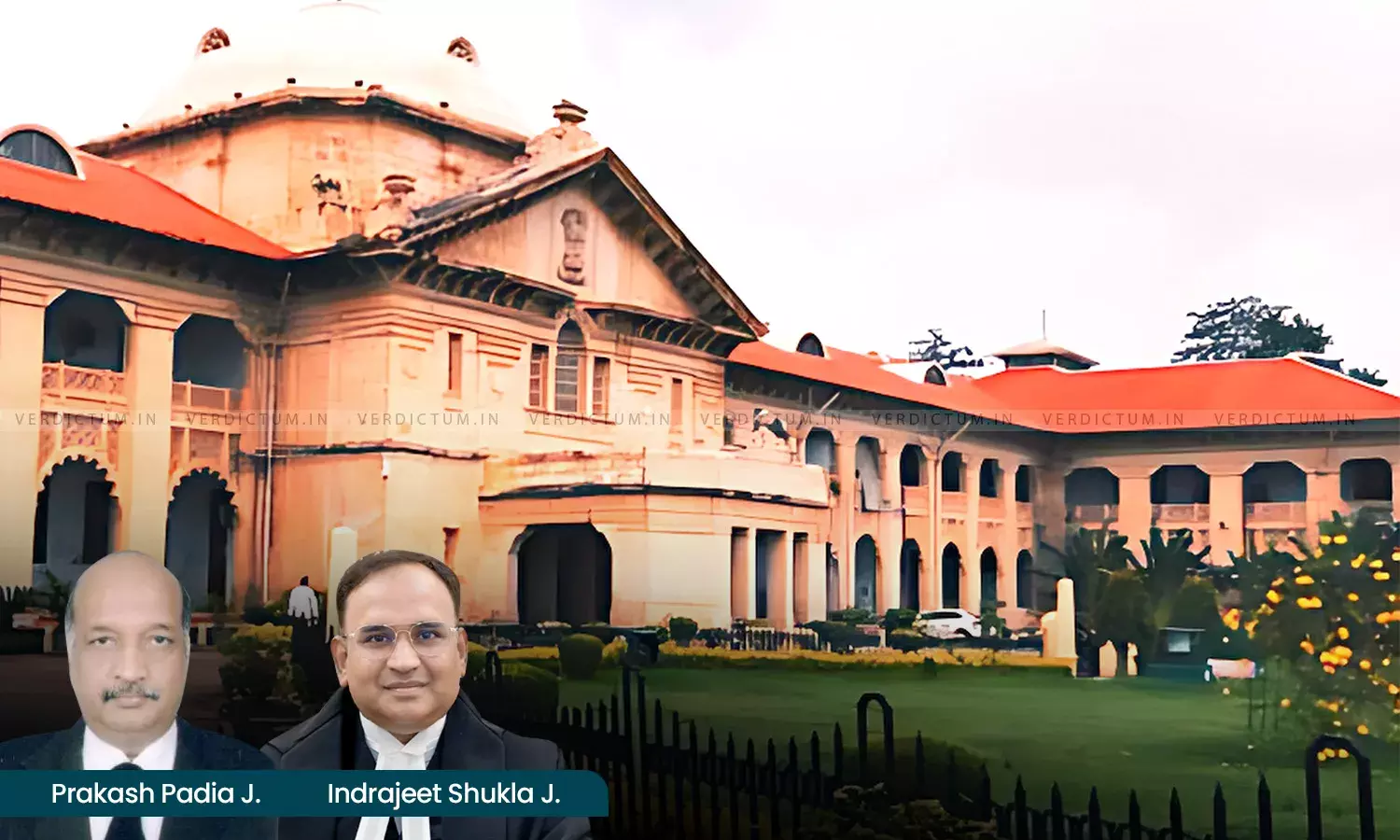
The Allahabad High Court has held that a father’s responsibility to provide his child with suitable education cannot be used as a tool for oppression and that the parents’ socio-economic circumstances must be considered while fixing educational and maintenance expenses.
Adopting what it described as a balanced approach, the Court reduced the father’s monthly contribution from ₹15,000 to ₹12,000.
The Court was hearing a first appeal under Section 19 of the Family Courts Act challenging a Trial Court order passed under Section 26 of the Hindu Marriage Act, 1955, which had assessed the minor daughter’s monthly maintenance and educational expenses at ₹35,000 and apportioned ₹20,000 to the mother and ₹15,000 to the father.
A Bench of Justice Prakash Padia and Justice Indrajeet Shukla observed: “No doubt father being natural guardian is bestowed with the responsibility imparting education in good and repudiated Alma matter commensurate financial and economic viability but same cannot be made a tool for oppression as right to education is a fundamental right but the socio-economic condition of parents are also to be looked into when it comes for adjudication of courts”.
Advocate Nanhe Lal Tripathi appeared for the father, while Advocate Anupam Dubey appeared for the mother.
Background
The parties married and had a daughter. After the father instituted divorce proceedings, the mother filed an application seeking maintenance for herself. A separate application under Section 26 of the Hindu Marriage Act was filed on behalf of the minor daughter through the mother, seeking ₹1 lakh towards one-time expenses and ₹35,000 per month for maintenance and education.
The mother was employed as a clerk at a Central School and earned approximately ₹60,000 per month with allowances. The father worked as a clerk at an inter college and earned ₹37,504 per month. He also relied on his responsibility towards his old and ailing parents and an unemployed younger brother.
The child had previously studied without fees at the Central School where the mother worked but was subsequently admitted to a private school. The father questioned the change and the expenses claimed, while the mother submitted that he remained responsible for maintaining and educating his daughter.
The Trial Court assessed the child’s monthly requirements at ₹35,000, apportioning ₹20,000 to the mother and ₹15,000 to the father. The father challenged the amount but did not dispute his obligation to maintain the child.
Court’s Observations
Maintenance Was A Joint Parental Obligation
The Court held that the child’s welfare remained paramount and could not be compromised because of differences between the parents. Although the mother’s income did not absolve the father, her financial capacity was relevant when determining their proportionate contributions.
It observed: “The responsibility of maintaining the children is a joint parental obligation, and the father cannot shirk his moral and legal duty merely on the ground that the mother is earning and is capable of contributing towards their upbringing. The financial capacity of the mother may, however, be taken into consideration while determining the proportionate contribution of each parent. The paramount consideration remains the welfare of the child, and the child cannot be made to suffer on account of the financial circumstances or conflicts between the parents.”
Section 26 Application Was Maintainable
The Court rejected the father’s argument linking his maintenance obligation to the transfer of custody. It noted that he had not filed any application seeking custody and that the mother could act as a natural guardian during his lifetime. Section 26 permitted orders concerning custody, maintenance and education both before and after a matrimonial decree.
The Court stated: “Thus, this Court finds that the application under Section 26, moved at the behest of the minor daughter through her mother, was very well maintainable, and the order passed by the learned Trial Court is well within the four corners of the jurisdiction vested in it by the statute itself. The order with respect to maintenance and educational expenses may form part of the decree or may be passed by way of an interim arrangement.”
Quantum Required Evidence Of Needs And Financial Capacity
The Court held that maintenance extended beyond subsistence to education, healthcare and overall development. However, the amount had to reflect the child’s reasonable needs, the parents’ status and income and the standard of living available before their separation.
Summarising the governing considerations, it observed: “Thus, having marshalled the legislative intent on the subject an various authorities, it can comfortably be deduced that the quantum of maintenance must be determined by taking into account the status and lifestyle of the parties, the reasonable needs of the children, including their educational expenses, as well as the rising cost of living and inflation. The amount so determined should ensure a standard of living commensurate with the financial capacity of the appellant and consistent with the standard of living to which the children were accustomed prior to the separation.”
Applying those factors, the Court found the ₹35,000 assessment unreasonable. It considered that the mother retained custody of the child and was not required to transfer her apportioned ₹20,000 to another custodian. It also relied on the earlier free schooling, the absence of material showing that the Central School was inadequate and the father’s income and responsibilities.
Accordingly, the Court modified only the father’s apportioned contribution and retained his continuing responsibility for maintenance and educational expenses.
It directed: “Accordingly, the impugned order is modified to the extent that, in place of Rs.15,000/- per month, the appellant shall pay a sum of Rs.12,000/- on or before the 7th day of every calendar month. The impugned order stands modified to the above extent. Any arrears outstanding shall be paid by the appellant within the next two months.”
Conclusion
The High Court partly allowed the appeal, reduced the father’s monthly contribution, and directed him to clear any outstanding arrears within two months.
Cause Title: VKN v. SRT (Neutral Citation: 2026:AHC:2395597-DB)