

Birth Certificate Issued Under Statutory Provision Cannot Be Doubted On Medical Opinion Unless Cancelled Or Forgery Is Proved: Allahabad High Court
The petitioner sought a mandamus directing admission in Class VI and to keep a seat reserved, relying on the birth certificate.
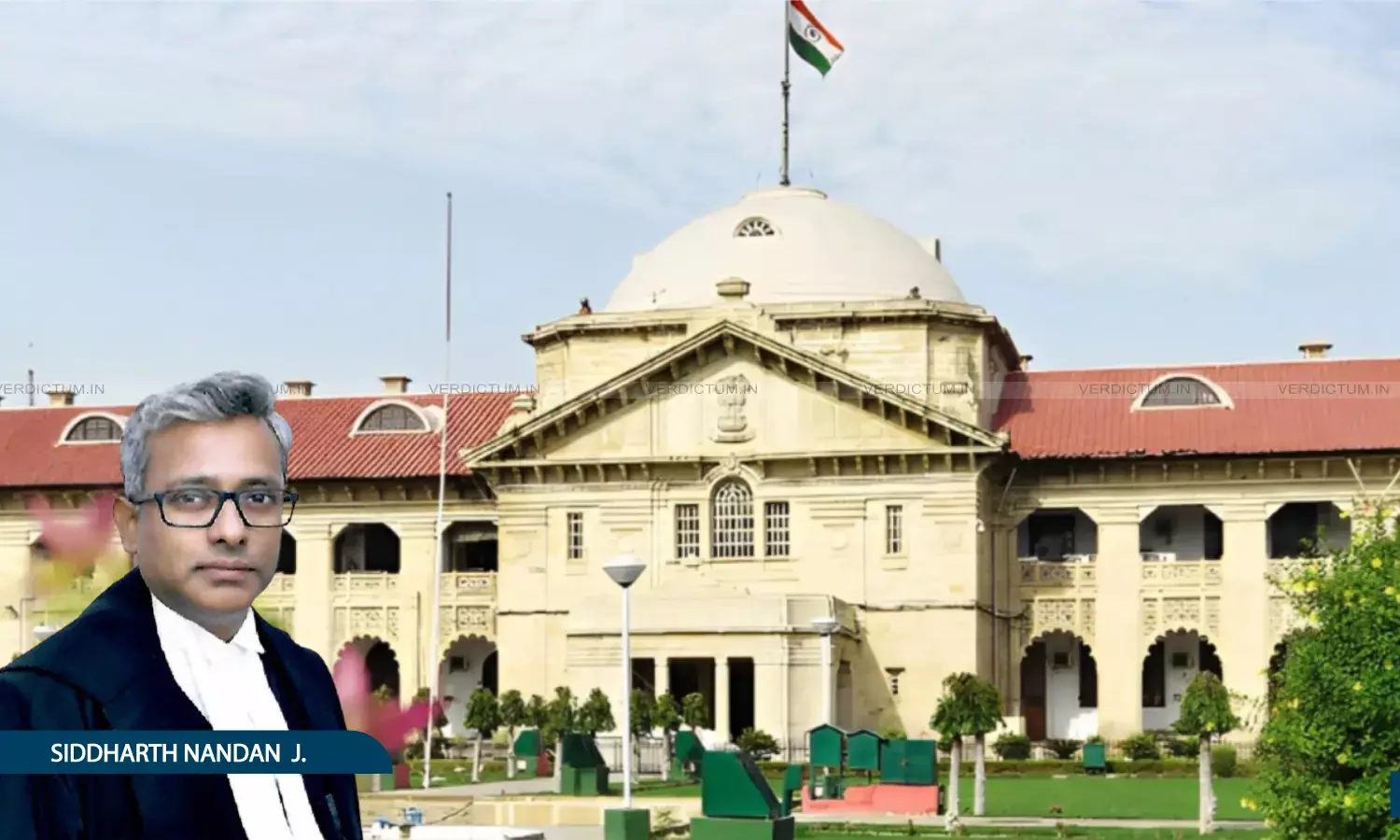
The Allahabad High Court has directed admission of a student in Class VI in Navodaya Vidyalaya holding that a birth certificate issued under a statutory provision carries a presumption of validity and cannot be doubted on the basis of medical opinion alone.
The petitioner sought a mandamus directing admission in Class VI and to keep a seat reserved, relying on the birth certificate issued by the Gram Panchayat showing date of birth as July 01, 2013 and the eligibility criteria under the Navodaya Vidyalaya prospectus.
A Bench of Justice Siddharth Nandan held, “unless and until, a document which has been issued under a statutory provision, is either cancelled or an element of forgery is proved, it shall have a binding effect on the authorities; and it is not within the domain of the authorities concerned, to doubt the certificate issued under a statutory provision, on its own whims and fancies.”
Advocate Chandra Prakash Awasthi appeared for the Petitioner and Advocate Anant Kumar Tiwari appeared for the Respondent.
The petitioner contended that the birth certificate issued under the Registration of Births and Deaths Act, 1969 carries a presumption of validity and cannot be doubted unless cancelled.
Opposing the plea, the respondents relied on a medical report of the Chief Medical Officer, Banda, stating the petitioner’s age to be about 16 years, and argued that admission could not be granted.
The Court held that once a document is issued under a statutory provision, it shall have the presumption of its validity under law and cannot be doubted on its own whims and fancies unless cancelled or proved forged. It further observed that ossification tests are not accurate and have a variation of ± 2 years, as held by the Supreme Court in Jaya Mala v. Home Secretary, Government of J&K and Vishnu Alias Undrya v. State of Maharashtra.
The Court also referred to Jarnail Singh vs. State of Haryana, observing that statutory documents like matriculation or birth certificates take precedence over medical opinion in age determination.
Finding that the birth certificate had not been controverted or cancelled, the Court held that denial of admission was not in consonance with the Right to Education Act, 2009.
Accordingly, the Court directed the respondent authority to admit the petitioner in Class VI for the academic session 2026–27.
Further, the Court issued directions to Navodaya Vidyalaya authorities to rely on statutory documents such as matriculation certificates, school records, or birth certificates, and seek medical opinion only in their absence, with a mechanism for verification from issuing authorities.
The petition was accordingly disposed of.
Cause Title: Vimal Singh v. Union of India & Ors., [2026:AHC:80210]
Appearance:
Petitioner: Advocate Chandra Prakash Awasthi
Respondents: Advocates Anant Kumar Tiwari, Gambhir Tripathi
