

State Lacks Competence To Prescribe Additional Eligibility For Drug Inspector: Allahabad High Court
Rule 8(ii)(a) to (c), U.P. Food and Drug Administration Department Gazetted Officers (Drug) Service (Third Amendment) Rules, 2015, held ultra vires.

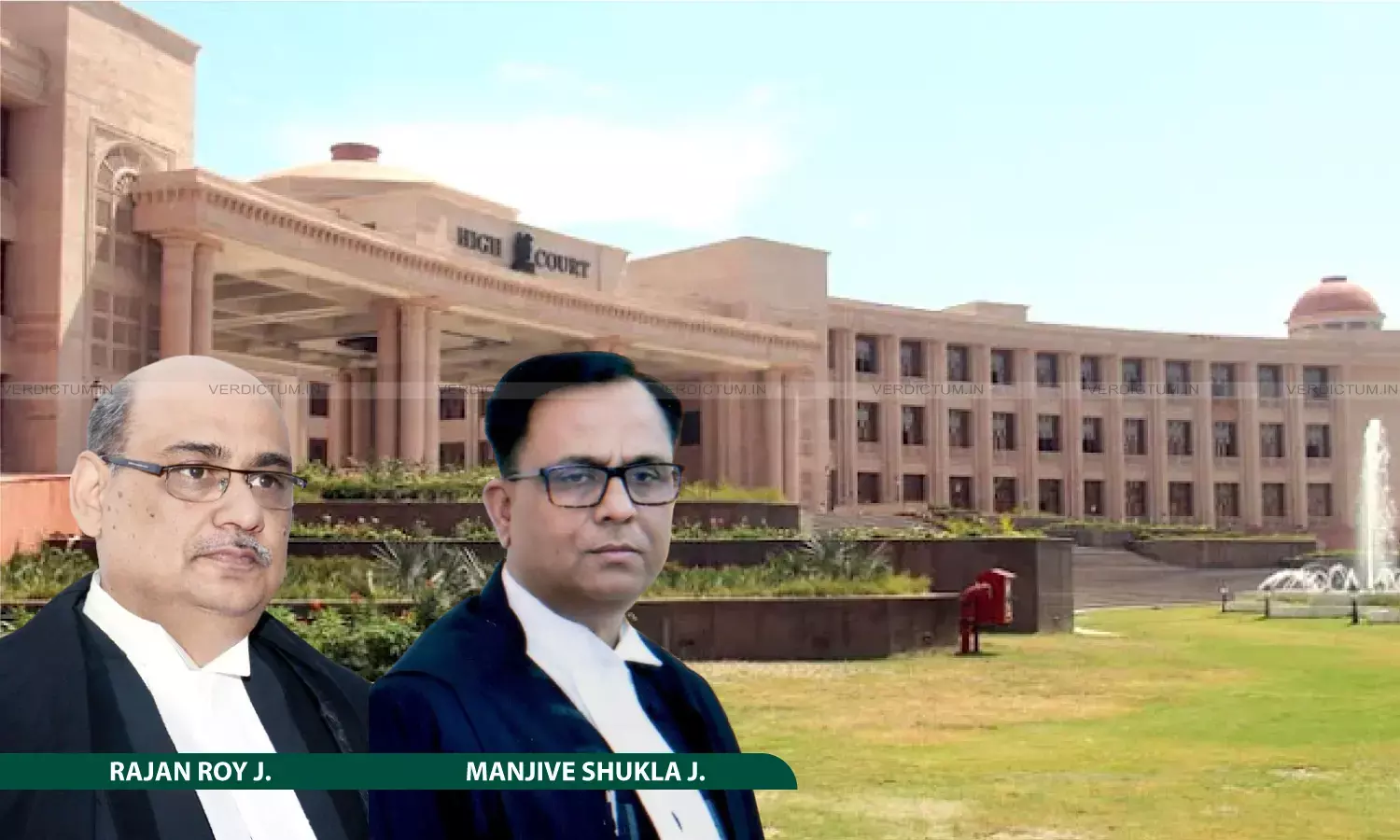
The Allahabad High Court, Lucknow Bench, has held that the State Government cannot incorporate additional experience requirements as essential qualifications for Drug Inspectors when such criteria are not mandated by the Central Government under the Drugs and Cosmetics Act, 1940. It noted that it is a central legislation referable to the Concurrent List, the field regarding the prescription of qualifications for Inspectors is entirely occupied by the Central Government.
Accordingly, it held Rule 8(ii)(a) to (c) of the U.P. Food and Drug Administration Department Gazetted Officers (Drug) Service (Third Amendment) Rules, 2015, as ultra vires. Consequently, it noted that any state-made rule under the proviso to Article 309 of the Constitution of India that conflicts with or exceeds the qualifications prescribed under Rule 49 of the Drugs and Cosmetics Rules, 1945, is legally unsustainable.
Justice Rajan Roy and Justice Manjive Shukla observed, “We find merit in the submission…as regards Rule 8 of the Rules, 2015 framed by the State Government under the proviso to Article 309 of the Constitution of India being ultra vires Section 21(1) read with Section 3(i), Section 33(2)(b) of the Act, 1940 and Rule 49 of the Rules, 1945…”.
“…The State of U.P. lacks the competence to prescribe qualification for the post of Drug Inspector in view of Section 21(1) read with Section 3(i) of the Act, 1940. Further, the Central Government, which is competent in this regard, has already prescribed the qualifications vide Rule 49 of the Rules, 1945 made under Section 33(2)(b) read with Section 21(1) of the Act, 1940…”, the Bench observed further.
Senior Advocate Anurag Shukla appeared for the respondent-appellant and Advocate R.K. Upadhyaya appeared for the Commission.
The matter pertained to a challenge to Rule 8 of the 2015 Rules, which mandated eighteen to thirty-six months of specific experience in manufacturing or testing as an essential qualification for direct recruitment to the post of Drug Inspector.
The petitioners argued that under Section 21(1) and Section 33(2)(b) of the 1940 Act, only the Central Government possesses the authority to "prescribe" such qualifications. They contended that the experience mentioned in the Central Rules is merely a condition for performing specific duties (inspecting Schedule C substances) and not an entry-level eligibility criterion.
The litigation involved a Special Appeal filed by the U.P. Public Service Commission against a Single Judge's order that had previously quashed the 2016 selection process. Simultaneously, the Court heard a writ petition challenging the vires of the 2015 Rules and the 2018 advertisement. While the Commission defended the State's power under Entry 41 of the State List to regulate public services, the petitioners relied on a recent Supreme Court precedent involving the State of Haryana to assert the "Doctrine of Occupied Field".
The Court highlighting the hierarchy of legislative powers, noted that while the State can regulate its services under Article 309, this power is displaced once the appropriate legislature intervenes. Under the 1940 Act, the term "prescribed" specifically refers to rules made by the Central Government. The Court emphasised that rules made under a specific enactment prevail over general rules made under the proviso to Article 309.
“…Apparently, under Rule 8, though, the essential qualifications as mentioned in Rule 49 of the Rules, 1945 have been mentioned but the proviso to Rule 49, which is not part of the essential qualifications prescribed by the Central Government, has been incorporated by the State Government in Rule 8 as an essential qualification which it could not have done, firstly for the reason, it lacked competence to do so, which in fact, is an error so fundamental and fatal that no other reason is required for declaring the same as ultra vires but, additionally, it is also in conflict with Rule 49 of the Rules, 1945”, it noted.
The Court, thus, partly allowed the writ petition by striking down the offending portions of Rule 8, however, it declined to quash the 2016 and 2018 selections on equitable grounds, noting that the appointed candidates had already served for several years and did possess the necessary central qualifications.
To remedy the prejudice caused to the petitioners, the Court directed the Commission to allow them to participate in the ongoing 2025 recruitment cycle, provided they meet the age and other statutory requirements. All future selections must strictly adhere to the qualifications prescribed by the Central Government.
Cause Title: U.P. Public Service Commission Prayagraj vs. Ashish Tyagi And Ors. (Neutral Citation: 2026:AHC-LKO:24035-DB)
Appearances:
Appellant: Anurag Shukla, Sr. Adv., Vineet Kumar Pandey, Advocate.
Respondent: R.K. Upadhyaya appeared for the commission, Nishant Shukla Additional Chief Standing Counsel, Advocate.