

Deprived Court Of Timely Assistance: Allahabad High Court Imposes ₹1 Lakh Cost On State For 30 Years Delay In Filing Counter Affidavit
The Allahabad High Court was considering a Petition filed by the petitioner assailing the orders whereby his appointment as a Class IV employee was annulled.

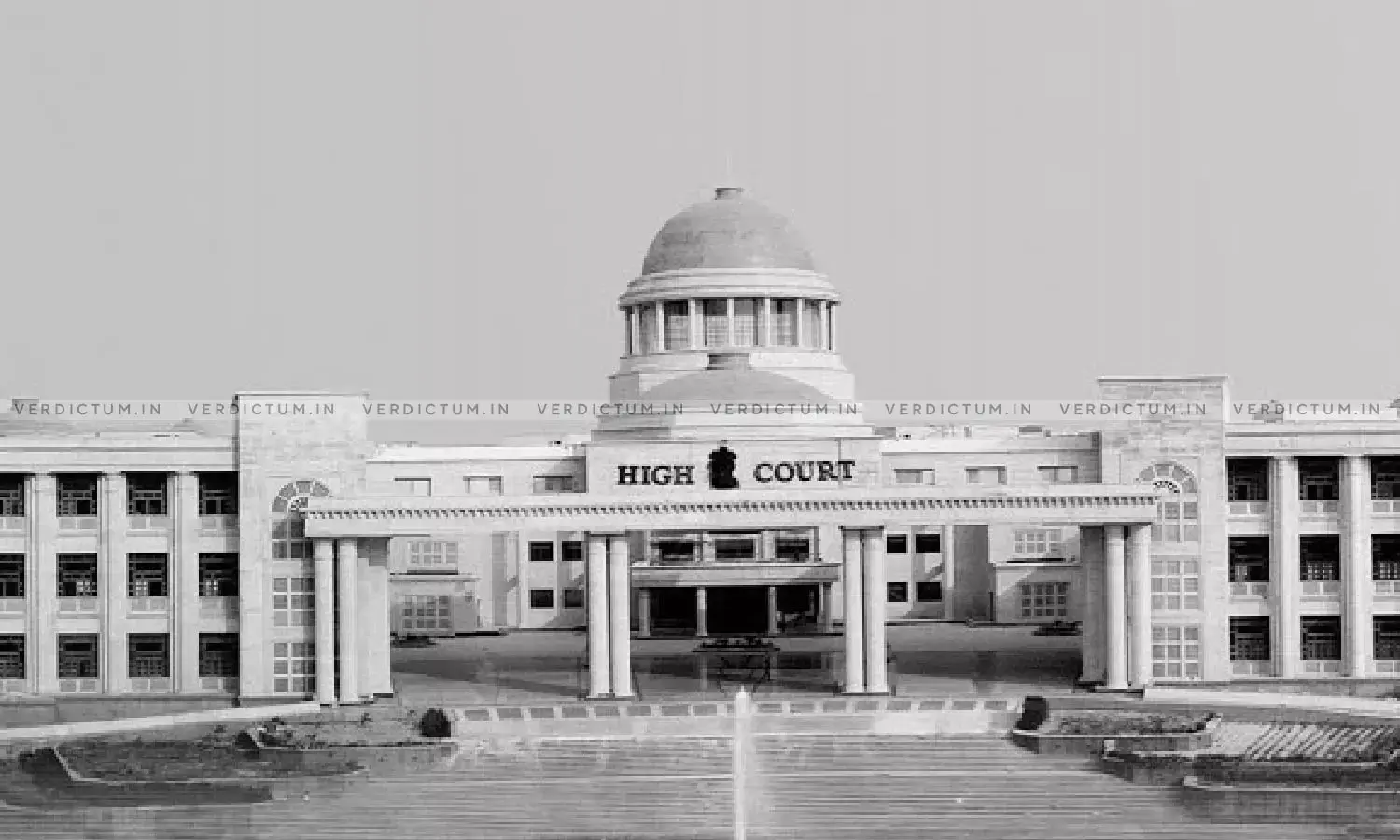
Allahabad High Court, Lucknow
The Allahabad High Court has asked the authorities to pay ₹1 lakh to a former employee while observing that the state cannot avoid responsibility for the lapse of 30 years in filing the response/counter affidavit merely because the employee failed to establish his substantive claim.
The High Court was considering a Petition filed by the petitioner assailing the orders whereby his appointment as a Class IV employee on the post of “Sahyogi” in the Bahraich District Cooperative Bank Limited was annulled, and he was consequently relieved from service. He also prayed for continuance in service together with salary and arrears.
The Single Bench of Justice Garima Prashad held, “On 02.05.1994, learned Standing Counsel accepted notice on behalf of opposite party nos. 3 to 5, and the respondents were directed to file their counter affidavits within six weeks. Opposite party nos. 3 and 4, whose action formed the basis of the impugned orders, nevertheless filed their counter affidavit only after further orders were passed in 2025. No explanation has been offered for this delay of more than three decades. During this period, the Court was also not informed that its interim direction had remained unimplemented.”
“The State cannot avoid responsibility for this lapse merely because the petitioner has failed to establish his substantive claim. The prolonged delay deprived the Court of timely assistance from the authorities concerned and allowed the issue of compliance with the interim order to remain unresolved until the petitioner had crossed the age of superannuation. The petitioner is, therefore, entitled to be compensated by way of costs, though not by the grant of service benefits to which he has established no legal right”, it added.
Advocates S.C. Sitapuri represented the Petitioner while Advocate P.K. Khare represented the Respondent.
Factual Background
The petitioner was initially appointed as a Sahyogi by an order dated September 7, 1993 and another appointment order was issued on December 22, 1993. Both orders described the appointment as wholly temporary, for a period not exceeding 89 days, and terminable without prior notice. The appointment was also made subject to the post being filled through regular selection. The petitioner’s case was that he was duly selected by the Committee of Management and the appointment order was issued pursuant to its resolution. He joined the post and continued to discharge his duties until the impugned orders were implemented in March 1994.
The respondents questioned the legality of the appointment. According to them, after the death of the then Secretary/General Manager on December 22, 1993, the Chairman authorised one Radha Mohan Singh, Junior Branch Manager, merely to look after the work of that office. Singh was neither a member of the centralised service nor competent to make appointments. It was also alleged that no lawful selection was held and that several appointment orders were issued without authority. The Deputy Registrar, Co-operative Societies annulled the authorisation as well as the appointment orders issued pursuant to it.
The Bank, in consequence, passed the order relieving the petitioner from service. When the writ petition was taken up on May 2, 1994, the Court directed the respondents to file their counter affidavits. In the meantime, the impugned order was kept in abeyance, and the respondents were directed to allow the petitioner to work and to pay him salary. According to the petitioner, this interim direction was never complied with. In his supplementary affidavit, he stated that, despite repeated representations, he was neither permitted to work nor paid any salary.
Reasoning
On a perusal of the facts of the case, the Bench noted that the two orders passed in 1993 did not appoint the petitioner on a substantive basis. On the contrary, they expressly provided that the appointment was wholly temporary, would not exceed 89 days, could be terminated without prior notice and would remain subject to the post being filled through regular selection
Considering that the petitioner had accepted the appointment on such terms, the Bench stated, “The assertion that no regularly selected candidate subsequently joined the post, even if accepted, would not convert a time-bound temporary appointment into a permanent one. The petitioner, therefore, acquired no enforceable right to continue after the expiry of the stipulated period.”
The Bench further explained that an interim order is intended to preserve the subject matter of the proceedings pending final adjudication and it cannot create or enlarge a substantive right that the petitioner did not otherwise possess. The Bench noted that the petitioner did not discharge any duties after March 1994.
The first affidavit on the record specifically complaining of continued non-compliance with the interim direction was filed on November 19, 2017, and no material was produced to show that, during the intervening period, the petitioner took steps to enforce the interim order or that his appointment was extended beyond its fixed tenure. “In these circumstances, the interim order cannot independently support a claim for salary and other service benefits extending over more than three decades”, it added.
Considering that the petitioner attained the age of superannuation on April 20, 2026, the Bench noted that a direction requiring the respondents to permit him to join or continue on the post cannot be implemented. The Bench noted that the Standing Counsel accepted notice on behalf of the opposite parties, and the respondents were directed to file their counter affidavits within six weeks. However, the Opposite parties, whose action formed the basis of the impugned orders, filed their counter affidavit after a delay of more than three decades.
Thus, dismissing the petition and discharging the interim order, the Bench imposed costs of ₹ 1 lakh upon the State having regard to the unexplained delay on the part of the State authorities and their failure to bring the non-compliance with the interim order to the notice of the Court. “Opposite party nos. 3 and 4 shall ensure that the amount is paid to the petitioner within six weeks from the date of this judgment”, it directed.
Cause Title: Uma Kant Tripathi v. C/M Bahraich Coop Bank Ltd. (Neutral Citation: 2026:AHC-LKO:67510)
Appearance
Petitioner: Advocates S.C. Sitapuri, A.M.tripathi, Sachichida Nand Shukla
Respondent: Advocates P.K. Khare, A.R. Khan, Neeraj Chaurasia, Pawan Kumar Mishra