Essentially Property Succession Issue: Allahabad High Court Dismisses Plea Seeking Ban Of UPCA And CBI Probe Into BCCI Affiliation
The Court found that UPCA’s acquisition of the assets, liabilities and functions of the erstwhile society was within the legal framework of the Companies Act, 1956, and that no mandamus could be issued to transfer those assets to the petitioner.
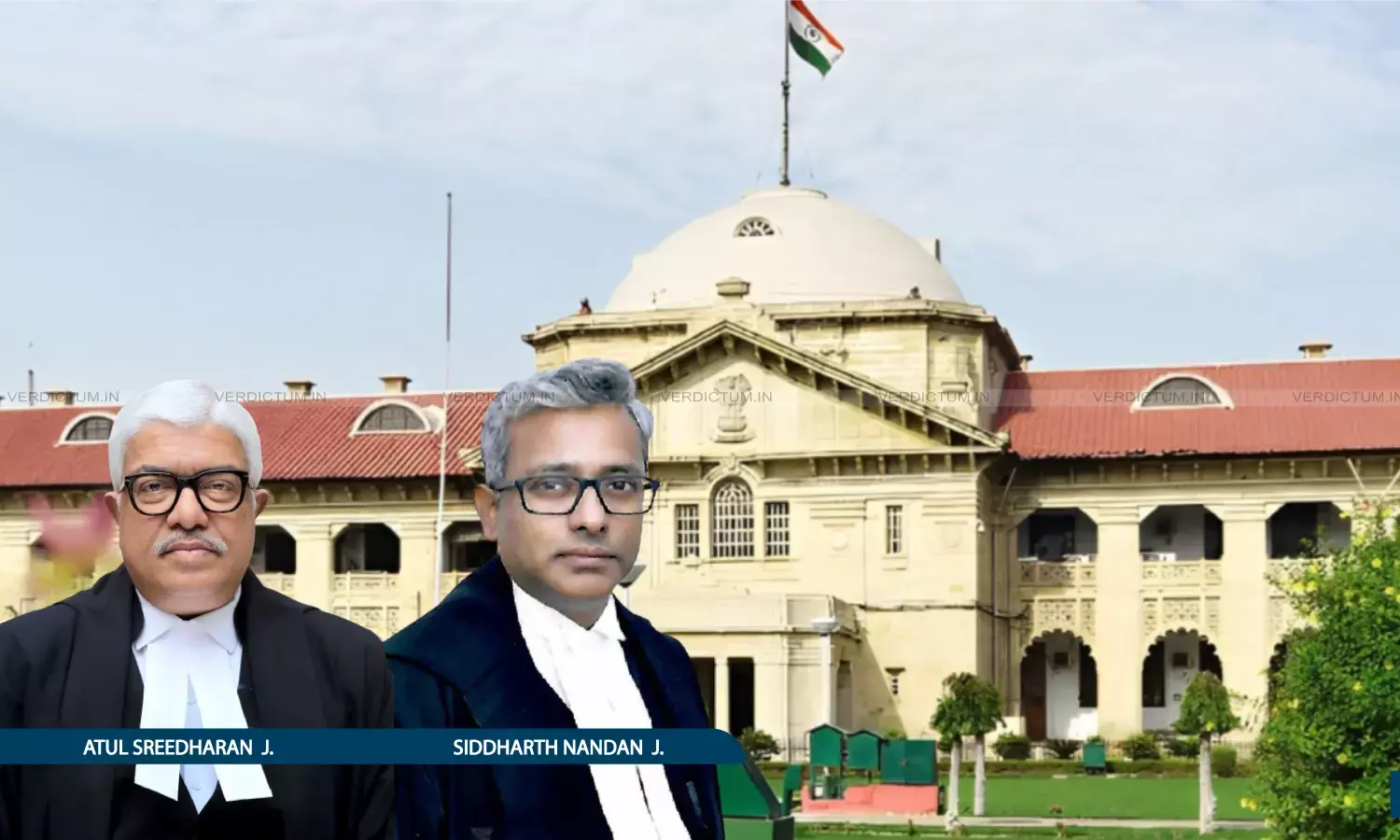
The Allahabad High Court, while dismissing a plea seeking a ban on UPCA, CBI investigation and inquiry into alleged BCCI affiliation and financial aid, has held that the dispute was essentially a private property succession issue concerning a dissolved society and did not warrant interference under Article 226 of the Constitution.
The Court was hearing a writ petition seeking, among other reliefs, transfer of assets, accounts and resources of the erstwhile society, directions against BCCI, a ban on UPCA from cricketing activities in Uttar Pradesh, CBI investigation, and constitution of a high-level committee into alleged affiliation and financial aid given by BCCI to UPCA.
A Bench of Justice Atul Sreedharan and Justice Siddharth Nandan observed: “In view of the aforesaid, this Court is of the opinion that the prayer of the petitioner to issue directions to ban UPCA or for investigation by CBI, is absolutely baseless; and is essentially a private dispute, concerning succession of property of a dissolved society, for which appropriate forums were available but still the petitioner has chosen to file the present writ petition.”
The Bench further held: “However, if so advised, the Petitioner may approach the State Government, for his grievances, confined to the interest of its members or for advancement of the cause of the Sport ‘Cricket’; but not in relation to the dissolution of “The UPCA” or the affiliation of “UPCA” with BCCI. In case he so desires, it may also seek affiliations, as per the applicable Rules and Regulations; but the same should be the sole discretion of BCCI.”
Advocate Ramesh Kumar Yadav appeared for the petitioner. Additional Advocate General Kartikeya Saran appeared for UPCA. Additional Chief Standing Counsel Rishi Kumar, Standing Counsel Manoj Kumar Mishra and Standing Counsel Chandrika Patel appeared for the State authorities. Advocate Gaurav Bishan appeared for the Registrar of Companies, and Advocate Anuj Srivastava appeared for BCCI.
Background
The petitioner claimed that the erstwhile society “The Uttar Pradesh Cricket Association”, registered under the Societies Registration Act, 1860, had not been dissolved in accordance with law and that its assets ought to vest with the Government or be transferred in favour of the petitioner.
The writ petition also sought directions to BCCI to transfer liabilities, to restrain UPCA from engaging in cricket-related activity in the State, to order CBI or other agency investigation into alleged use of property of the dissolved society, and to constitute a high-level committee into BCCI affiliation and financial assistance.
UPCA opposed the petition, contending that the erstwhile society had resolved to transfer its assets, liabilities and functions to a company incorporated under Section 25 of the Companies Act, 1956, and that the issue could not be reopened after nearly two decades.
Court’s Observations
The Court first examined whether the erstwhile society had been dissolved under Section 13 of the Societies Registration Act, 1860, and whether its assets could be transferred to a Section 25 company.
The Court noted that Section 13 permitted dissolution on a resolution by not less than three-fifths of members and that the dispute mechanism before the principal civil court would arise only if there was a dispute between the governing body or members.
The Court observed: “From the bare reading of the aforesaid section, it is evident that on a resolution being passed by not less than 3/5th of the members of the Society, the Society shall be dissolved forthwith; and only in case of any dispute with respect to the “disposal” and “settlement” of the property of the Society, between the Governing Body or the members of the Society, it shall be referred to the principal court of original civil jurisdiction of the District; and accordingly, the Court shall make such an order in the matter, as it shall be requisite.”
The Court found that there was no dispute between the governing body or members and that the resolutions had never been challenged before a competent court.
The Court held: “It is also not disputed that the Society has passed the resolution by more than 3/5th of its total members, to transfer all assets and liabilities and function to “UPCA” ; and on the same day the members of the Board also passed a resolution that all the assets, liabilities and functions of the Society, be transferred to new Society, whereafter the Society shall stand dissolved.”
The Court then considered whether the State Government’s consent was required under the second proviso to Section 13 of the 1860 Act on the ground that the Government was a member, contributor or otherwise interested in the society.
It noted that no material was placed to show State contribution or interest in the society.
The Court stated: “Be as it may, even if the Court, is required to examine, as to whether the State was actually a contributor in the Society, so as to invoke the second proviso to Section 13 of the Act, 1860, in order to examine the embargo against the resolution of the society in question without the consent of the government, on a specific query, to the learned Standing Counsel, as to whether there is anything on record, to the effect that the State was the contributor in the society, the learned Standing Counsel has fairly submitted that on the said aspect there is nothing on records, in support of his argument.”
It therefore held that Government consent was not required on the record placed before it.
The Court repeatedly emphasised the delay in approaching the writ court, noting that UPCA had been functioning as the recognised cricket body in Uttar Pradesh for around two decades.
The Court observed: “The Court is also of the view that after a lapse of more than 21 years, the said issue cannot be agitated, as UPCA is discharging certain public functions, as has been recognized in the case of Board of Control for Cricket in India (supra); and the Apex Court has also considered its affairs by constituting a Committee of Administrator (CoA) initially and thereafter on the compliances and in consideration of the Lodha’s Committee report, there has been an assumption of the office by the elected office bearers of the respondent no.7 and UPCA is a full member, with voting rights as per the constitution of the BCCI.”
The Court added that the legal personality of the company stood separately established after incorporation.
The Bench held: “Once UPCA got incorporated under Section 25 of the Act, 1956, on 13.07.2005, it acquired a distinct legal personality from the date of its certificate of incorporation.”
The Court held that since the acquisition of assets, liabilities and functions was within the legal framework, no writ of mandamus could be issued either against State authorities or BCCI.
The Court stated: “In view of the findings returned hereinabove, that the acquisition of the assets, liabilities and functions of “U.P.C.A.” (Society) was within the legal framework of the Act, 1956; no mandamus can be issued to the Authorities directing to transfer the assets, accounts and resources of “UPCA” Society in favour of the petitioner or directing the BCCI to transfer liabilities conferred by it, to the dissolved Society.”
The Court also noted that members, depositors or stakeholders aggrieved by the manner in which the affairs of the company were conducted had remedies before the National Company Law Tribunal.
The Court added: “It is also trite in law that if any member, depositor or stakeholder is aggrieved by the manner in which the affairs of respondent no.1 company are being conducted, the remedy lies before the National Company Law Tribunal under Section 241 and 245 of the Companies Act, 2013.”
On the prayer to ban UPCA, order CBI investigation, or constitute a high-level committee into BCCI affiliation and financial aid, the Court held that such relief could not be granted in writ jurisdiction on the pleadings before it.
The Court observed: “This Court does not find, good grounds to interfere at this belated stage; and similarly there cannot be any direction to constitute a high Level Committee to inquire into the matter of alleged affiliation and financial aid given by BCCI to respondent no.1.”
It further held: “In view of the aforesaid, this Court declines to issue any direction pertaining to ban, investigation by CBI or to constitute a High Level Committee to inquire into the matter of alleged affiliation and financial aid given by BCCI to respondent no.1.”
Conclusion
The High Court dismissed the writ petition after finding no ground for interference under Article 226. It refused to issue directions for banning UPCA, ordering a CBI investigation, or constituting a high-level committee into the alleged affiliation and financial aid given by BCCI.
The Court also observed that the petitioner could approach the State Government only for grievances concerning the interests of its members or advancement of cricket, but not for reopening issues relating to dissolution of the erstwhile society or UPCA’s affiliation with BCCI.
Cause Title: The Cricket Association of Uttar Pradesh v. Uttar Pradesh Cricket Association and Others (Neutral Citation: 2026:AHC:161014)