

Crowd Behaviour Science Must Be Integrated Into Planning To Prevent Mathura-Vrindavan Like Stampedes: Allahabad High Court
The High Court urged the Uttar Pradesh Government to embed crowd behaviour science into academic, administrative and planning systems, holding that Article 21 requires the State to prevent avoidable loss of life from crowd disasters caused by administrative and intellectual unpreparedness.
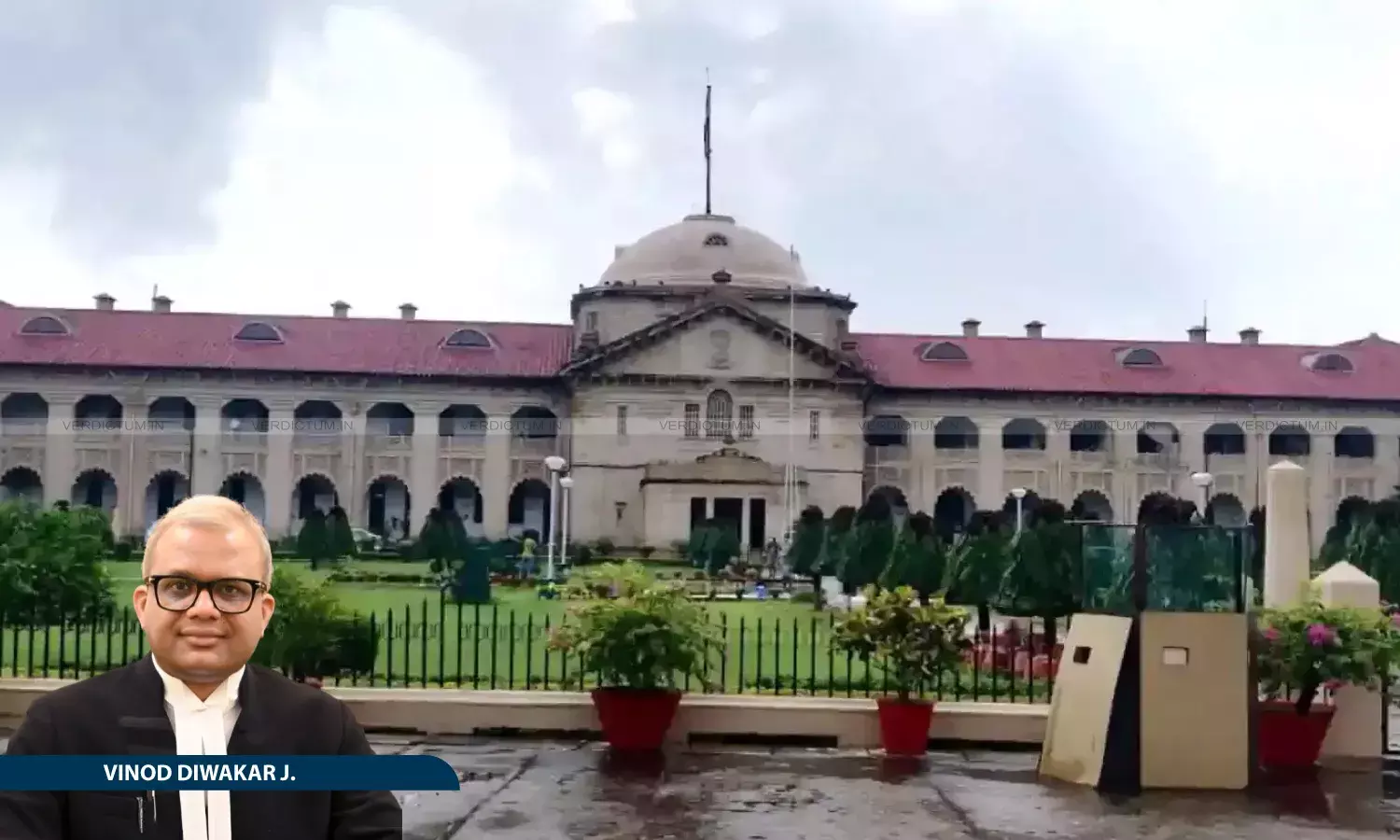
Justice Vinod Diwakar, Allahabad High Court
The Allahabad High Court has held that crowd safety at religious gatherings in Mathura and Vrindavan cannot be treated merely as a matter of traffic diversion, barricading or police deployment, and that the State’s obligation under Article 21 includes institutionalising crowd behaviour science in governance, urban planning and public-safety policy.
The Court was hearing a writ petition arising from a demolition order passed in relation to an alleged unauthorised construction in Mathura. However, noting recent crowd-crush incidents in Mathura and other pilgrimage sites, the Court expanded the scope of the matter to examine whether the district administration and statutory authorities had any scientifically informed crowd and crisis management plan.
A Bench of Justice Vinod Diwakar observed that the Mathura Vrindavan Development Authority, as the district’s spatial planning authority, must integrate crowd behaviour science into master planning, zoning and development control.
The Court held: “… the Mathura Vrindavan Development Authority, in its capacity as the spatial planning authority for the district, is obligated to integrate the findings of crowd behaviour science into its master planning, zoning, and development control processes. The width of streets, the design of access and egress points, the location and capacity of congregation spaces, the provision of emergency evacuation routes — all of these are not merely engineering decisions but crowd safety decisions, and they must be informed by a thorough understanding of how crowds behave in the specific spatial and cultural context of Mathura's religious landscape”.
The Bench further stated: “The right to life guaranteed under Article 21 of the Constitution of India is not fulfilled merely by the absence of active State violence; it imposes upon the State a positive obligation to create and maintain conditions in which human life is not lost to preventable disasters arising from the State's own administrative and intellectual unpreparedness.”
Advocate Dharmendra Kumar Gupta appeared for the petitioner, while Additional Advocate General M.C. Chaturvedi appeared for the State.
Background
The petitioner had challenged the rejection of an appeal against a demolition order under the U.P. Urban Planning and Development Act, 1973. The construction was alleged to have been raised without an approved sanction plan from the Mathura Vrindavan Development Authority.
During the hearing, the Court directed affidavits from the authorities on unauthorised constructions, demolition actions, traffic arrangements, crowd management, and whether any expert body or scientific study existed for understanding crowd behaviour in Mathura.
The affidavits referred to the 2022 stampede at Shri Banke Bihari Ji Temple, Vrindavan, in which two persons died, and described measures such as traffic diversions, barricading, queue systems, CCTV deployment, vehicle restrictions, extended darshan hours and infrastructure proposals.
Court’s Observations
The Court said the administrative material showed preparatory work on paper, but its concern was whether Mathura had a scientifically grounded crowd and crisis management framework.
The Court observed: “The Court's primary concern and emphasis was- and remains- whether the administration of the city of Mathura has any comprehensive crowd and crisis management plan, grounded in a scientific understanding of crowd behaviour, and capable of anticipating, preventing, and responding to crowd-related emergencies of the nature that have tragically manifested in recent times.”
The Bench noted that reducing crowd management to traffic diversion reflected a fundamental misunderstanding of the problem.
The Court emphasised that religious crowds have a different behavioural character from crowds at political rallies, sports events or protests.
The Bench stated: “The crowds that converge upon Mathura are, by their very nature and motivation, religious crowds- gatherings of men, women, and children drawn together by faith, devotion, and the desire for spiritual communion. A religious crowd is, in its essential character, a self-regulating assembly.”
At the same time, the Court cautioned that self-regulation does not mean self-sufficiency, because devotional crowds may be vulnerable to spatial constriction, sudden density surges and inadequate ingress or egress.
The Court also linked unauthorised construction in pilgrimage cities with crowd-crush risks, emergency access failures and fire safety hazards.
The Court observed: “The problem of unauthorized construction is not unique to Mathura. It is a pervasive and deeply entrenched challenge confronting development authorities across virtually every city and town in India. However, its manifestation in a religious city of Mathura's significance assumes an altogether graver dimension, given the direct and demonstrable causal relationship between unauthorized construction- particularly along pilgrimage routes, riverfront ghats, and congregational spaces- and the occurrence of crowd crush incidents, emergency access failures, and fire safety hazards during mass gatherings.”
The Court further remarked that unauthorised construction must be understood not as a private act alone, but as a public safety hazard affecting the urban fabric.
The Court held that crowd behaviour must be treated as an administrative necessity and not as a purely academic subject.
The Bench stated: “What is required, at the minimum, is the establishment of a permanent, multi-disciplinary expert body at the district and divisional level, comprising specialists in crowd psychology, urban planning, disaster management, civil engineering, and public health, charged with the continuous study of crowd behavioural patterns at major religious sites and events.”
It added that the U.P. Braj Teertha Vikas Parishad must act as an institutional anchor for evidence-based crowd management across the Braj circuit.
The Court recommended that the State Government introduce crowd behaviour and crowd management as academic disciplines in relevant universities and professional institutions, including courses on crowd psychology, panic propagation, density modelling, crowd risk assessment, evacuation planning, and legal frameworks governing public gatherings.
It also recommended consideration of a dedicated Center of Excellence for Crowd Science, Mass Gathering Safety, and Urban Risk Management, in collaboration with institutions such as IIT Kanpur, IIT Roorkee or another institution of national repute.
The Court further recommended mandatory engagement of qualified crowd behaviour experts and crowd safety consultants at the planning stage of major public gatherings, and integration of crowd safety norms into master plans, development control regulations and building bye-laws.
Conclusion
On the individual demolition dispute, the Court disposed of the petition with liberty to approach the MVDA afresh. It directed the authority to decide the grievance in light of State Government circulars issued in compliance with the Supreme Court’s demolition directions. Meanwhile, the impugned order was kept in abeyance.
The Registrar (Compliance) was directed to transmit the order to the Chief Secretary, Secretary, Higher Education, Chairman of the University Grants Commission, and Secretary, Higher Education, Government of India.
Cause Title: Swami Shiv Swarupanand Ji Maharaj v. State of U.P. & Others (Neutral Citation: 2026:AHC:160511)
Appearances
Petitioner: Advocates Dharmendra Kumar Gupta with Kiran Gupta
Respondents: M.C. Chaturvedi, Additional Advocate General, with Prabhakar Tripathi, Standing Counsel; Advocates D.S. Chauhan & Harsh Vardhan Gupta
