Dates Of Waqf’s Registration & Issuance Of Certificate Do Not Establish When It Was Created: Allahabad High Court Dismisses State’s Review Petition
The Court also reiterated that review jurisdiction cannot be used to reargue the merits of a concluded judgment merely because another interpretation is possible.
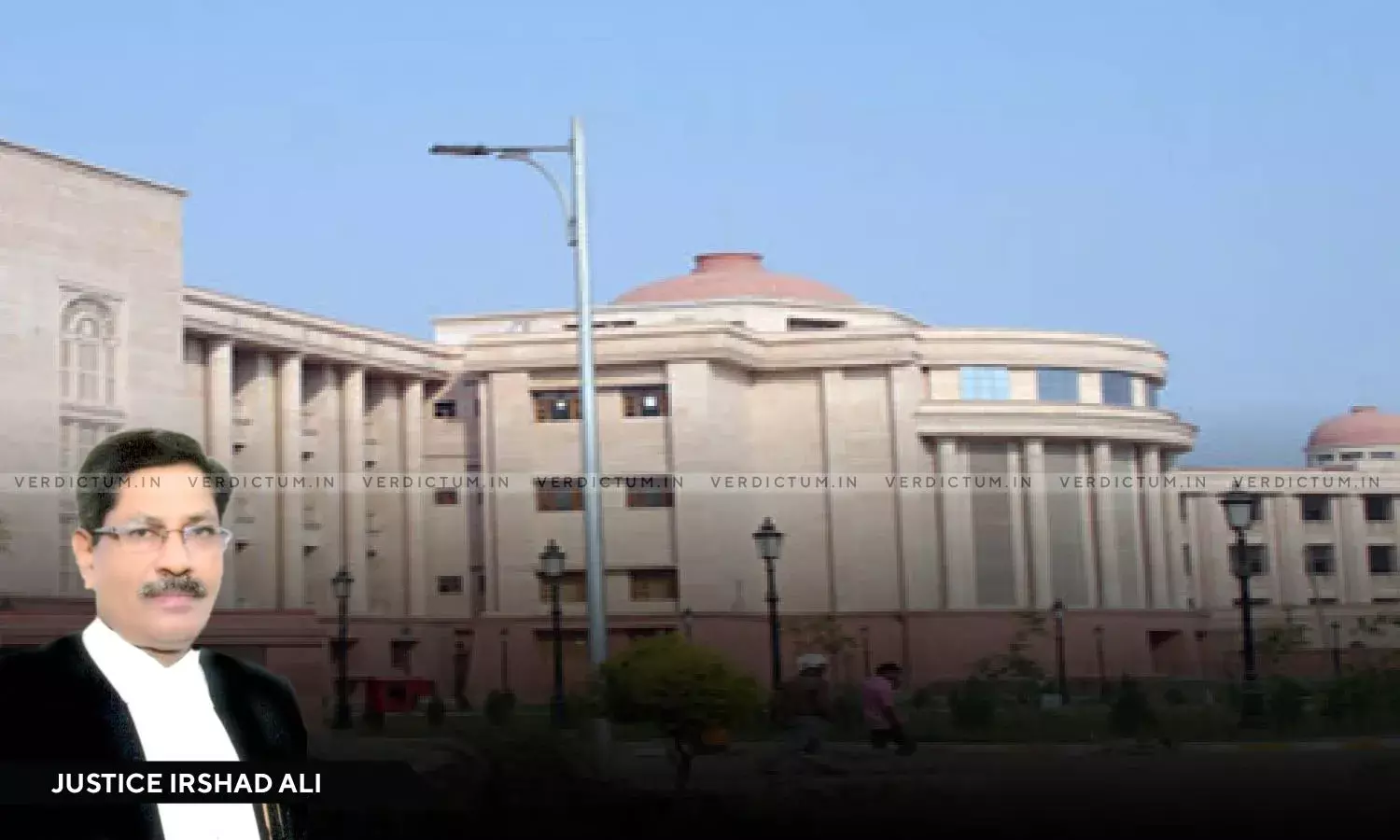
The Allahabad High Court has held that the dates of submission of an application for Waqf registration and issuance of the registration certificate, although relevant to an exemption claim, do not, standing alone, necessarily establish when the Waqf came into existence.
The High Court, accordingly, dismissed the State’s review plea against its earlier judgment quashing the land-ceiling orders.
The Court was hearing the State’s review application challenging an earlier judgment that had allowed a writ petition concerning the exemption claimed for Waqf land under Section 6(f) of the Uttar Pradesh Imposition of Ceiling on Land Holdings Act, 1960.
A Bench of Justice Irshad Ali observed: “The date of submission of the application for registration and the date of issuance of the registration certificate are circumstances which may have relevance while examining the claim of exemption; however, those dates, standing alone, do not necessarily establish that the Waqf itself came into existence after 01.05.1959.”
Additional Advocate General Pratyush Kumar appeared for the State. Senior Counsel Arif Khan appeared for the respondent.
Background
The dispute arose from ceiling proceedings in which the Prescribed Authority declared land held by the tenure-holder across several villages to be surplus. The statutory appeal against that determination was dismissed, and the authorities subsequently issued notices seeking possession of the land.
The writ petitioners claimed that the disputed land formed part of a public religious or charitable Waqf created through an oral dedication before the statutory cut-off and was, therefore, exempt under Section 6(f) of the Ceiling Act. Although the Waqf claim had earlier been accepted for land in one village, its application to the remaining holdings was disputed. A civil court subsequently declared the suit land to be Waqf property and held that possession could not be disturbed pursuant to the ceiling determination. The State’s appeal against that decree was dismissed.
The High Court later allowed the writ petition, holding that the pending ceiling proceedings had abated under the 1976 amendment and that the subsequent possession proceedings were without jurisdiction. It quashed the ceiling determination, the appellate order and the later possession order.
Seeking review, the State relied on the post-cut-off submission of the Waqf-registration application and the later issuance of the registration certificate. It also raised objections concerning the interpretation of the 1976 amendment, the availability of an alternative statutory remedy, delay in filing the original writ petition, notice to the Waqf Board and the effect of the civil decree. The respondents argued that registration was distinct from creation and that the State was attempting to reopen concluded issues without demonstrating an apparent error.
Court’s Observations
Review Jurisdiction And Delay
The Court recognised its inherent power to review judgments delivered under Article 226 of the Constitution but held that the jurisdiction was limited to recognised review grounds. It could not be converted into appellate reconsideration merely because another view was possible.
The State attributed its delay to administrative correspondence, legal opinions and approval procedures. The Court held that institutional processes could be considered but did not automatically establish sufficient cause. It added: “Consequently, even assuming that the explanation furnished by the review applicant is sufficient to explain the time taken in obtaining administrative approval, such condonation would not, by itself, entitle the review applicant to succeed on merits. The review application must independently satisfy the settled requirements governing the exercise of review jurisdiction.”
Ceiling Amendment And Waqf-Creation Claim
The State contended that the later proceedings merely implemented an existing surplus-land determination and did not involve redetermination under the 1976 amendment. The Court held that accepting this contention would require fresh interpretation of the statutory scheme and reconsideration of the conclusions reached in the original judgment.
The Court then examined whether the State’s reliance on the registration timeline disclosed an apparent error. It also observed that the different treatment of holdings in separate villages might have evidentiary relevance, but determining whether the evidence concerning each village established the exemption was a question on the merits that could not be reopened through a fresh comparative assessment in review.
The Court explained: “The distinction between the creation of a Waqf and its subsequent registration is material. The review applicant’s argument that the registration application was submitted after the prescribed date cannot, without further examination of the evidence relating to the alleged dedication and the nature of the property, automatically displace the claim of an earlier Waqf. Such an examination would involve appreciation of the material and interpretation of the statutory requirements, which is beyond the permissible scope of review unless an apparent error is demonstrated.”
Statutory Objections, Civil Decree And Alternative Remedy
The State argued that the Ceiling Act was a special enactment and that Section 66(1) of the Waqf Act could not be imported into the ceiling proceedings. The Court held that resolving the notice question and the consequence of any omission required statutory interpretation rather than correction of a patent error.
It observed: “Merely describing an enactment as a special statute does not, by itself, resolve every question concerning the interaction between two statutory enactments. The respective provisions have to be considered in the context of the controversy and the statutory rights sought to be enforced.”
The Court further noted that the original judgment had considered the civil decree declaring the land to be Waqf property and the dismissal of the State’s appeal. The State had not shown that the decree had been set aside, modified or rendered ineffective. Giving it a different legal effect would require impermissible reconsideration.
The State also relied on the appellate remedy under Section 13 of the Ceiling Act to question the maintainability of the original writ petition. Addressing that objection, the Court clarified: “The judgment relied upon by the review applicant itself recognises the constitutional power of the High Court under Article 226 and distinguishes between the existence of such jurisdiction and the circumstances in which it should ordinarily be exercised. The rule of alternative remedy is a rule of judicial restraint and does not operate as an absolute ouster of the jurisdiction of this Court.”
The decision to entertain the original writ petition, as well as the objection concerning delay in filing it, formed part of the original adjudication and could not be reopened in review without a manifest error.
No Ground For Review Established
After addressing the individual objections, the Court found that they required renewed examination of statutory provisions, documents and facts already considered, rather than correction of a self-evident error.
The Court concluded: “This Court is, therefore, of the considered opinion that the review application does not satisfy the essential requirements for invoking the limited review jurisdiction of this Court. The grounds raised therein are essentially directed against the correctness of the findings recorded in the judgment dated 20.08.2025 and would require this Court to undertake a fresh examination of the statutory provisions, documentary material and factual circumstances already considered while deciding the writ petition. Such an exercise would amount to sitting in appeal over its own judgment, which is impermissible in law.”
Conclusion
The High Court dismissed the State’s review application after finding no error apparent on the face of the record, new and important evidence or other sufficient ground for review. Its earlier judgment quashing the ceiling orders remained undisturbed.
Cause Title: State of U.P. Through Collector Faizabad and Another v. Shrimati Afsar Jahan and Others (Neutral Citation: 2026:AHC-LKO:81973)
Appearances
Applicants: Pratyush Kumar, Additional Advocate General; Nishant Shukla, Advocate
Respondents: Mohd. Arif Khan, Senior Counsel; Shadab Khan, Advocate