Reassessment Notice U/S 148 IT Act Issued To Dead Person Void Ab Initio; Proceedings Against Legal Heir Valid Only If Within Limitation: Allahabad High Court
The Court quashed reassessment proceedings initiated against a deceased assessee, holding that a jurisdictional notice under Section 148 must be issued to the correct person and that Section 159 cannot be used to cure a notice issued to a dead person.
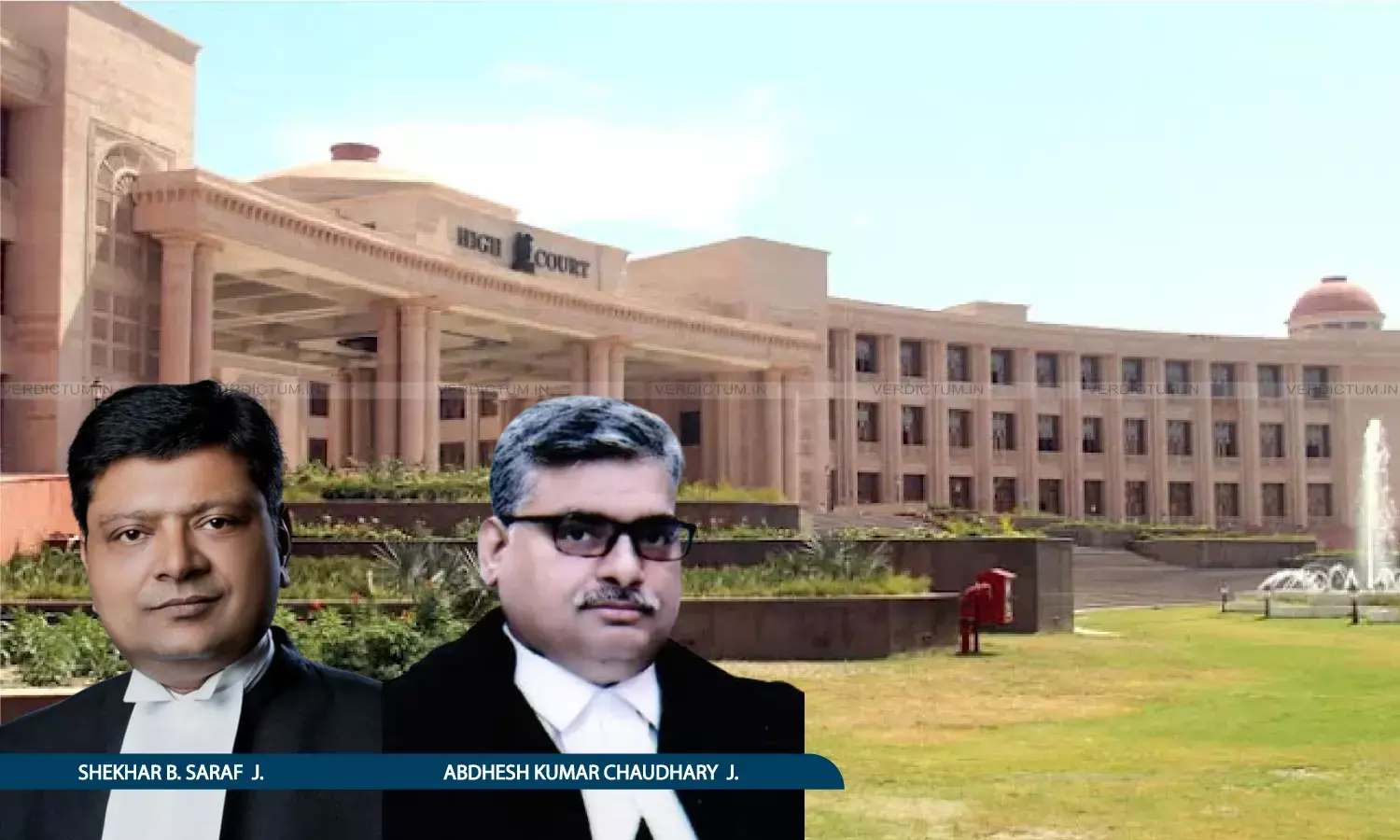
The Allahabad High Court has held that a notice under Section 148 of the Income Tax Act, 1961, for reopening past assessments is a jurisdictional notice which must be issued in the name of the correct person, and a notice issued against a dead person is void ab initio, rendering all consequential reassessment proceedings null and void.
The High Court further held that the Income Tax Department may proceed against the legal representative of a deceased assessee under Section 159 only where proceedings had first been validly initiated against the assessee during his lifetime, or where proceedings are initiated directly against the legal representative within the limitation period prescribed under Section 149.
The Court was hearing a writ petition filed by the legal heir of a deceased assessee challenging a Section 148 notice, subsequent Section 142(1) notices, rejection of preliminary objections, assessment order and demand, on the ground that the reassessment proceedings were initiated and continued in the name of a person who had already died.
A Bench of Justice Shekhar B. Saraf and Justice Abdhesh Kumar Chaudhary held: “A notice under Section 148 for reopening past years assessment is a jurisdictional notice that must be issued in the name of the correct person and not against the dead and such issuance of notice against a dead person is void ab initio rendering all the consequential proceedings as null and void.”
The Bench further held:“The department can continue reassessment proceedings against the legal representative of the deceased assessee invoking Section 159 if the notice at the very first instance was issued on the assessee when he was alive [Section 159(2)(a)]; and after his death against the legal representative/heir of the deceased assessee within the prescribed limitation under Section 149 of the Act [Section 159(2)(b)].”
Advocates Kartikey Dubey and Ramesh Chandra Mishra appeared for the petitioner, while Advocates Kushagra Dikshit and Paavan Awasthi appeared for the respondents.
Background
The reassessment proceedings arose from alleged cash transactions connected with purchase of a residential flat. The assessee died before the notice under Section 148 was issued. After his death, an income tax return was filed in his name through electronic verification.
The Department later issued a Section 148 notice in the deceased assessee’s name. When the legal heir objected that the proceedings were void, the Department rejected the objection, principally stating that it had not been informed about the death and that the filing of the return in the deceased assessee’s name amounted to misrepresentation.
The Department thereafter substituted the legal heir’s name and proceeded to pass an assessment order and demand. This was challenged before the High Court.
Court’s Observations
The Court held that the foundation of reassessment jurisdiction under Section 147 is a valid notice under Section 148. A notice to a dead person, it said, is not a procedural mistake but a jurisdictional defect.
The Court observed: “Following the settled line of authorities, including Alamelu Veerappan (Supra), Savita Kapila (Supra), Vanitha Gopal Shetty (Supra) as well as the judgment of the Supreme Court in Spice Infotainment (Supra) and Bhupendra Bhikhalal (Supra), we may unequivocally hold that notice under Section 148 of the Act against a dead person is void ab initio rendering all the proceedings pursuant thereto as null and void.”
The Bench added that proceedings under Section 159 could not be continued against the legal heir where the very initiation was against a deceased person. The Bench remarked: “For proceeding against the legal representative of the deceased the notice under Section 148 ought to have been issued against the legal representatives of deceased assessee at the first instance within limitation. Since, the statute does not provide for intimation of death of deceased to the department, such duty with regard to factum of death cannot be cast upon the legal representative.”
The Department argued that the defect was curable under Section 292B. Rejecting this, the Court held that the provision saves technical mistakes only where the notice is in substance in conformity with the Act.
The Court stated: “Section 292B, provides for curing the defect of the notice issued if the notice is in substance and in conformity with the intent and purpose of the Act. Indubitably, the issuance of notice against a dead person, in substance is not in conformity with the provision of Section 148 which is the foundation for reopening an assessment and jurisdiction can only be acquired, if the notice is issued to the correct person. Issuance of notice to a dead person is not merely a procedural error but a jurisdictional error that renders the entire proceedings void.”
The Court further held: “The revenue cannot validate a notice under Section 148 against a dead person by invoking Section 292B as it is not a mere procedural defect. Ergo, the notice issued against a dead assessee is void ab initio that cannot be cured taking recourse to Section 292B.”
The Court also rejected the contention that participation by the legal heir or filing of responses could cure the defect under Section 292BB.
It noted: “From the perusal of Section 292BB it is clear that it applies only to two types of proceedings; namely when the assessee had himself appeared, and secondly, when the assessee had cooperated in the enquiry. In the present case, the assessee was dead at the time of issuance of notice. It was the assessee's wife who appeared and allegedly cooperated in the proceedings.”
The Bench underscored: “The primary condition for invocation of Section 292BB is absent in the present case. Section 292BB is in place to take care of contingencies where assessee is put on notice of the initiation of proceedings.”
The Court held that waiver, acquiescence or consent cannot confer jurisdiction where the statute does not.
The Court rejected the Department’s plea that reassessment should be sustained to protect public revenue, observing that taxing statutes must be construed strictly.
The Court held: “Equity and tax are strangers to each other. If a particular income is exigible to tax under the taxing statute, then the individual may be taxed and if inexigible, then cannot be taxed.”
It also held that equitable considerations cannot be used to supply a statutory deficiency or validate proceedings initiated without jurisdiction.
The Department also contended that if the notice was quashed, a fresh notice could be issued to the legal representative by invoking Section 150. The Court rejected this argument, holding that an order quashing a void Section 148 notice does not amount to a “finding” or “direction” under Section 150(1).
The Court observed: “Where the time prescribed under Section 149 for issuance of a notice under Section 148 has expired, the Department cannot revive a time-barred proceeding merely on equitable considerations or by relying upon Section 150(1). Consequently, if the limitation prescribed under Section 149 has lapsed, the issuance of a fresh notice to the legal representative is impermissible in law and the reassessment proceedings are barred by limitation.”
Before parting, the Court criticised the Department’s handling of the matter and observed: “The Income Tax Department, armed with the vast machinery of the State and entrusted with the solemn responsibility of administering a complex fiscal statute, proceeded to initiate, pursue, and conclude reassessment proceedings initiated against a dead person undeterred by categorical intimations of his death, and apparently oblivious to the foundational legal principle that a dead person is not a legal entity and cannot be subjected to reassessment proceedings.”
The Court further remarked: “To tax the dead is, in the rudimentary sense, a contradiction in terms, for taxation, as a statutory exercise of sovereign power, operates upon living persons possessed of legal personality, capacity to respond, and ability to participate in proceedings. A dead man can do none of these things.”
Conclusion
The High Court quashed the Section 148 notice and all consequential proceedings, orders and demands.
In its epilogue, the Court noted that the case revealed a lacuna which may prejudice revenue, but held that the Court could not rewrite a taxing statute. It directed the transmission of the judgment to the Ministry of Finance for consideration of possible legislative amendments.
Cause Title: Smt. Asha Dubey v. Union of India and Others (Neutral Citation: 2026:AHC-LKO:48354-DB)
Appearances
Petitioner: Advocates Kartikey Dubey and Ramesh Chandra Mishra
Respondents: Additional Solicitor General of India with Advocates Kushagra Dikshit and Paavan Awasthi