

Code On Social Security, 2020 Overrides U.P. Financial Handbook’s Two-Year Bar On Second Maternity Leave: Allahabad High Court
The Bench noted that the Code contains no stipulation prescribing time gap between first and second child, while setting aside rejection of leave to two staff nurses.

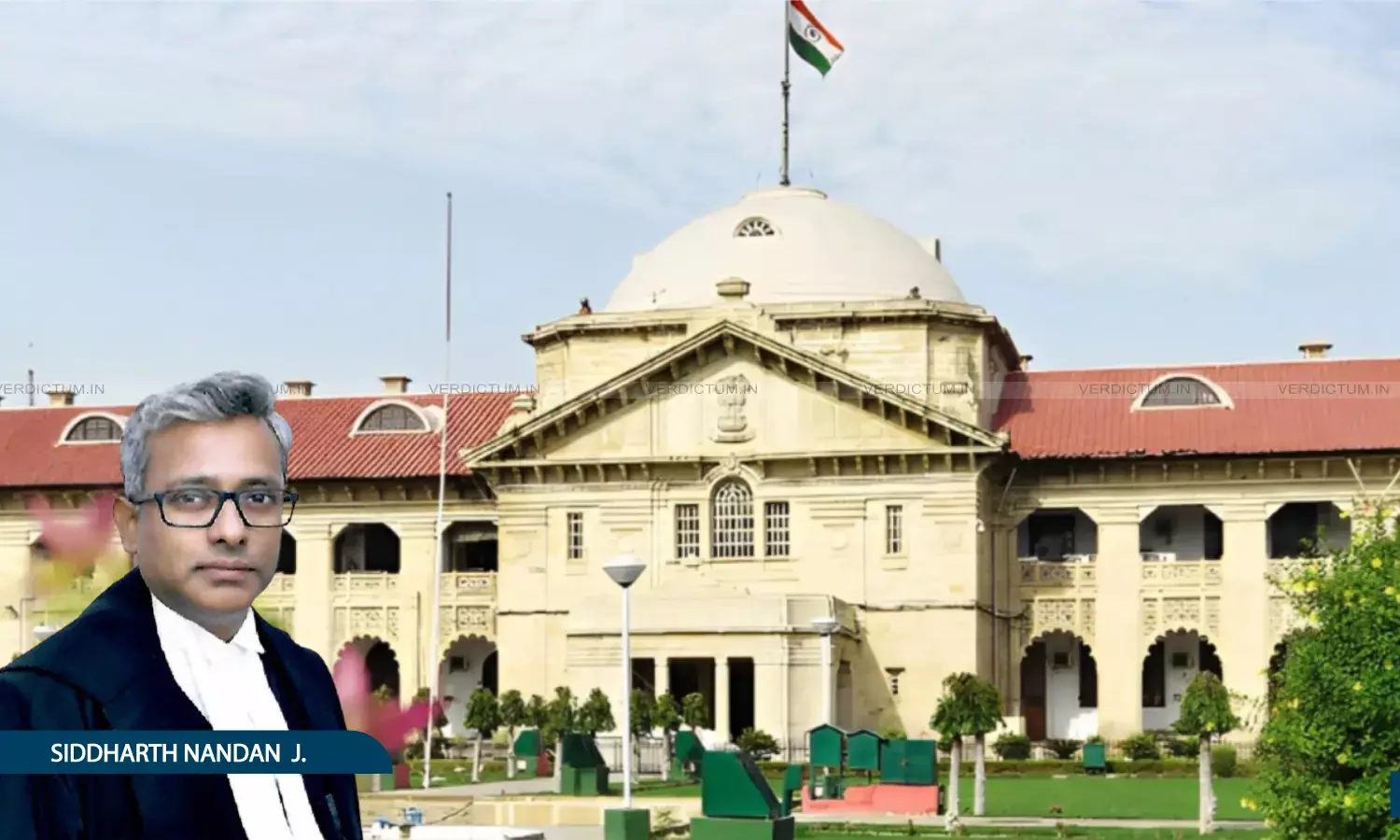
The Allahabad High Court has held that the Code on Social Security, 2020 shall prevail over any executive instructions, including Rule 153(1) of the U.P. Financial Handbook, quashing orders that had rejected maternity leave applications of two staff nurses on the ground that two years had not elapsed since their earlier spell of maternity leave.
The Court further held that the stipulation contained in Government Order dated December 08, 2008 and Rule 153(1) of the Financial Handbook "cannot be permitted to override or curtail" the benefits conferred under the Code, 2020, since Section 161 of the Code accords it overriding effect over any inconsistent law, whether enacted before or after its commencement.
A Single Judge Bench of Justice Siddharth Nandan allowing a writ petition filed by two Staff Nurses/Nursing Officers employed under the Department of Medical Education, Government of Uttar Pradesh, observed, “…the provisions of The Code, 2020 shall prevail over any executive instructions, including Rule 153(1) of the Financial Handbook, Volume II, Part 2 to 4, which has also been read down by a Coordinate Bench of this Court in Smt. Anupam Yadav (supra) in relation to the grant of maternity benefits for the second pregnancy. The said benefits, therefore, shall be governed by the provisions of the Code, 2020; which does not put any embargo, by way of a timeline, between two pregnancies”.
“The entire scheme of the Code, 2020, does not contain any stipulation prescribing a time gap between the birth of the first and second child, as has been provided under Rule 153(1) of the Financial Handbook”, the Bench further noted.
Advocate Mohammed Iftekhar Farooqui appeared for the petitioner and Advocate Rajan Sharma appeared for the respondent.
In the matter, both petitioners, having earlier availed 180 days' maternity leave in 2024 for their first child, applied afresh upon their second pregnancy in January 2026. Their applications were rejected by the respondent authority solely on the ground that two years had not elapsed since the earlier leave, relying on Government Order dated December 08, 2008 and Rule 153(1) of the Financial Handbook applicable to the Department of Medical Education.
The State relied on a Coordinate Bench decision in Renu Chaudhary v. State of U.P., distinguishing it on the ground that it concerned an employee of the U.P. Basic Education Board to whom the erstwhile Maternity Benefit Act, 1961 did not apply.
Examining Articles 38, 39, 42, 43 and 15(3) of the Constitution, the Court noted, “…Article 39 of the Constitution of India provides that the citizens, men and women equally, have the right to an adequate means of livelihood; and that the health and strength of workers, both men and women, are not abused or forced by economic necessity to enter into avocations unsuited to their strength”.
Framing the issue as whether maternity relief could be curtailed by executive instructions or must yield to Parliamentary legislation under Entry 24 of List III, the Court noted that no Presidential assent under Article 254(2) had been obtained for any State law overriding the Code, 2020, and that no such conflicting State legislation existed in any event.
It relied upon Smt. Anupam Yadav v. State of U.P.& 2 Others Writ-A No. 9535 of 2022 and the Division Bench ruling in Dr. Rachna Chaurasiya v. State of U.P. & Ors. 2017 (11) ADJ 399 (DB), holding their reasoning, rendered under the 1961 Act, equally applicable to the pari materia provisions of the Code, 2020.
Accordingly, the Court set aside the impugned orders dated January 09, 2026 and January 06, 2026, and directed the respondent authority to decide fresh applications submitted by the petitioners in light of the Code, 2020, within two weeks of filing, without any timeline-based embargo between two pregnancies.
Cause Title: Shikha Yadav and Another v. State of U.P. and 2 Others, Writ-A No. 9299 of 2026
Appearances:
Petitioners: Mohammed Iftekhar Farooqui and Jeeshan Ahmed Siddiqui, Advocates.
Respondents: Additional Chief Standing Counsel, and Rajan Sharma, Advocate, for the Respondents.