Electrohomeopathy Certificate Does Not Entitle Practitioner To Practice Allopathy: Allahabad High Court
The High Court dismissed a plea seeking permission to reopen a sealed clinic and practise modern medicine, holding that public health regulations validly restrict medical practice to persons holding recognised qualifications and registration.
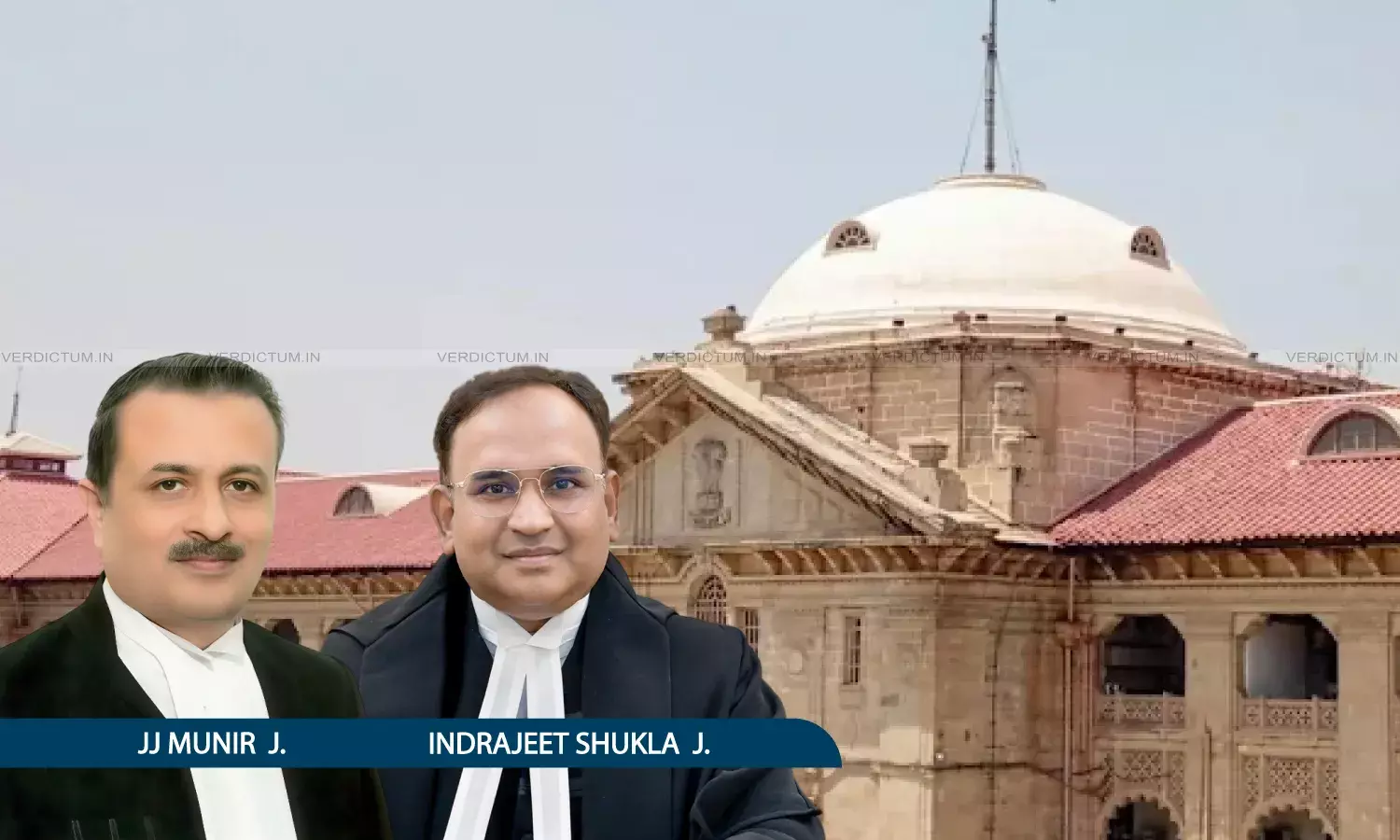
An electrohomeopathy certificate cannot be used as authority to practise modern medicine or allopathy, the Allahabad High Court has held, observing that a person who lacks qualification in a particular system of medicine cannot claim a right to treat patients under that system.
The Court was hearing a writ petition challenging the sealing of a clinic and seeking a direction to the State authorities to permit the petitioner to operate the clinic and practise modern medicine.
A Bench of Justice J.J. Munir and Justice Indrajeet Shukla dismissed the plea, holding that “the inescapable conclusion is that the petitioner is not entitled to practice modern medicine (allopathy) on the strength of his electrohomeopathy certificate. More so, his clinic/hospital also failed to meet the standards prescribed by various Government Orders as well as the National Commission for Indian System of Medicine (NCISM) Act, 2020.”
Advocate Ashok Kumar Singh appeared for the petitioner, while Standing Counsel Akhilesh Kumar Tripathi appeared for the State authorities.
Background
The petitioner claimed that he had obtained a vocational certificate in Community Health from the National Institute of Open Schooling and that, on the strength of that certificate and his experience, he was eligible to practise modern scientific medicine.
The Chief Medical Officer had earlier asked him to submit his degrees and educational record showing his entitlement to practise medicine. After notices and representations, the authority rejected his claim, observing that he was treating patients with allopathic medicines without being registered with the office of the Chief Medical Officer, and that no registration or operation of a clinic could be permitted on the basis of a degree in electrohomeopathy.
The authority also recorded that a certificate or diploma in electrohomeopathy could not permit practice in allopathic medicine, and that the clinic did not satisfy the required standards, including biomedical waste management, fire safety clearance, and infection prevention and control requirements.
The petitioner argued that adequate hearing had not been granted, that the action against him was motivated, and that the right to practise a profession, including medicine, was protected under Article 19(1)(g) of the Constitution.
The State, opposing the petition, submitted that an electrohomeopathy certificate could not confer authority to practise modern medicine and that the order sealing the clinic was legally valid.
Court’s Observations
The Court began by emphasising that protection of public health is a core responsibility of the State, and that medical practice is not an unregulated occupation.
The Court observed: “The health of public at large is the primary responsibility of the State Government. As such, any quack cannot be permitted to play with the health of the general public. The practice of medicine is regulated by the Statutes and Government Orders, which occupy the field and prescribe standards. It is the State’s duty to protect public health from unqualified practitioners.”
Referring to Poonam Verma v. Ashwin Patel (1996) and Dr Mukhtar Chand v. State of Punjab (1998), the Court noted that a practitioner registered under one system of medicine cannot cross over into another system without the requisite qualification and registration.
The Court held: “It is well settled that a practitioner registered under one system of medicine cannot transgress and practice another system, particularly ‘allopathy’ without requisite qualification and registration, and that doing so amounts to negligence per se exposing both the practitioner and the public to grave risk (see Poonam Verma Vs. Ashwin Patel (1996) 40 SCC 332). Likewise, the Supreme Court has held that a practitioner of Indian system of medicine is not entitled to prescribe allopathic drugs unless expressly permitted by the governing statute or rules framed thereunder (see Dr. Mukhtar Chand Vs. State of Punjab (1998) 7 Scc 579).”
The Court rejected the petitioner’s claim that his certificate could authorise him to practise modern medicine.
The Bench stated: “The petitioner’s certificate in electrohomeopathy by no stretch of imagination can be said to be a valid degree/diploma entitling him to practice modern medicine (allopath).”
It further found that the clinic had not merely failed on the question of qualification, but also on regulatory compliance.
The Court noted: “Having considered the rival submissions advanced by parties and perused the record, it comes out that the petitioner though in possession of a certificate in electrohomeopathy is not thereby entitled to practice modern medicine, particularly the allopathic system. The seal on the petitioner’s clinic has been declined to be removed for the reason that it does not meet the standards to operate a hospital/clinic, and even unqualified doctors were found to be practicing modern medicine on the premises of the hospital in question.”
The Court also made a clear distinction between lawful medical practice and treatment by a person not qualified in the relevant system.
The Bench observed: “A person, who does not have knowledge of a particular system of medicine but practices in that system is a quack and a mere pretender of medical knowledge or skill or to put it differently, can be maximum termed a charlatan.”
The Court held that allopathic practice requires a recognised medical qualification and that permitting unqualified persons to practise would directly conflict with the governing statute.
It added that the petitioner’s clinic was admittedly not registered with the Chief Medical Officer, which was necessary for practising modern medicine and treating patients.
The Court stated: “The petitioner’s clinic is admittedly not registered with the office of Chief Medical Officer, which is a sine qua non for practicing modern medicine and treating patients.”
Rejecting the argument based on the right to practise a profession, the Court held that Article 19(1)(g) is subject to reasonable restrictions in the interest of the general public.
The Court observed: “The right to practice a profession under Article 19(1) (g) of the Constitution of India is not an absolute right and remains subject to reasonable restrictions that the State may impose in the interest of the general public under Article 19(1) (g) of the Constitution of India (see Chintaman Rao Vs. State of M.P., AIR 1951 SC 118). Regulatory measures ensure that only qualified and registered persons practice medicine and the clinical establishment meet prescribed standards. Such restrictions are legitimate and proportionate restriction in the interest of public health and cannot be said to offend Article 19(1) (g) of the Constitution of India (see State of Gujarat Vs. Mirzapur Moti Kureshi Kassab Jamat, (2005) 8 SCC 534).”
The Court also said that while exercising jurisdiction under Article 226, it could not substitute its own view for the findings of competent expert authorities.
Conclusion
The High Court held that the petitioner was not entitled to practise modern medicine on the basis of an electrohomeopathy certificate, and that his clinic had also failed to meet prescribed statutory and regulatory standards. Accordingly, the writ petition was dismissed, with no order as to costs.
Cause Title: Santosh Kumar Sharma v. State of U.P. and 5 Others (Neutral Citation: 2026:AHC:138560-DB)
Appearances
Petitioner: Ashok Kumar Singh with Pratibha Singh
Respondents: Akhilesh Kumar Tripathi, Standing Counsel