

Forwarding Citizen’s Grievance Without Coercive Direction Not Criminal Conspiracy: Allahabad High Court Dismisses Plea Against Cabinet Minister
The High Court said Section 199 BNSS applies only where the consequence relied on is legally relevant to the alleged offence, and not to remote or collateral effects pleaded to create territorial jurisdiction.
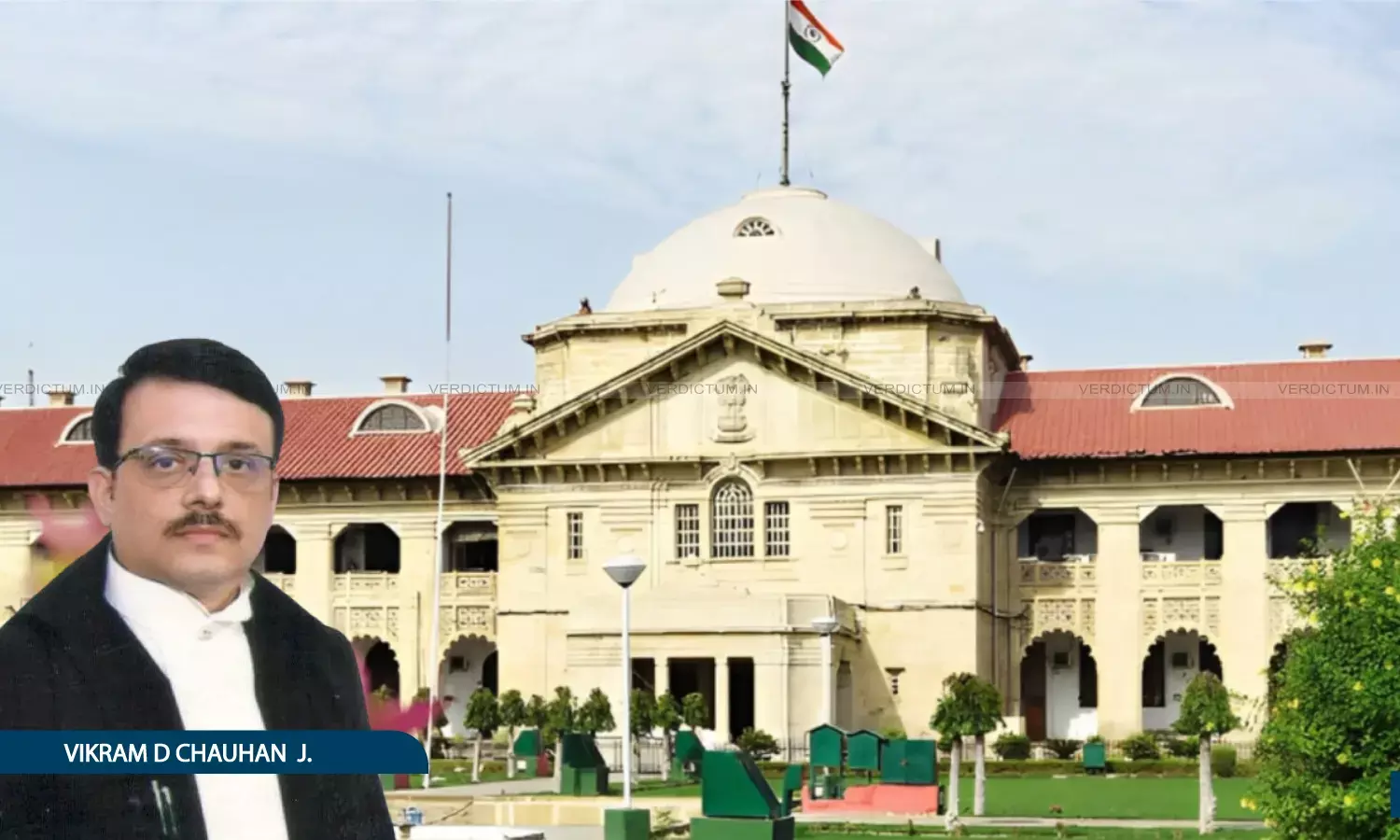
The Allahabad High Court has dismissed a criminal revision seeking action against a Cabinet Minister in Uttar Pradesh over a letter forwarding a citizen’s grievance to the Home Department, holding that such forwarding, without any positive or coercive direction, did not disclose criminal conspiracy under Section 61 of the Bharatiya Nyaya Sanhita, 2023.
The Court was hearing a criminal revision challenging the rejection of an application under Section 175(3) of the Bharatiya Nagarik Suraksha Sanhita, 2023, by which the revisionists had sought registration of a first information report and investigation against the Cabinet Minister for alleged delay and interference in an earlier investigation.
A Bench of Justice Vikram D. Chauhan observed, “It is further to be noted that opposite party no.2 is an elected representative and, therefore, citizens may approach an elected representative for redressal of their grievances. An elected representative may, in turn, forward such grievance to competent department for consideration and action in accordance with law. Mere forwarding of a citizen’s grievance, (in the absence of any positive or coercive direction in favour of the person making the representation), does not disclose an agreement to commit an illegal act or to procure an illegal result. In the present case, letter dated 16.07.2024 contains no positive direction, command, or instruction to delay, obstruct, or otherwise interfere with investigation. It only recommends or requests that action be taken in accordance with law. Thus, said letter dated 16.7.2024 and act of opposite party no.2 does not disclose the essential ingredients of criminal conspiracy under Section 61 BNS, 2023.”
The Bench further held, “In view of above, letter dated 16.07.2024, being a mere forwarding of a representation for action in accordance with law, does not disclose any agreement to commit an illegal act or to employ illegal means. Therefore, does not constitute an offence under Section 61 BNS, 2023 and, as a result, no consequences can be said to have ensued from the alleged act in respect to Section 61 of BNS, 2023. Further, investigation was conducted at Meerut & not at Mathura, and no consequence constituting alleged offence ensued at Mathura. Section 199 of BNSS, 2023 is consequently, not attracted, since neither alleged criminal act nor any legally relevant consequence of such act occurred within territorial jurisdiction of court at Mathura. The fact that representation was acted upon only after submission of charge-sheet and taking of cognizance further negatives any allegation of delay or interference with investigation.”
Advocate Rreena N. Singh appeared for the revisionists. Additional Advocate General Manish Goyal appeared for the State. Advocate Ashutosh Kumar Sand appeared for the respondents.
Background
The dispute arose from an earlier vigilance case concerning allegations that a disputed property at Vrindavan had been recorded in the name of another person on the basis of an alleged forged will. The investigation in that earlier case was being conducted at Meerut, and the Court noted that the Cabinet Minister was neither named in the earlier first information report nor shown as an accused in the subsequent charge-sheet.
The revisionists alleged that the Minister’s letter forwarding a representation seeking further verification of the disputed document amounted to interference in the investigation. They argued that although the letter was written at Lucknow and the investigation was at Meerut, the consequences ensued at Mathura because the property in dispute was situated there.
The court of first instance rejected the Section 175(3) BNSS application on the ground that the Mathura court lacked territorial jurisdiction. The revisionists then approached the High Court.
Court’s Observations
The Court held that the power under Section 175(3) BNSS is tied to the investigative jurisdiction contemplated under the BNSS and cannot be used to compel investigation outside the Magistrate’s territorial competence.
The Court observed, “Under section 175(3) of BNSS, 2023, the power of Magistrate is jurisdictionally anchored to Section 175(1)/Chapter XIV of BNSS, 2023 in terms that it cannot be used to compel an investigation, the local police could never have lawfully undertaken and cannot be directed at a police officer outside the Magistrate's own territorial jurisdiction. A Magistrate who could not himself try or commit the offence for want of territorial jurisdiction is, equally incompetent to set the investigative machinery of police in motion for an offence wholly outside that jurisdiction in terms of section 175 of BNSS, 2023 read with chapter XIV of BNSS, 2023.”
On the allegation under the Prevention of Corruption Act, 1988, the Court found that the alleged consequence of delay or interference in investigation could not complete the ingredients of an offence under Section 13.
The Court held, “The consequence which ensues as per learned counsel for revisionist is the delay and interference in the investigation of previous first information report dated 7.4.2022. Such allegation (of delay and interference in investigation) cannot be construed as a consequence of alleged act of opposite party no.2 being part of offence under section 13 of Prevention of Corruption Act, 1988, in terms of section 199 of BNSS, 2023. As observed hereinabove, consequences must be part & parcel of alleged offence and must complete the definition of alleged offence. Therefore, alleged consequences (of delay and interference in investigation) has no direct nexus or ensuing consequences of offence under section 13 of Prevention of Corruption act, 1988. In view of above, once there is no offence as detailed hereinabove and no consequences ensued then question of jurisdiction arising from offence under section 13 (2) of Prevention of Corruption Act, 1988 does not arise at Mathura. Similarly, section 12 of Prevention of Corruption Act, 1988 would not arise against opposite party no.2 in the facts and circumstances of the case as there is no allegation of abetment of offence under Prevention of Corruption Act, 1988 against opposite party no.2.”
The Court added, “Even otherwise, consequence of delay and interference in investigation as a result of abovementioned letter dated 16.7.2024 is not an act/offence connected in any manner with any offence under Prevention of Corruption Act, 1988. More particularly, when there is no allegation of corruption against opposite party no.2 in application filed under section 175(3) of BNSS, 2023. It is settled law that criminal machinery cannot be set on motion on basis of suspicion but is required to be based on foundational facts and material which constitute an offence. In view of aforesaid, no offence and/or consequences ensued under the Prevention of Corruption act, 1988 which can be said to have been ensued within the jurisdiction of court concerned at Mathura.”
The Court also rejected the allegation that a request for further verification, sent for action in accordance with law, could by itself amount to abetment, conspiracy or interference with investigation.
The Court noted, “The allegation against opposite party no.2 is confined to forwarding to the Home Department the representation submitted by wife of opposite party no.3, requesting further investigation in earlier First Information Report. The representation sought verification of disputed signature through a reputed laboratory. Such a request is referable to statutory power of further investigation under Section 173(8) BNSS, 2023 and statutory provision permits further investigation in accordance with law. The exercise of a statutory power of further investigation cannot, by itself, constitute an offence under BNS, 2023 nor can forwarding of a request for such lawful action amount to instigation, intentional aid, or conspiracy, particularly when letter dated 16.07.2024 of opposite party no.2 merely requested the competent department to take action in accordance with law and contained no positive or unlawful direction.”
Conclusion
The High Court held that the trial court had committed no error in rejecting the Section 175(3) BNSS application for want of jurisdiction. It accordingly dismissed the criminal revision.
Cause Title: Sanatan Dharm Rakshapeeth and another v. State of U.P. and 2 others (Neutral Citation: 2026:AHC:184083)
Appearances
Revisionists: Advocates Rreena N. Singh and Satendra Singh
Respondents: Additional Advocate General Manish Goyal, assisted by Additional Government Advocate Pankaj Saxena; Advocate Ashutosh Kumar Sand; Advocate Ravi Kumar Singh
