

Finance Company’s Right To Repossess Vehicle Cannot Be Enforced By Employing Goons: Allahabad High Court Orders Release Of Vehicle Seized At Gunpoint
The Court held that a repossession clause in a loan-cum-hypothecation agreement does not allow a private lender to arm itself with the coercive authority of the State; directed release of the vehicle without precondition.

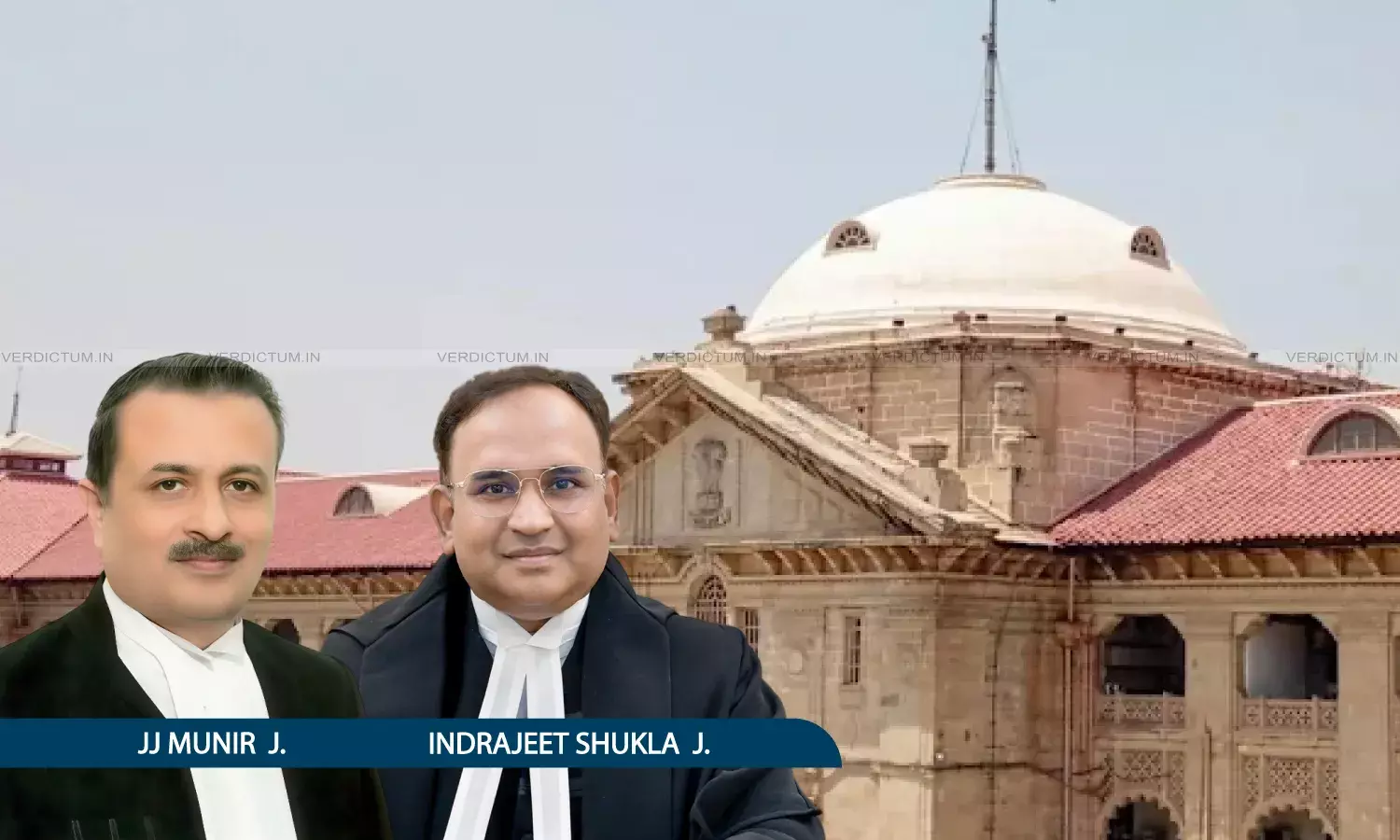
The Allahabad High Court has held that a finance company’s contractual right to repossess a financed vehicle must be enforced through a forum known to law, such as a civil court or an arbitrator, and not by recovery agents who waylay the borrower and seize the vehicle by force. It said that reading a repossession clause literally, to allow this, would arm a private party with the coercive authority of the State.
The Court observed that the vehicle of a borrower, who had paid 31 of 45 instalments, was seized at gunpoint on a highway and the allegation was never specifically denied. It ordered the vehicle to be delivered forthwith without any precondition, imposed costs of Rs 10,000, and directed the finance company to restructure the loan without penal interest. It left the question of any default open for adjudication by a competent forum.
A Division Bench of Justice J.J. Munir and Justice Indrajeet Shukla observed, “…the right of the finance company engrafted into a hire-purchase agreement to seize the chattel, the vehicle here, purchased on hire-purchase, gives an enforceable right no doubt to the finance company, but that enforcement has to be done through a process known to law. It cannot be done by force employing goons, styled as agents”.
Advocate Anas Khan appeared for the petitioner, Awadhesh Chandra Srivastava, Standing Counsel appeared for respondent no. 1, while Advocate Amit Shukla appeared for respondent no. 3.
“…it would be virtually arming a private party with the coercive authority of the State, invariably exercisable by a Judge, an Arbitrator or some quasi-judicial Authority with the aid of its own agency and re-enforced by the Police. If this kind of a power does flow from Clause 14 of the loan agreement to the Finance Company, it would virtually turn the contract between parties into a legislation, actual or delegated, without there being any statutory vigour in fact to it. No doubt, it is true, as often said, that in a contract, parties legislate for themselves, but that principle cannot imaginably be carried to the extent, where the terms of the contract are actually imbued with legislative force empowering parties to enforce terms, deciding for themselves and executing it too, as if they were judicial or quasi-judicial fora, deciding a lis and then executing the decision”, the Bench said.
The petitioner, Sadab Ahmad, a self-employed man, bought a TATA goods carrier in December 2023 with finance from HDB Financial Services Limited, repayable in 45 instalments of Rs 64,059 each. On August 9, 2026, men acting for the company intercepted him at Chandauli, threatened him at gunpoint, took the vehicle and made him sign a repossession inventory. He complained to the company, the local police and the District Magistrate, and then approached the High Court seeking release of the vehicle.
The company said that his loan account was a linked account with a loan taken by his brother, Shoaib Ahmad, who had defaulted and whose vehicle was untraceable. It said the petitioner too had defaulted, that 30 post-dated cheques had bounced, that his facility was terminated, and that it had authorised a repossession agency, Poonia Associates Private Limited, on August 8, 2026. It relied on the repossession clauses and on Supreme Court decisions. The Court had earlier restrained the company from transferring the vehicle to any third party.
The Bench held that, however well documented the default, the company could not seize the vehicle by force. It noted that, in the brother’s case, the company went to an arbitrator, obtained interim orders and an award, and that even that award provided for police aid. It said no proceedings were taken against the petitioner.
It distinguished Charanjit Singh Chadha & Ors v. Sudhir Mehra, a criminal case, and read Magma Fincorp v. Rajesh Kumar Tiwari as holding that possession cannot be taken by physical violence, assault or criminal intimidation. It relied on ICICI Bank v. Prakash Kaur, Citicorp Maruti Finance v. S. Vijayalaxmi and the Supreme Court’s recent decision in Hari Dutta Sharma v. State of U.P. It noted that the police should have investigated the use of the gun, which could bring the Arms Act into play.
While allowing the writ, the Court directed the company to deliver the vehicle forthwith without precondition, furnish an updated statement of account, restructure the loan with fresh instalments at the usual interest but no penal interest, and sign a fresh agreement. A moratorium of two months from delivery applies. On any future default, it must approach the civil court or the arbitrator.
Cause Title: Sadab Ahmad v. State of U.P. & Ors. (Neutral Citation: 2026:AHC:221690-DB)
Appearances:
Petitioner: Advocates Anas Khan, Daniyal Niyazi, Muhammad Hamza Usman and Syed Ahmed Faizan (Advocate Gulshad Ali holding brief).
Respondent: Standing Counsel Awadhesh Chandra Srivastava for Respondents 1 and 2; Advocate Amit Shukla for the Finance Company (Respondent 3).