Magistrate Not Bound To Order FIR In Every Application U/S 175(3) BNSS; Can Treat Matter As Complaint Case Depending On Nature Of Evidence: Allahabad High Court
The Court held that while exercising powers under Section 175(3) BNSS, a Magistrate may either direct registration of an FIR or treat the application as a complaint case, depending upon the nature of allegations, availability of evidence with the complainant, and necessity of police investigation.
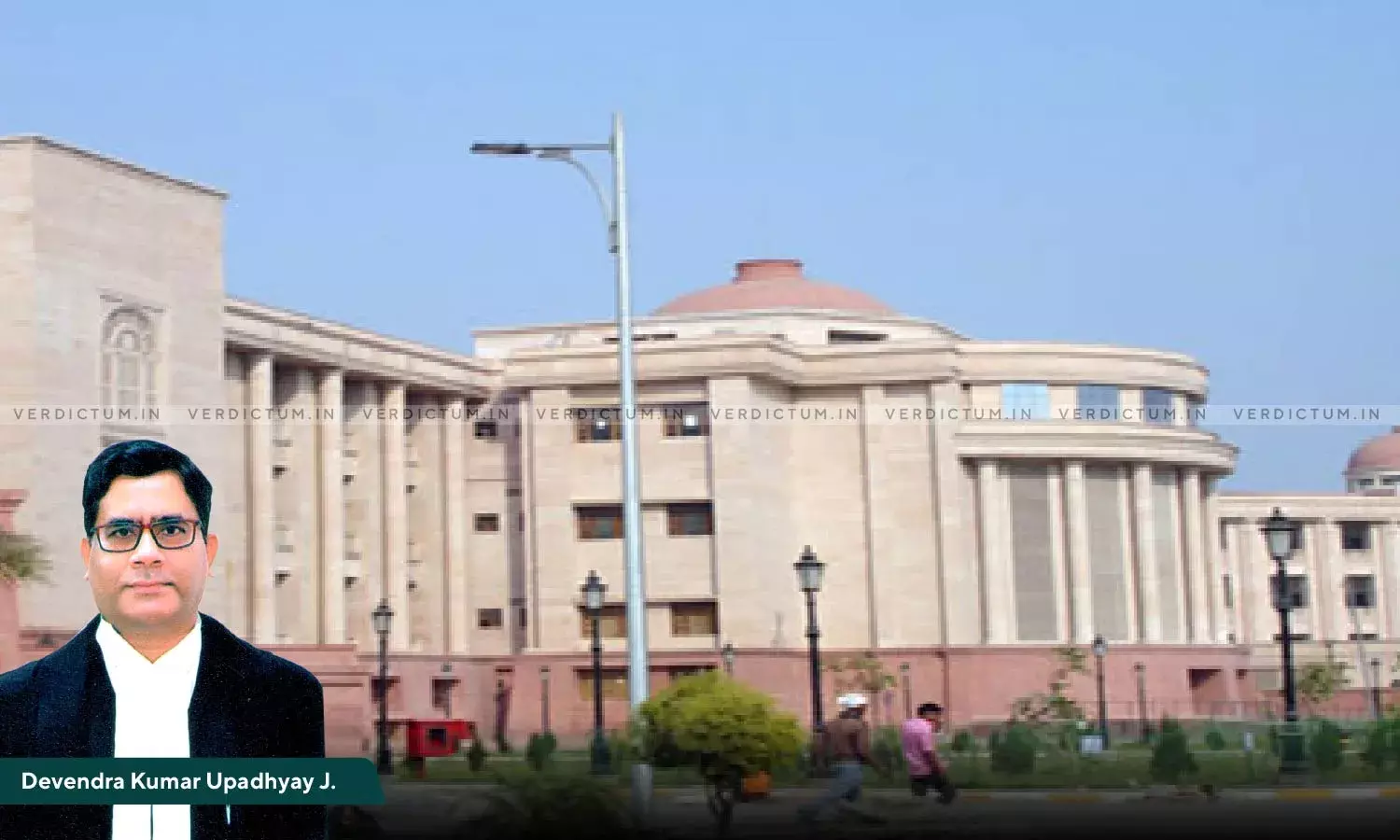
Justice Brij Raj Singh, Allahabad High Court
The Allahabad High Court has held that a Magistrate is not mandatorily required to direct registration of an FIR in every application filed under Section 175(3) of the Bharatiya Nagarik Suraksha Sanhita, 2023 (BNSS), merely because allegations disclose commission of a cognizable offence.
The Court observed that the Magistrate retains judicial discretion to either order registration of an FIR or proceed with the matter as a complaint case, depending upon the facts, nature of evidence and requirement of police investigation.
The Court further held that where the complainant already possesses complete details and material evidence relating to the case, and no specialised police investigation is necessary, the Magistrate may legitimately adopt the procedure applicable to complaint cases under Chapter XV Cr.P.C./BNSS.
The Court was hearing an application under Section 528 BNSS challenging the order passed by the Chief Judicial Magistrate, Gonda, whereby an application filed under Section 175(3) BNSS seeking registration of an FIR in relation to allegations of molestation and attempted sexual assault was treated as a complaint case instead of directing police investigation.
A Bench of Justice Brij Raj Singh observed: “While exercising the power under Section 175(3) of B.N.S.S., 2023 (erstwhile Section 156(3) Cr.P.C.), the Magistrate has the following options:- (i) to pass an order for registration of the FIR; (ii) to treat the application as a complaint case and proceed accordingly.”
The Court further observed: “In case the complainant is in possession of the complete details of the case and also the material evidence and the investigation by the police may not be required, the Magistrate may follow the procedure of a complaint case.”
Advocates Dwijendra Mishra, Rajneesh Mishra and Vishva Deep Pandey appeared for the Applicant; Anurag Varma, AGA-I, appeared for the State.
Background
According to the case set up by the applicant, she alleged that while she was returning from her agricultural field, the accused persons allegedly caught hold of her, attempted to drag her into the sugarcane field and assaulted her when she resisted. It was further alleged that despite approaching the local police authorities immediately after the incident and subsequently making representations to superior police officials, no FIR was registered.
The applicant thereafter moved an application under Section 175(3) BNSS before the Chief Judicial Magistrate seeking a direction for registration of an FIR. However, by order dated 20.03.2026, the Magistrate treated the application as a complaint case and fixed the matter for the recording of statements under the complaint procedure. Aggrieved thereby, the applicant approached the High Court.
Counsel for the applicant argued that once cognizable offences were disclosed, especially involving allegations of sexual assault, the Magistrate ought to have directed registration of an FIR in light of the Constitution Bench judgment in Lalita Kumari v. State of Uttar Pradesh (2014). It was contended that the evidence required in the case could only be collected through a police investigation.
The State, on the other hand, contended that the Magistrate was not bound in every case to direct registration of an FIR and retained discretion to treat the matter as a complaint case depending upon the facts and circumstances.
Court’s Observation
The High Court undertook an extensive examination of the legal framework governing Section 175(3) BNSS and the corresponding provisions under the Code of Criminal Procedure.
The Court first examined the Constitution Bench decision in Lalita Kumari v. State of Uttar Pradesh (2014), noting that the said judgment primarily dealt with the statutory obligation of police authorities under Section 154 Cr.P.C. to register an FIR where information discloses the commission of a cognizable offence.
The Court observed that the judgment in Lalita Kumari did not eliminate the judicial discretion vested in Magistrates while exercising powers under Section 156(3) Cr.P.C./Section 175(3) BNSS.
The Court referred to several precedents of the Supreme Court as well as coordinate Benches of the High Court dealing with the distinction between directing police investigation and proceeding with a complaint case.
Relying upon XYZ v. State of Madhya Pradesh (2023), the Court reiterated that in cases involving sexual harassment or sexual assault where crucial evidence such as CCTV footage or other material is not within the possession or control of the complainant, police investigation may become necessary and Magistrates ought to exercise powers under Section 156(3) Cr.P.C. judiciously.
The Court quoted the Supreme Court’s observation: “Especially in cases alleging sexual harassment, sexual assault or any similar criminal allegation wherein the victim has possibly already been traumatised, the Courts should not further burden the complainant and should press upon the police to investigate.”
At the same time, the Court also relied upon the decisions in Sukhwasi v. State of U.P. (2007), Kailash Vijay Vargiya v. Rajlakshmi Chaudhuri (2023), Priti Agarwalla v. State of GNCT of Delhi (2024), and Om Prakash Ambadkar v. State of Maharashtra (2026), which recognise the discretionary power of Magistrates in such matters.
The Court observed: “The Magistrate is not expected to mechanically direct investigation by the police without first examining whether in the facts and circumstances of the case, investigation by the State machinery is actually required or not.”
The Bench further observed that where allegations are simple in nature, and the complainant is capable of leading evidence independently through witnesses or documentary material already within his or her possession, the Magistrate may proceed under the complaint procedure instead of directing a police investigation.
The Court summarised the legal position by holding that while exercising powers under Section 175(3) BNSS, the Magistrate has four broad options and considerations:
“(i) to pass an order for registration of the FIR; (ii) to treat the application as a complaint case and proceed accordingly; (iii) in case the evidence of such nature which can only be collected by doing a thorough investigation by the police, the Magistrate has to pass an order for registration of the FIR. However, while exercising his power, he has to apply his mind judiciously; (iv) in case the complainant is in possession of the complete details of the case and also the material evidence and the investigation by the police may not be required, the Magistrate may follow the procedure of a complaint case.”
Applying these principles to the facts of the present case, the High Court found that no such evidence existed which necessarily required police investigation. The Court held that the Magistrate had exercised discretion judiciously in treating the application as a complaint case.
The Court observed: “In the present case, after perusing the complaint, this Court finds that there is no such evidence, which requires any investigation by the police. Therefore, the Magistrate has rightly passed the impugned order treating the application as a complaint case, which needs no interference.”
Conclusion
Accordingly, the Court dismissed the application and upheld the order passed by the Chief Judicial Magistrate, Gonda. The Court also directed the Registrar General to circulate the judgment to all subordinate courts through District Judges.
Cause Title: Roli v. State of U.P. & Ors. (Neutral Citation: 2026:AHC-LKO:39241)