

Gratuity Is A Distinct Retiral Benefit & Payment Of Other Service Dues Alone Cannot Justify Its Denial: Allahabad High Court
The Court quashed the rejection of a retired madrasa teacher’s gratuity claim, holding that her failure to opt for retirement at 60 could not by itself defeat the benefit after she was permitted to serve until 62.
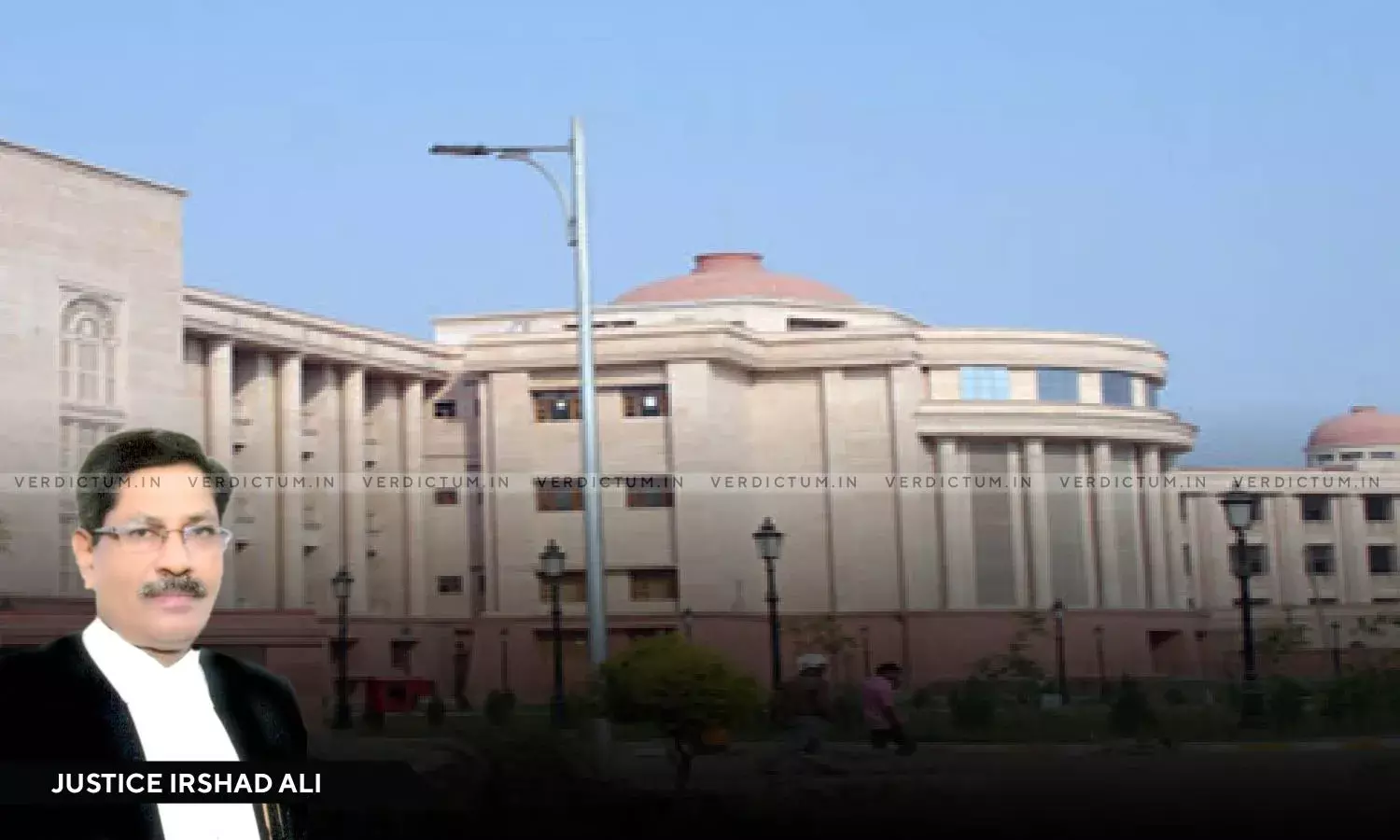
The Allahabad High Court has held that payment of other admissible service or retiral dues does not determine an employee’s entitlement to gratuity, which constitutes a distinct retiral benefit and cannot be denied without a sustainable legal foundation.
The Court, accordingly, directed the authorities to determine and release the gratuity payable to a retired madrasa teacher with 6% annual interest.
The Court was hearing a writ petition challenging an order of the Principal Secretary, Minority Welfare Department, which rejected the petitioner’s gratuity claim because she had not opted to retire at 60 and had continued in service until 62.
A Bench of Justice Irshad Ali observed: “Payment of other retiral or service dues cannot, by itself, amount to a valid determination that gratuity was not payable. Gratuity constitutes a distinct retiral benefit and its denial must have a sustainable legal foundation.”
Advocate Anu Pandit appeared for the petitioner. Advocate Ravi Prakash Yadav appeared for the respondents.
Background
The petitioner was appointed as an Assistant Teacher at a madrasa in 1992 and retired in March 2019. The judgment noted that she repeatedly approached the authorities for payment of gratuity but received no relief.
An earlier writ petition filed by her was disposed of with a direction to submit a comprehensive representation to the Principal Secretary. The authority subsequently rejected that representation, principally because she had not exercised an option to retire at 60 and had instead received the benefit of service until 62.
The petitioner contended that the absence of such an option could not deprive her of gratuity after more than two decades of continuous service. She relied upon University College Retired Teachers Welfare Association, Lucknow Through Its President Dr. S.S. Chauhan and Another v. State of Uttar Pradesh Through Principal Secretary, Department of Higher Education, Uttar Pradesh, Lucknow and Others (2024) and State of Uttar Pradesh and Others v. Smt. Priyanka (2022).
The respondents argued that the service conditions of madrasa employees were governed by the applicable government orders and departmental rules. They submitted that the petitioner had not exercised the prescribed option, had received the benefit of service until 62 and had already been paid all other admissible dues.
Court’s Observations
The Court held that the respondents’ reference to payment of other admissible dues did not address whether gratuity was independently payable. It observed that the rejection order disclosed no consideration of the gratuity claim beyond the petitioner’s failure to opt for retirement at 60.
The Court stated: “The impugned order does not demonstrate any independent consideration of the petitioner’s entitlement to gratuity apart from the alleged absence of an option to retire at the age of 60 years.”
The Court acknowledged that an employee must establish entitlement to gratuity under the governing service regime. It nevertheless held that the authorities could not disregard the legal consequences of having permitted the petitioner to continue in service until her retirement.
The Court added that the petitioner had completed the qualifying period and that the respondents had not established any disqualification affecting her entitlement. It observed that the circumstance relied upon to deny gratuity was the same circumstance that had enabled her to render further service.
The Court referred to University College Retired Teachers Welfare Association (2024), in which the High Court had quashed government orders to the extent that they denied gratuity to teachers who continued in service during an extended period. That decision had also directed payment of gratuity with 6% annual interest.
The Court observed: “Once this Court has examined the legal effect of continuation in service for the extended period and has held that such circumstance cannot furnish a valid basis for denial of gratuity in the circumstances considered therein, the respondents were required to examine the petitioner’s claim in the light of the said legal position.”
The Court also considered State of Uttar Pradesh and Others v. Smt. Priyanka (2022), in which the Supreme Court declined to interfere with the grant of death-cum-retirement gratuity and referred to the benefit as arising from a benevolent scheme.
The Court held that these decisions supported the conclusion that the petitioner’s gratuity could not be denied solely because she had not opted to retire at 60. It found that the respondents had failed to establish any other legally sustainable ground for withholding the benefit.
The Court noted that the 2024 judgment relied upon by the petitioner was delivered after the rejection of her representation. It clarified that the decision was not being treated as creating a new right from the date of its pronouncement.
The Court explained: “Rather, it is being taken into consideration for determining the legality and sustainability of the basis adopted by the respondents for denying a retiral benefit to the petitioner.”
The Court added that the legal position declared by a constitutional court had to be applied while judicially considering the petitioner’s pending claim, particularly when its factual and legal basis substantially corresponded with an already adjudicated controversy.
The Court held that the principle of parity was relevant because similarly situated employees had been granted gratuity by constitutional courts. It observed that any distinction drawn against the petitioner required a cogent factual and legal foundation.
The Court stated: “Any distinction sought to be made must have a cogent legal and factual foundation. No such distinguishing circumstance has been demonstrated before this Court.”
The Court further found that the petitioner had continuously pursued her entitlement through representations and earlier proceedings. It consequently held that she could neither be said to have acquiesced in the denial of gratuity nor to have slept over her rights.
Conclusion
The Court allowed the writ petition and quashed the order rejecting the petitioner’s gratuity claim.
It directed the respondents to determine and release the gratuity legally payable to her under the applicable rules and orders without treating her failure to opt for retirement at 60 as a ground for denial. The calculation and payment were directed to be completed within three months of production of a certified copy of the judgment.
The Court also awarded interest at 6% per annum from March 31, 2019, when the gratuity became payable upon the petitioner’s retirement, until actual payment. It made no order as to costs.
Cause Title: Raisa Khan v. State of Uttar Pradesh (Neutral Citation: 2026:AHC-LKO:70249)
Appearances
Petitioner: Advocates R.B.S. Rathaur and Anu Pandit
Respondents: Standing Counsel; Advocates Afzal Ahmad Siddiqui and Ravi Prakash Yadav
