

Allahabad High Court Questions Appointment Of Panchayat Administrators Post Expiry Of Five-Year Term, Seeks State’s Response
The Court questioned whether appointing an erstwhile Gram Pradhan as an Administrator illegally extends the constitutional life of a Panchayat or merely provides a temporary substitute body.

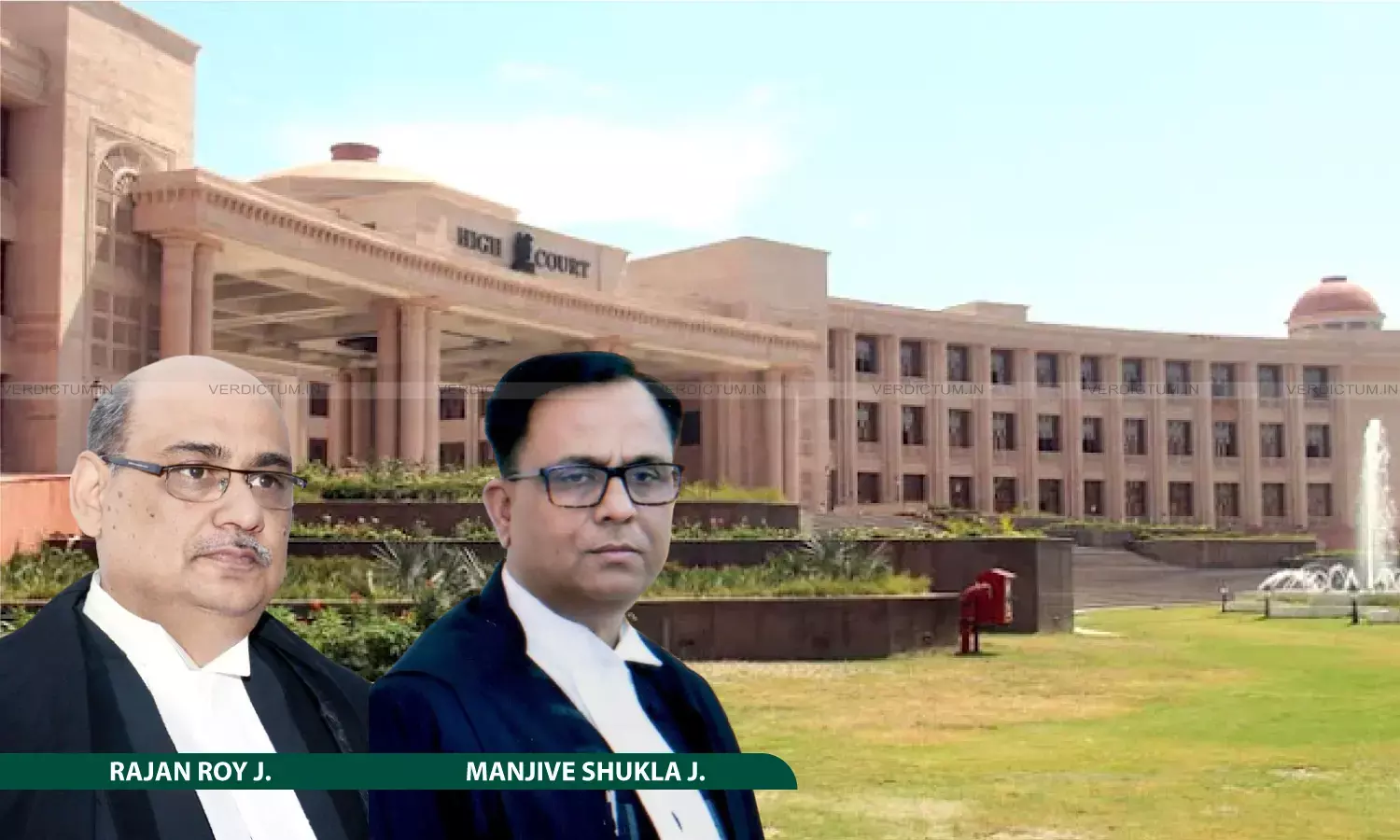
The Allahabad High Court questioned the action of the State Government in appointing Administrators under Section 12(3-A) of the Uttar Pradesh Panchayat Raj Act, 1947, following the expiry of the mandatory five-year tenure of Panchayats.
It was the case of the Petitioner that the statutory provision was ultra vires as an identical provision in a predecessor Ordinance had already been struck down by a Coordinate Bench in Prem Lal Patel vs. State of U.P.
Expressing concern over how the State issued the order in the teeth of an existing binding precedent, the Court raised pivotal constitutional queries regarding Article 243-E and Article 243-K of the Constitution of India and directed the Additional Chief Secretary of the Department of Panchayat Raj to join the next proceedings via video conferencing to satisfy the Bench.
The Division Bench of Justice Rajan Roy and Justice Manjive Shukla observed, "The question is as to whether by appointing Administrator under Section 12(3-A) of the Act, 1947, the term of the Panchayat, as referred in Article 243-E of the Constitution of India, gets extended beyond five years or it is an Administrator who is appointed in its place to administer the Panchayat because the embargo placed by the Article 243-E of the Constitution of India is on the term of the Panchayat, which is five years, which cannot be extended in any circumstances beyond the said period; whether by appointing a Gram Pradhan as an Administrator, the term of the panchayat gets extended beyond five years; whether Gram Pradhan is the Panchayat. The Panchayat is a larger body of which Gram Pradhan is also a part. The Gram Pradhan, if he is appointed as Administrator after the expiry of its term does not continue to function as a Panchayat but he functions as an Administrator i.e. a substitute for the Panchayat. The Panchayat, of course, comprises of several other persons as is mentioned in Article 243-C of the Constitution of India."
Petitioner appeared in person, while CSC Anurag Kumar Singh appeared for the Respondent-State.
Brief Facts
The matter arose out of a challenge before the High Court concerning the validity of an order passed by the State Government under Section 12(3-A) of the Uttar Pradesh Panchayat Raj Act, 1947, which provided for the appointment of an Administrator upon the expiry of the five-year term of a Panchayat.
A Single Judge Bench of the High Court, placing reliance on a Coordinate Bench decision in Prem Lal Patel vs. State of U.P., passed an interim order noting the petitioner’s contention that the said statutory provision was already declared ultra vires (beyond legal authority). The State Government had previously assailed the Prem Lal Patel decision before the Hon’ble Supreme Court; however, because the underlying Ordinance was subsequently replaced by a legislative enactment, the Apex Court disposed of the appeal as infructuous while explicitly leaving the questions of law open.
Contentions of the Parties
The petitioner contended that Section 12(3-A) of the Act, 1947, was unconstitutional and lacked legal force, as a Coordinate Bench of the High Court had already struck down an identical provision contained in the predecessor Ordinance for being repugnant to Articles 243-E and 243-K of the Constitution of India. It was argued that the State Government could not have issued the impugned order in direct contravention of a standing Division Bench judgment, which operated as the law of the land.
Conversely, the State Government sought to justify its action under the statutory framework of Section 12(3-A) of the Act, 1947, maintaining that the legislative enactment itself had not been formally declared unconstitutional by any forum, especially since the Hon'ble Supreme Court left the questions of law open.
Observations of the Court
The Division Bench observed that Article 243-E(1) of the Constitution of India strictly mandated that every Panchayat shall continue for five years "and no longer," thereby placing an absolute embargo on extending the life of a Panchayat beyond the prescribed period.
The Court, however, raised pivotal questions regarding whether the appointment of an Administrator—even if that Administrator happened to be the erstwhile Gram Pradhan—actually extended the term of the Panchayat, or whether the Administrator merely functioned as a temporary substitute body without occupying the character of the Panchayat itself.
The Court raised the issue and said, "Another question is, as to whether merely because of Section 12(3-A) or by appointing an Administrator under Section 12(3-A) of the Act, 1947, in the circumstances and exigencies mentioned therein, can it be said that the jurisdiction of the Election Commission under Article 243-K of the Constitution of India has been encroached because after all appointment of an Administrator does not prevent the Election Commission from holding the election as per law, subject to other pre-requisites being satisfied."
The Court further observed that the appointment of an Administrator did not prima facie encroach upon the jurisdiction of the State Election Commission to conduct elections under Article 243-K of the Constitution of India. Recognizing that a Coordinate Bench judgment ordinarily binds a Bench of equal strength, the Court noted that if it chose to follow Prem Lal Patel, a heavy burden would lie on the State to justify the impugned provision.
Conversely, the Court observed that it would need to determine whether a reference to a Larger Bench was necessitated, particularly to evaluate if the precedential and binding value of the Prem Lal Patel decision ceased to exist after the Hon’ble Supreme Court disposed of the civil appeal while leaving the questions of law open.
"Even if we decide to refer the matter to a Larger Bench hereinafter, the question still remains as to how the State Government passed the impugned order in the teeth of the Division Bench which is the law of the land as of now", the Court added.
Consequently, the Court directed the personal appearance of the Additional Chief Secretary of the Department of Panchayat Raj via video conferencing to satisfy the Court on these complex constitutional issues.
Cause Title: Sanjay Kumar Sharma v. State Of U.P. and Ors. [PIL No.: 593 of 2026]
Appearances:
Petitioner: In person
Respondents: C.S.C. Anurag Kumar Singh