

Meritorious Reserved Candidates Must Be Placed In Open Category Even At Preliminary Stage: Allahabad High Court Quashes UPPSC APO 2025 Preliminary Result
The Bench held UPPSC's 2020 office memorandum lacked competence, quashed APO preliminary examination 2025 result and directed fresh result and mains.

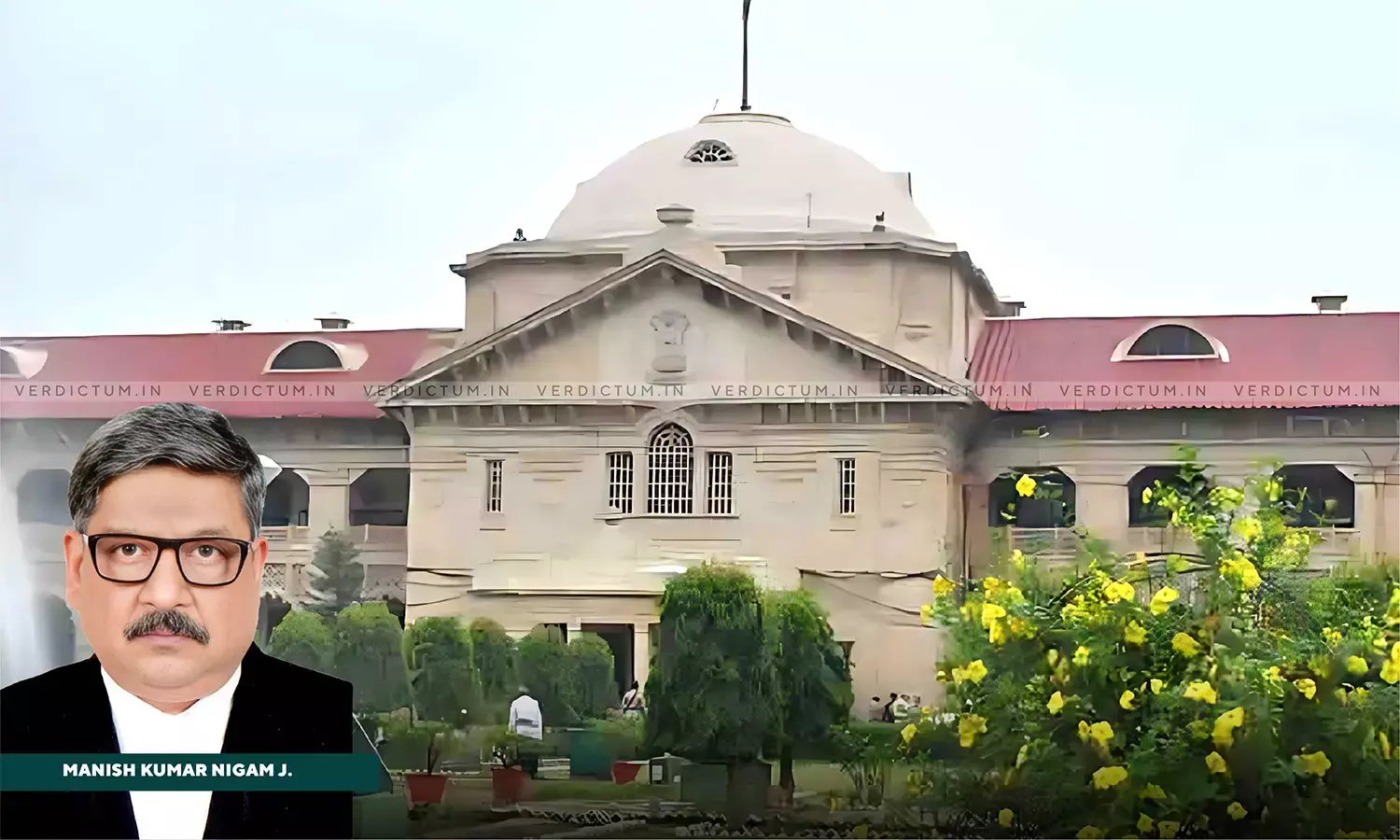
The Allahabad High Court has held that the open or unreserved category is open to all at every stage of a recruitment examination. Reserved category candidates who score more than the last selected unreserved candidate must therefore be placed in the open list, including at the preliminary stage, it said. Consequentially, it quashed the result of the Uttar Pradesh Public Service Commission's (UPPSC) APO Examination 2025 (Preliminary).
The Bench also struck down the Commission's Office Memorandum dated January 9, 2020, which allowed such migration only at final selection, for want of legislative competence. The Court directed the Commission to redraw the preliminary result and hold the Mains afresh on that basis.
A Bench of Justice Manish Kumar Nigam observed, “…I am of the considered opinion that the act of the respondents in confining the reserved category candidates at the stage of preliminary examination as well as Mains Examination to their respective reserved categories, irrespective of the fact that the candidates have secured more marks than the last unreserved category candidate, is arbitrary and violative of Article 16(4) of the Constitution of India and cannot be sustained. Open category is open for all at every stage of the examination and cannot be treated as a category reserved for unreserved candidates. More meritorious reserved category candidates at every stage of examination, if they secure more marks than the last selected unreserved category candidate, have to be placed in the open category”.
Advocate Anurag Tripathi appeared for the petitioner while Senior Advocate Anoop Trivedi appeared for the respondent.
The petitioners, OBC candidates who did not seek age relaxation, applied under Advertisement No. A-8/E-1/2025 for about 182 posts of Assistant Prosecution Officer. They did not qualify the preliminary test of March 22, 2026, whose result of April 30, 2026 showed 2,856 candidates qualified. The Mains was held in June 2026. By an interim order of September 28, 2026, the Court let the interviews continue but stayed the declaration of the result.
An earlier appeal against the interim order failed on maintainability, and the Division Bench left the merits open. It said prima facie that Section 3(6) of the Uttar Pradesh Public Services (Reservation) Act, 1994 appeared to operate at final selection.
The Commission and the State argued that the preliminary test is only a screening test whose marks are not counted, that reservation is applied at appointment and not at shortlisting, and that the petitioners were estopped and their claim hypothetical. The Commission told the Court that 321 OBC and 43 SC candidates who scored above the last open candidate had been retained in their own categories.
The Court held that preparing category-wise lists is permissible, but not treating the unreserved list as reserved for those who claimed no reservation. It relied on Indra Sawhney and Others v. Union of India and Others (1993), R.K. Sabharwal and Others v. State of Punjab and Others, (1995), Saurav Yadav Others v. State of Uttar Pradesh and Others (2021) and Rajasthan High Court & Anr. v. Rajat Yadav & Ors. (2025). It found that this "compartmentalization" effectively kept about 50 per cent of seats for unreserved candidates, since the law provides "a minimum reservation and not the maximum".
“Even the marks of the Preliminary Examination are not to be included while preparing the final merit list but same would result in the exclusion of more meritorious reserved category candidates from appearing in the next tier of examination, is arbitrary. The action of the respondents preparing the list category-wise treating the Open/Unreserved category to be reserved only for candidates who do not come within the reserved category cannot be upheld as the same is violative of mandate of Articles 14 and 16 of the Constitution. There is no question of application of reservation at the intermediate stage of examination. It is only as to how the Open/Unreserved category list is to be prepared, is in question…”, the Bench noted.
“…The Open/Unreserved category is not reserved for any category. It is open to all, who are able to come within the same on the basis of their merit, irrespective of the fact whether they claimed reservation or not. This exercise has to be done at all stages of examination. It is only while preparing the final merit list after the interview, if any reserved category candidate is found to have qualified on his own merit in the Open category, his candidature will not be counted towards the reserved seats and will be treated as that of a General category, without affecting the number of seats reserved for the reserved category, which is the constitutional mandate as well as in line with the law as made by the State of U.P. in the Act of 1994. Admittedly, in the present case, this is not being done. Both at the preliminary stage as well as at the stage of the Mains Examination, the lists are prepared category-wise, treating the Unreserved category to be reserved for candidates, who have not claimed reservation, which is not permissible. The question that the marks of the Preliminary Examination are not added at the time of preparation of the final list is of no consequence”, it noted further.
It held Sanjeev Kumar Singh and Jitendra Kumar Singh, which concern concessions under Section 8, inapplicable to petitioners who took none. It also found no statutory bar on migration other than the Office Memorandum itself, and declined to follow Abhishek Kumar Yadav.
On the Office Memorandum, the Court relied on Article 320(4), State of Punjab and others v. Manjit Singh and others (2003) and the Division Bench in Special Appeal No. 233 of 2026, Bhavna Yadav and six others v. State of U.P. Thru. Prin. Secy. Deptt. Appointment and Personnel Lko. and 2 others. It said that the reservation policy lies with the State, and that the Commission's competence covers procedure only, and Article 315(3) gives it no law-making power.
Furthermore, the objections of estoppel, hypothetical challenge and non-impleadment were rejected. Participation does not bar challenge to an illegal procedure, the preliminary marks were undisclosed, and those who cleared Mains have no right to appointment.
The Office Memorandum and the preliminary result of April 30, 2026 were quashed. The Commission must redraw the preliminary merit list, hold the Mains afresh and proceed with the selection.
Cause Title: Pankaj Verma and 2 Others v. State of U.P. and Another (2026:AHC:240139)
Appearances:
Petitioners: Advocate Anurag Tripathi.
Respondents: Senior Advocate Anoop Trivedi with Advocate Avneesh Tripathi (Commission); Manish Goel, Additional Advocate General with Gaurav Singh, Standing Counsel (State). Mahendra Narain Singh is also listed in the cause title.