

Dispute Relating To Bar Association Membership Private In Nature; Writ Petition Not Maintainable: Allahabad High Court
The Allahabad High Court was considering a Petition filed under Article 226 seeking quashing of the impugned order debarring the petitioner from membership of the Bar Association.

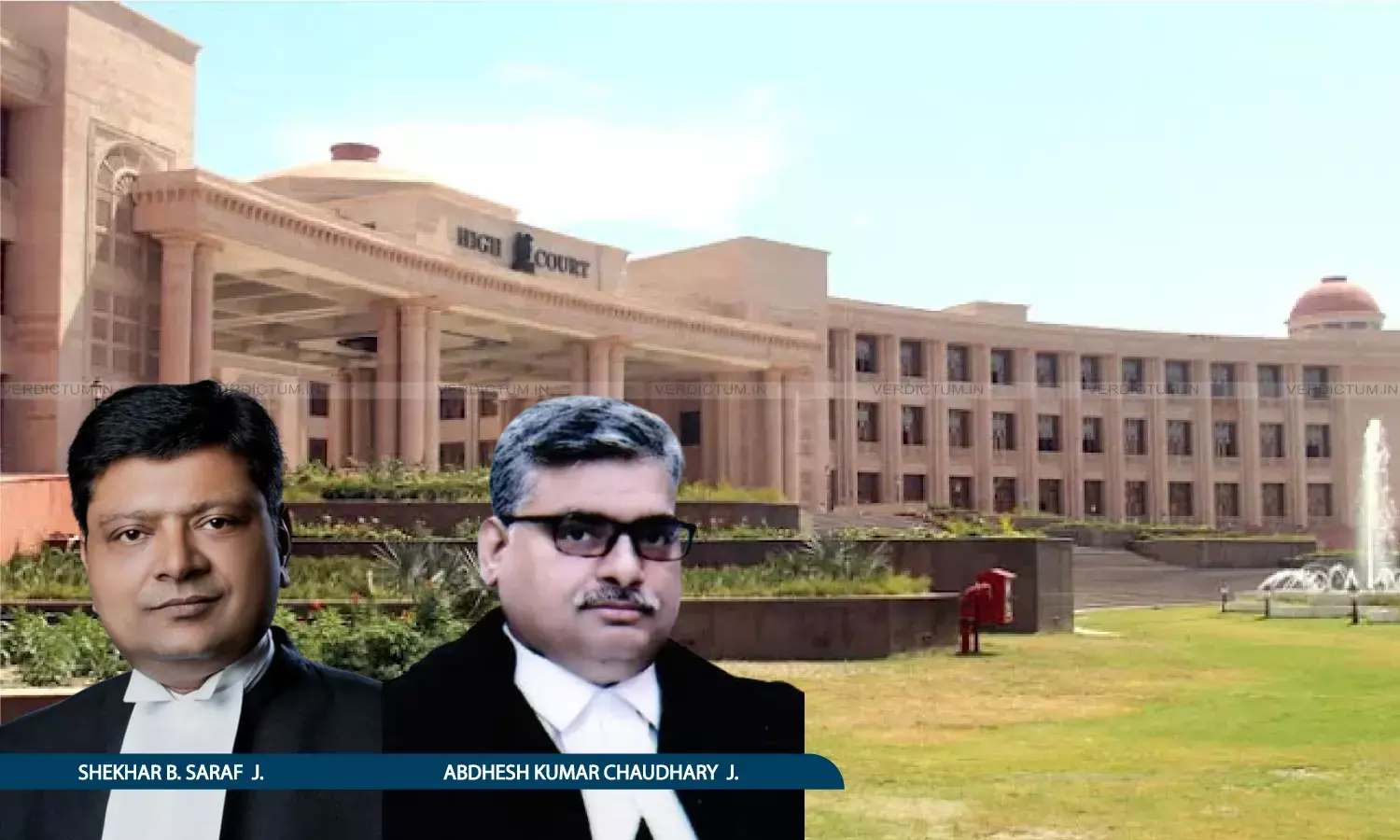
While dismissing a writ petition filed by an Advocate under Article 226 of the Constitution challenging an order debarring him from membership of the Bar Association, the Allahabad High Court has held that any dispute relating to membership issue of a Bar Association is private in nature and does not perforce of any public character.
The High Court was considering a Petition filed under Article 226 of the Constitution wherein the writ petitioner sought quashing the impugned order (press release) dated June 12, 2026 debarring the petitioner from membership of Central Bar Association Tehsil Gola Gokaran Nath District Lakhimpur Kheri for one year.
The Bench comprising Justice Shekhar B. Saraf and Justice Abdhesh Kumar Chaudhary held, “For all the reasons stated above, this Court holds that the present writ petition is not maintainable under Article 226 of the Constitution of India as essentially any dispute relating to membership issue of a Bar Association is private in nature and does not perforce of any public character. The writ petition is accordingly dismissed as being not maintainable.”
Advocate Ramendra Kumar Misra represented the Appellant while Chief Standing Counsel represented the Respondent.
Factual Background
The petitioner was aggrieved by the action on the part of the Central Bar Association, Tehsil Gola Gokaran Nath, District Lakhimpur Kheri in debarring him from its membership for a period of one year.
Arguments
The Petitioner claimed that he is a practicing Advocate, enrolled with the Bar Council of Uttar Pradesh and an ex-president of the said Bar Association. It was his case that having conducted a fair election,he subsequently lodged complaints against the newly elected office-bearers alleging illegal activities, and the impugned debarment, publicized through the impugned press release caused irreparable injury to his reputation.
Opposing the maintainability of the writ petition, the respondent submitted that the basic prayer was against the Bar Association and was purely private in nature. It was argued that the petitioner had an equally efficacious alternative remedy before another authority.
Reasoning
The Bench reiterated that the amenability of a body to writ jurisdiction under Article 226 does not turn on whether it is "public" or "private" in form, but on the "function test" as to whether the impugned action involves the discharge of a public duty or public function or is a private affair. Reference was made to a judgment of the Delhi High Court in Sangita Rai v. New Delhi Bar Association (2026), wherein it has been held that since the Bar Association is not a public body, it is not covered under Article 12 of the Constitution of India and the High Court, in exercise of its jurisdiction under Article 226, cannot issue a writ of Mandamus to the Bar Association.
On a perusal of the facts of the case, the Bench noted that the Central Bar Association, Tehsil Gola Gokaran Nath, is a society registered under the provisions of the Societies Registration Act, 1860, and the issue was essentially a membership dispute. The Bench was of the view that the inter se relationship between a voluntary Bar Association and its members is essentially contractual and regulatory under its own rules.
“Therefore, any resolution of disputes regarding membership or debarment must be pursued before a competent Civil Court or before the Registrar of society or before the body designated for the said purpose under the Bye-laws of the society/ Bar Association itself. In any case, membership dispute of the Bar Association, cannot be termed to be a public function of the Association or a dispute having any public character, so as to make the said dispute amenable to the writ Jurisdiction of this Court”, it held.
The Bench clarified that the mere fact that the State of Uttar Pradesh, the Bar Council of India, and the Bar Council of Uttar Pradesh had been impleaded as respondents, did not cure the defect of maintainability, as no relief or inaction had been attributed to them, independently of the Bar Association.
Dismissing the petition, the Bench held that the petitioner would be at liberty to seek alternative legal remedies, either by filing a civil suit before a Court of competent jurisdiction or by approaching the Registrar of Societies concerned or any authority specifically designated under the bye-laws of the society for redressal of his grievances.
Cause Title: Lal Bihari Verma v. State Of U.P. Thru. Prin. Secy. Law U.P. Lko. (Neutral Citation: 2026:AHC-LKO:63110-DB)
Appearance
Petitioner: Advocates Ramendra Kumar Misra, Amit Kumar Gupta, Rakesh Chandra Tripathi, Satyendra Mishra, Smt. Preeti Gupta
Respondent: Chief Standing Counsel, Advocates Shailesh Kumar Pathak, Subhash Chandra Pandey