

Parental Authority Yields To Constitutional Liberty: Allahabad High Court Orders Release Of Two Women Detained By Father After Their Conversion To Islam
The daughters alleged that physical restraint, intimidation and sustained mental harassment were used to compel them to renounce the faith they had voluntarily adopted.
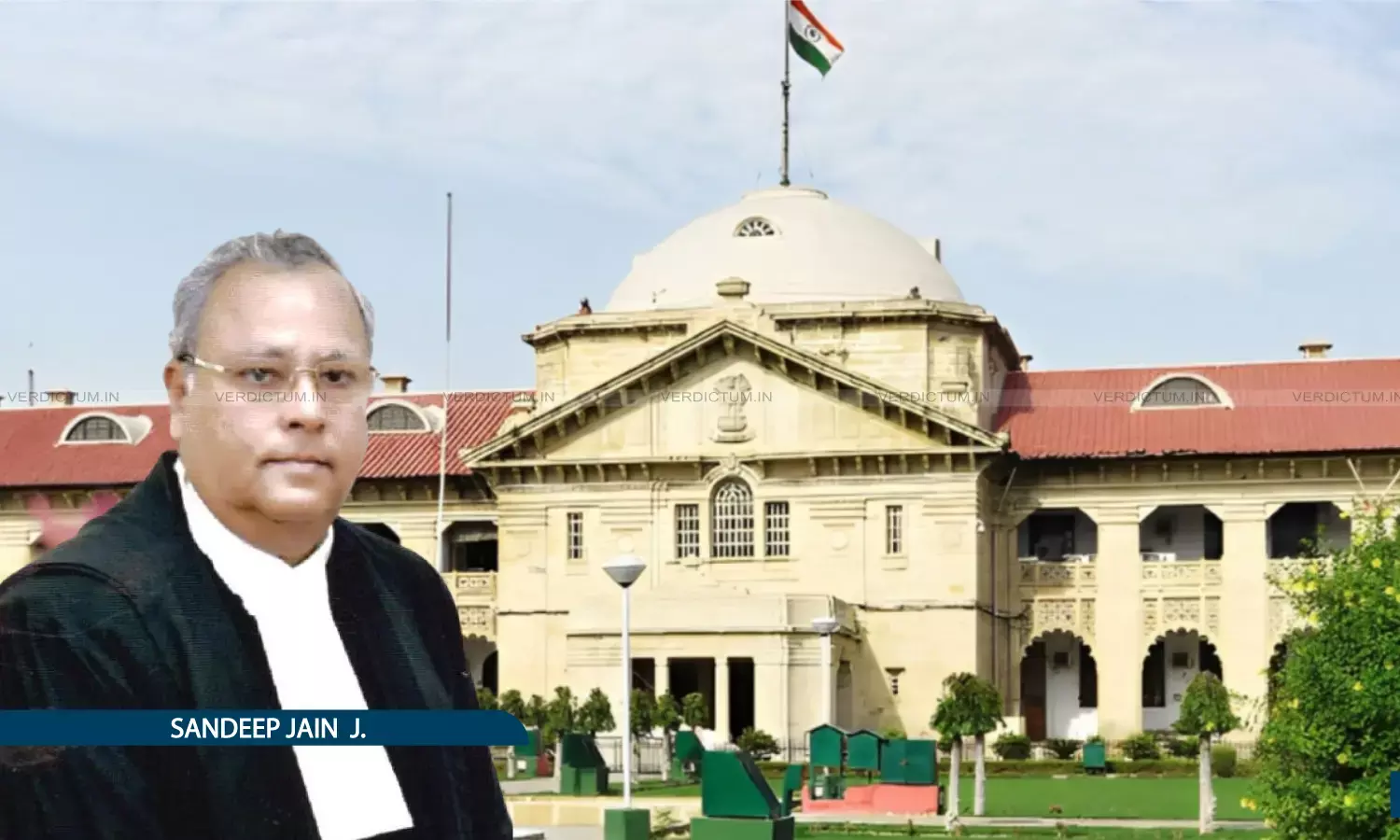
Justice Sandeep Jain, Allahabad High Court
The Allahabad High Court has held that the detention of two adult women by their father, after they converted to Islam, was “wholly illegal and without any sanction of law” and directed that they be free to reside at any place and with any person of their choice.
A Bench of Justice Sandeep Jain held, “Constitutional rights cannot be eclipsed by parental authority, social morality or majoritarian sentiment. The liberty of an adult individual is inviolable, and any attempt to suppress that liberty by force or coercion invites the constitutional scrutiny of this Court and attracts appropriate public law consequences, including the award of monetary compensation for the infringement of fundamental rights.”
The Court also directed the father and the State of Uttar Pradesh to jointly and severally pay ₹25 lakh as compensation for the unlawful deprivation of the women’s fundamental rights. The amount is to be equally divided between the two women and paid within eight weeks.
The Court had earlier directed the State to produce the two women before it. During their interaction with the Court, both stated that they had voluntarily embraced Islam one in 2020 and the other in 2021 out of their own free will, personal faith, conscience, mental peace and spiritual solace.
Advocate Ali Bin Saif, appeared for the Petitioners and AAG Manish Goyal appeared for the Respondents.
The first woman, described in the order as about 35 years old, stated that she was unmarried and highly educated, with M.Sc. and M.Phil. degrees in Zoology and a B.Ed. degree, and had also served as a Lecturer. She told the Court that her decision to embrace Islam was neither actuated by inducement, influence, coercion, undue persuasion nor any extraneous consideration.
The second woman, about 20 years old and educated up to the Intermediate level, similarly stated that she had embraced Islam voluntarily and without force, fraud, coercion, undue influence or allurement.
According to the women, their father opposed their decisions to change their faith and unlawfully confined them in the parental home. They alleged that physical restraint, intimidation and sustained mental harassment were used to compel them to renounce the faith they had voluntarily adopted.
The women also stated that their passports, educational certificates, identity documents, bank passbooks, cheque books, conversion-related documents and other personal belongings remained in the custody of their father.
The State opposed the maintainability of the habeas corpus petition, submitting that the assertion of voluntary conversion was contrary to the material collected during investigation.
The State argued that the alleged conversion formed part of a larger organised conspiracy having far-reaching ramifications upon the sovereignty, integrity and unity of the nation. It also submitted that material collected during investigation suggested the involvement of foreign entities and external influences.
The High Court rejected the argument that questions concerning the alleged conversion could justify continued confinement of the two adult women.
The Court observed that the legality or validity of the alleged conversion was not the subject matter of adjudication in the habeas corpus proceedings. Any issue concerning compliance with the Uttar Pradesh Prohibition of Unlawful Conversion of Religion Act, 2021, could be examined by the competent authority or court.
“The legality of the conversion and the legality of their detention constitute two distinct and independent issues,” the Court held.
The Court further observed that even assuming that the alleged conversion had not strictly complied with the procedure under the 2021 Act, that would not authorise the continued confinement of two adult women by their father against their wishes.
The Court relied upon Supreme Court judgments including Home Secretary (Prison) v. H. Nilofer Nisha, Soni Gerry v. Gerry Douglas and Shafin Jahan v. Asokan K.M., as well as decisions of the Kerala and Madhya Pradesh High Courts.
The Court noted that the writ is available where a person is deprived of personal liberty and can also operate against private detention.
The Court held that once a person attains majority, she is entitled to make choices concerning her life. It observed that the Constitution recognises the autonomy of an adult individual to take decisions relating to faith, belief, residence and association.
The Court stated that Article 25 guarantees freedom of conscience and the right freely to profess, practise and propagate religion, and held that freedom of conscience encompasses the right of a competent adult to adopt, renounce or change her faith according to her free will, belief and conviction.
According to the Court, such choice is an essential facet of individual autonomy, dignity and personal liberty protected under Articles 21 and 25.
The Court observed, “Except for a broad assertion founded upon the allegations contained in the First Information Report and the pendency of investigation, no material has been placed before this Court to demonstrate that the voluntary exercise of religious choice by the corpus, by itself, constitutes a threat to the sovereignty, integrity or security of the country. Mere apprehensions, however serious they may appear, cannot substitute legally admissible material while adjudicating upon the fundamental rights of citizens.”
After independently interacting with both women, the Court found their responses to be “spontaneous, coherent and unequivocal”.
“Nothing emerged during the course of such interaction to indicate that either of them was acting under coercion, fear, inducement or undue influence,” the Court said.
The Court concluded that both women had been unwillingly confined in their parental home and prevented from exercising their independent choice because of their decision to embrace a different faith.
The Court held that the father had no legal authority to curtail the liberty of the two adult women or confine them against their free and informed consent. It said, “Upon attaining majority, parental authority yields to constitutional liberty and individual autonomy. Any restraint upon the movement or liberty of such person, except lawful authority, would constitute illegal confinement and amount to a direct infringement of the fundamental rights guaranteed by the Constitution.”
The Court also found the conduct of the State and its instrumentalities disturbing, observing that the State machinery had failed to discharge its constitutional obligations and had, through acts of omission and commission, lent tacit support to the continued deprivation of the women’s fundamental rights. It added, “The record unmistakably reveals that the State machinery failed to discharge its constitutional obligations and, by its acts of omission and commission, lent tacit support to the continued deprivation of the fundamental rights of the corpus. Such executive inaction and constitutional indifference cannot receive judicial approbation and renders the State equally accountable in public law for the violation of the fundamental rights guaranteed to the corpus.”
Relying on Supreme Court decisions including Rudul Sah v. State of Bihar and Nilabati Behera v. State of Orissa, the Court held that constitutional courts can award monetary compensation for established infringement of fundamental rights.
The Court found that the case disclosed an “exceptionally grave and egregious violation of constitutional rights” and warranted exemplary constitutional compensation. The father was directed to hand over their passports, educational certificates, identity documents, bank passbooks, cheque books, conversion-related documents, original documents and personal belongings within seven days.
Cause Title: Kunwar Sultan Ali & Ors. v. State Of U.P. & Ors., [2026:AHC:165122]
Appearance:
Petitioners: Advocates Ali Bin Saif, Kaif Hasan, Mohd. Abubakar, Mohd. Areeb Masood, Faraz Khan and Dinesh Kumar Yadav
Respondents: AAG Manish Goyal, Advocates Pankaj Saxena, Mahipal Singh, Nripendra Pratap Singh
Click here to read/download Order
