

Govt. Order Fixing Fee Range Not Automatic Entitlement To Maximum Fee: Allahabad High Court Dismisses Advocate's Plea For Recovery Of ₹4.8 Crore Professional Fees
The Bench held that a Government Order prescribing a fee range (Rs 15,000 – Rs 5,00,000) is merely a guiding framework requiring case-by-case agreement, and unadmitted contractual fee claims cannot be enforced under Article 226.

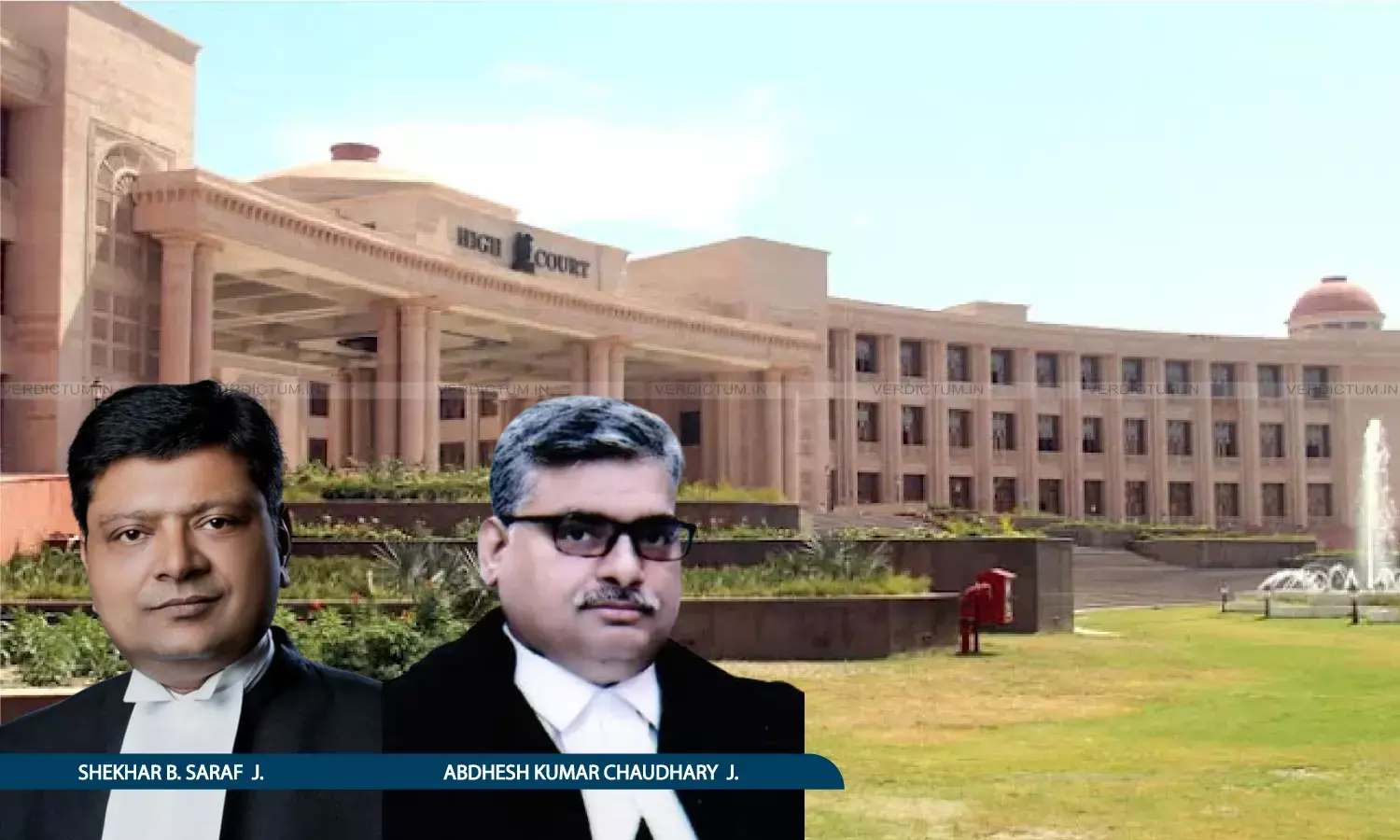
The Allahabad High Court, Lucknow Bench has held that a Government Order prescribing a fee range for Special Counsels serves merely as an administrative guideline for individual case-by-case fee negotiation rather than an automatic entitlement to the maximum fee prescribed. The Court held that an advocate cannot invoke the writ jurisdiction of the High Court under Article 226 of the Constitution of India to demand the maximum fee ceiling from the State Government in the absence of an explicit, mutual agreement fixing such remuneration or an unambiguous admission of dues.
Clarifying the limits of writ jurisdiction in advocate fee disputes, the Bench observed that the advocate-client relationship is fundamentally contractual in nature. Disputed monetary claims arising out of contractual engagements, lacking an undisputed statutory liability or an acknowledged obligation, cannot be resolved through a writ of mandamus. The Court emphasized that complex factual questions regarding empanelment periods, agreed fees, and entitlement following termination require a trial before a Civil Court where evidence can be tested through cross-examination.
A Division Bench comprising Justice Shekhar B. Saraf and Justice Abdhesh Kumar Chaudhary observed, “…A facial reading of the said Government order merely signifies that the fee for a special counsel would be in the range of Rs. 15,000/- to Rs.5,00,000/- per case and does not in any manner fix the fee for a special counsel for the maximum fee of Rs.5,00,000/- in all cases allotted to him. There is no automatic applicability of the fees and to the mind of this Court, the said Government Order merely gives a guidance to the various department of the Government indicating therein that in case a special counsel is to be appointed, the fee has to be finalized between Rs.15,000/- to Rs.5,00,000/…To add further chaos, to the existing confusion, it has also been contended that this government Order is not applicable to Basic Shiksha Department. Thus, a complex web of disputed facts is involved in the present case, which obviously cannot be adjudicated and decided by this Court exercising jurisdiction under Article 226 of the Constitution of India.”
"Payments of professional fees ought to be a very privileged and private affair between an Advocate and a Client and ought not to be a subject-matter of any Court proceedings...A litigation between a Counsel and his client would tantamount to defeating the very bedrock of trust and faith, which is the basic foundation for an Advocate and client relationship", the Bench noted further.
Advocate Jyotinjay Verma, petitioner appeared in person and Pankaj Khare, Additional Chief Standing Counsel appeared for the respondent.
The brief facts of the case involve Jyotinjay Verma, a practicing advocate of the High Court and member of the Oudh Bar Association, who claimed to have represented the Basic Education Department of Uttar Pradesh as a Special Counsel for approximately 16 years. Relying on Government Orders dated April 23, 2009, and March 2, 2011, the petitioner submitted fee bills for 96 Special Appeals across four districts (Sitapur, Lucknow, Hardoi, and Raebareli) claiming the maximum rate of Rs. 5,00,000/- per case, amounting to a total claim of Rs. 4.80 crore along with penal interest.
The petitioner filed four separate writ petitions before the Lucknow Bench of the Allahabad High Court seeking a writ of mandamus against the State of Uttar Pradesh and the District Basic Education Officers to compel up-to-date clearance of his fee bills. The State and the Basic Education Department raised preliminary objections regarding maintainability, contending that the fee claims were unadmitted, disputed in quantum, contractual in nature, and barred by delay and laches.
In its reasoning, the High Court rejected the petitioner’s reliance on the Supreme Court’s order in State of U.P. v. Gopal K. Verma, clarifying that directions passed under Article 142 of the Constitution do not lay down a binding precedent under Article 141. Reviewing precedent from the Supreme Court (S. Tejinder Singh Gujral) as well as the Bombay, Madhya Pradesh, and Madras High Courts, the Bench affirmed that writ jurisdiction cannot be used for recovery of professional fees. The Court noted that the 2011 Government Order merely provided a fee range (Rs. 15,000 to Rs. 5,00,000) rather than an automatic entitlement to the maximum fee, and pointed out that no admitted or acknowledged bills were placed on record.
Accordingly, the Court dismissed all four writ petitions without costs. However, the Bench granted liberty to the petitioner to approach a competent Civil Court to establish his claims through a regular civil suit, clarifying that the benefit of Section 14 of the Limitation Act, 1963, would be available to him in accordance with law for the period spent pursuing the writ proceedings.
Cause Title: Jyotinjay Verma v. State of U.P. Thru. Secy. Basic Education Lko And 5 Others (Neutral Citation: 2026:AHC-LKO:57145-DB)
Appearances:
Petitioner: Petitioner-in-Person, Advocate Jyotinjay Verma.
Respondents: C.S.C., Pankaj Khare (Additional Chief Standing Counsel), Shivam Sharma, Pradeep Tiwari, Prashant Kumar Singh, Ran Vijay Singh, and Rishabh Tripathi, Advocates.