Children’s Court Must Independently Decide Whether Child Needs Adult Trial After JJB’s Preliminary Assessment: Allahabad High Court
The Court held that an offence carrying a maximum sentence exceeding seven years, but no minimum sentence of seven years, is a “serious offence” and cannot trigger the preliminary-assessment mechanism reserved for heinous offences.
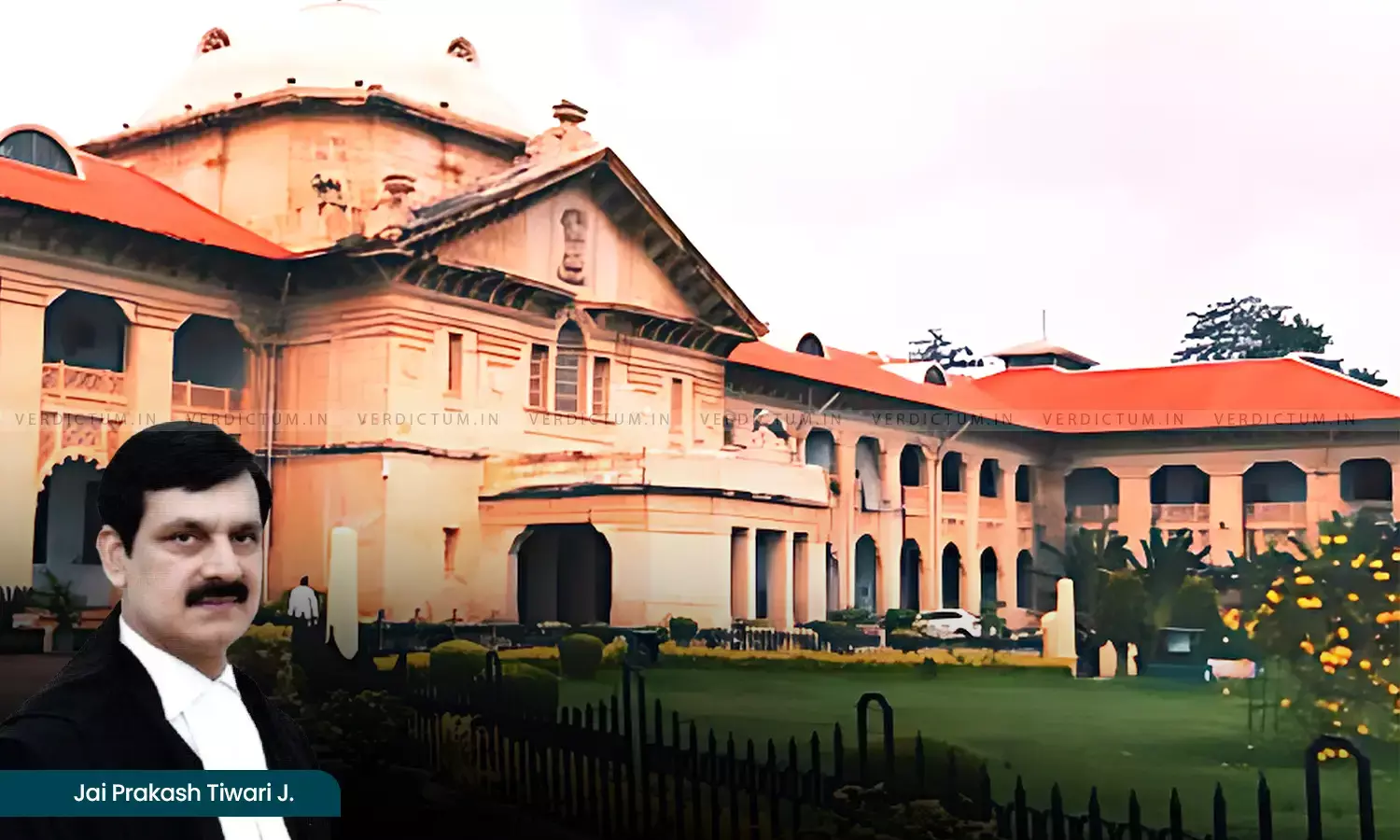
The Allahabad High Court has held that a Children’s Court receiving a case after a Juvenile Justice Board’s preliminary assessment must independently decide whether the child needs to be tried as an adult. If it finds no such need, it must conduct the inquiry as a Board.
Alternatively, the High Court added, where the transfer itself was without jurisdiction, it must decline jurisdiction and return or forward the case to the competent Board.
The Court was hearing a criminal revision under Section 102 of the Juvenile Justice (Care and Protection of Children) Act, 2015, challenging orders by which the Juvenile Justice Board and the Children’s Court directed that a child accused of forgery and cheating offences be tried as an adult.
A Bench of Justice Jai Prakash Tiwari observed: “When a case is received by the Children's Court following a preliminary assessment, Section 19(1) of the Act of 2015 imposes a mandatory statutory duty upon it to independently determine whether there is a need to try the child as an adult.”
The Court added: “Under Section 19(1)(ii), if the Children's Court comes to the conclusion that there is no need for a trial as an adult which includes cases where the offence itself is non-heinous it is required to step into the shoes of the Board, conduct the inquiry itself, and pass appropriate orders under Section 18 of the Act.”
Senior Advocate Sushil Shukla appeared for the revisionist. Additional Government Advocate Ashutosh Srivastava appeared for the State, while Advocate Shyam Kishore Yadav appeared for the second opposite party.
Background
The revisionist was charge-sheeted with several persons for offences under Sections 419, 420, 467, 468, 471 and 120-B IPC in a case alleging cheating and fraud involving ₹40 lakh. The Juvenile Justice Board subsequently declared that he was 16 years, nine months and seven days old on the date of the alleged offence.
In May 2022, the Board treated the alleged offences as heinous, conducted a preliminary assessment under Section 15 of the 2015 Act and transferred the case for an adult trial under Section 18(3).
The Board later held in July 2023 that the alleged offence under Section 467 IPC was a serious rather than heinous offence and that it possessed jurisdiction to conduct the inquiry. In May 2026, however, it rejected the revisionist’s application after finding that its earlier transfer order remained binding and could not be reviewed. The Children’s Court affirmed that decision.
The revisionist relied upon Shilpa Mittal v. State (NCT of Delhi) (2020) and argued that Section 467 IPC did not prescribe a minimum sentence of seven years and therefore could not be classified as heinous. The State and the second opposite party contended that the unchallenged 2022 transfer order had attained finality and that the Board could not review or recall it.
Court’s Observations
Section 467 IPC Was A Serious, Not Heinous, Offence
The Court observed that Section 2(33) of the 2015 Act classifies an offence as heinous only when the statute prescribes a minimum sentence of seven years or more.
Relying on Shilpa Mittal (2020), the Court held that an offence carrying a maximum sentence exceeding seven years or life imprisonment, but either no minimum sentence or a minimum below seven years, must be treated as a serious offence until Parliament provides otherwise.
Applying that rule, the Court held: “In case at hand, the revisionist is charged under Section 467 IPC, which carries a punishment of imprisonment for life or imprisonment up to ten years along with a fine. Applying the above settled position of law to the present case, since Section 467 IPC does not prescribe any minimum sentence of imprisonment, it does not fall within the definition of a ‘heinous offence’ under Section 2(33). Instead, it falls under the category of a ‘serious offence’ under Section 2(54) of the Act.”
The Court consequently held that the preliminary-assessment mechanism under Section 15 and transfer power under Section 18(3), which apply to heinous offences allegedly committed by children aged 16 or above, could not be invoked.
Board Could Not Transfer A Non-Heinous Case
The Court observed that the Juvenile Justice Board possessed exclusive original jurisdiction under Sections 8(1) and 9(2) to conduct inquiries concerning petty and serious offences committed by children.
Referring to Kiran Singh v. Chaman Paswan (1954), Sushil Kumar Mehta v. Gobind Ram Bohra (1990) and Harshad Chimanlal Modi v. DLF Universal Ltd. (2005), the Court stated that subject-matter jurisdiction could neither be created by consent nor cured through procedural waiver.
The Court held: “In the present case, since the offence under Section 467 IPC is a ‘serious offence’, the Juvenile Justice Board had no statutory authority to invoke Section 15 or pass a transfer order under Section 18(3). The Board erred in holding that it could not recall its order and that the Children's Court must try the matter. Statutory jurisdiction can neither be created nor abdicated on the pretext of procedural constraints or an inability to recall an order. An order passed by a court or board lacking subject-matter jurisdiction is void ab initio.”
The Court also referred to Vikram Bakshi v. R.P. Khosla (2025) and observed that although criminal courts ordinarily cannot substantively review their final orders, a limited procedural recall remains permissible where the original order suffers from an inherent lack of jurisdiction.
Children’s Court Could Not Merely Affirm The Transfer
The Court observed that the Children’s Court acquired jurisdiction to try a child as an adult only through a valid transfer order passed under Section 18(3) following a preliminary assessment concerning a heinous offence.
It held that Section 19(1) required the Children’s Court to apply its own mind and decide whether an adult trial was necessary. The Board’s preliminary assessment did not bind the Children’s Court or dispense with this independent statutory determination.
The Court further held: “Alternatively, where the transfer order passed by the Board is fundamentally without jurisdiction, the Children's Court lacks inherent original subject-matter jurisdiction over serious offences. In such circumstances, it ought to have exercised its statutory powers under Section 9(2) of the Act of 2015 read with Section 228(1)(a) of the Code of Criminal Procedure, 1973(Section 251(1)(a) of the Bharatiya Nagarik Suraksha Sanhita, 2023) to decline jurisdiction and return/forward the file to the competent Juvenile Justice Board.”
The Court consequently found that the Children’s Court had erred by affirming its jurisdiction over a non-heinous offence instead of conducting the inquiry as a Board or returning the case to the competent Board.
Conclusion
The Allahabad High Court allowed the criminal revision and set aside the Juvenile Justice Board’s May 11, 2026 order and the Children’s Court’s July 16, 2026 order.
The Court remanded the case to the Juvenile Justice Board, Bulandshahr, under Section 9(2) of the 2015 Act. It directed the Board to register the matter and conduct the inquiry as a serious-offence case under Sections 14 and 18(1), without subjecting the revisionist to an adult trial. The case record was directed to be transmitted forthwith from the Children’s Court to the Board.
Cause Title: Juvenile - X v. State of U.P. and Another (Neutral Citation: 2026:AHC:222817)
Appearances
Revisionist: Senior Advocate Sushil Shukla; Advocates Ankita Tiwari and Nidhi
Respondents: Additional Government Advocate Ashutosh Srivastava; Advocates Shyam Kishore Yadav and Kunwar Akhilendra Singh