

“Accused Threw Children Into Well Without Premeditated Intent To Kill”: Allahabad High Court Converts Murder Conviction To Culpable Homicide
The Court held that though the accused had knowledge that throwing the children into a well was likely to cause death, the evidence did not establish a premeditated intention to kill, and therefore the case would fall under Section 304 Part II IPC and not Section 302 IPC.
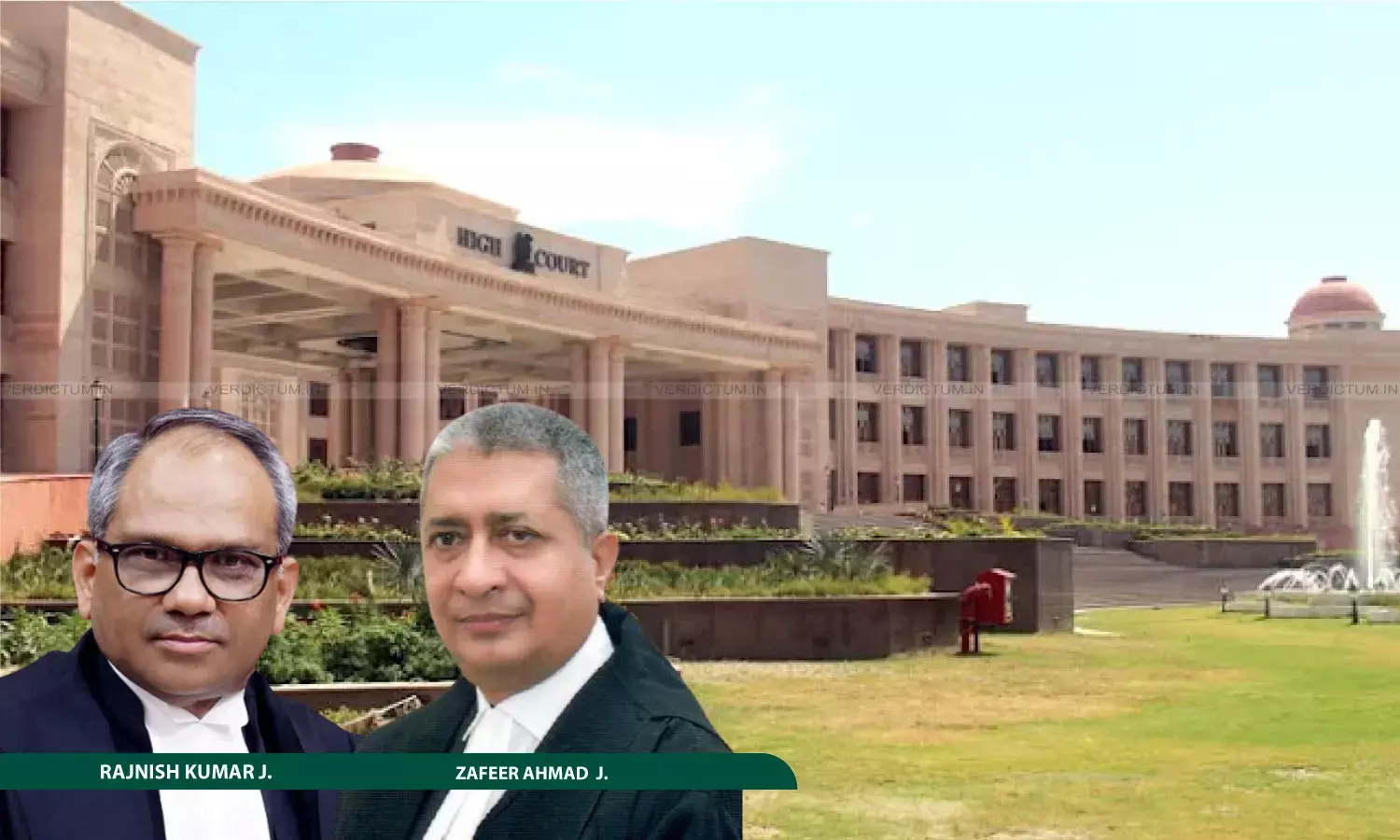
The Allahabad High Court modified the conviction of an accused from Section 302 IPC to Section 304 Part II IPC after holding that the incident in which two children were thrown into a well occurred in the heat of passion after the accused’s “bad intention” towards the mother of the children was resisted.
The Court observed that although the accused had knowledge that the act was likely to cause death, the prosecution's evidence did not establish premeditated intention to commit murder.
The Court was hearing a jail appeal challenging the judgment of the trial court whereby the appellant had been convicted under Sections 302, 307 and 323 IPC in connection with an incident in which one child died after being thrown into a well while another child survived with injuries.
A Division Bench of Justice Rajnish Kumar and Justice Zafeer Ahmad observed: “It is apparent from the evidence and material on record that the appellant had thrown the children of P.W.2 in the well in heat of passion on account of frustration of his bad intention for the P.W.2, which could not be fulfilled, as she had asked him to go away… though it may be said that he had thrown the children in the Well with the knowledge that it is likely to cause death but without intention to kill, therefore, it cannot be said to be a per-medidated murder.”
Advocate Shreesh Kumar Mishra Atal appeared as Amicus Curiae for the appellant, while the AGA appeared for the State.
Background
According to the prosecution's case, a written complaint was lodged alleging that during the night, the accused had picked up two children sleeping on a cot outside the house of their maternal relatives and thrown them into a nearby well. The children were subsequently taken out of the well by villagers and rushed to the hospital, where one child was declared dead while the other survived.
The prosecution's case further disclosed that the mother of the children had also sustained injuries during the incident and was medically examined.
The trial court convicted the appellant under Sections 302, 307 and 323 IPC while acquitting him of the offence under Section 3(2)(v) of the SC/ST Act.
Court’s Observations
The High Court observed that the FIR had been lodged promptly within approximately one hour and ten minutes of the occurrence and held that the promptness of the FIR lent assurance to the prosecution's version by minimising the possibility of concoction or embellishment.
The Court found that the testimony of the injured eye witness, who was the mother of the children, remained fully consistent throughout. The Court noted that she had specifically deposed that the accused came near her with “bad intention”, pressed her neck, kicked her when she resisted him and thereafter picked up the children sleeping beside her and threw them into the well.
The Bench observed that nothing material could be elicited in her cross-examination so as to create doubt regarding either the occurrence or the involvement of the accused.
The Court further noted that the evidence on record established that there was no prior enmity between the family of the accused and the family of the injured witness. The Bench observed that even after the incident, relations between the families remained cordial, which ruled out the possibility of false implication.
The High Court held that the prosecution version stood corroborated by the medical evidence on record. The Court noted that the injury report of the injured witness supported her version that she had been kicked by the accused before the children were thrown into the well.
The Bench further observed that the post mortem report also supported the prosecution case regarding drowning.
The Court observed: “Thus the post mortem report (Ex. Ka. 4), also supports the prosecution case because the death could have been on account of drowning in the well. Therefore, the presence of about 50 ml liquid in the stomach further supports the prosecution version.”
The Court held that the prosecution had successfully proved the incident not only through ocular testimony but also through medical evidence corroborating the prosecution's narrative.
The High Court observed that the evidence of the injured witness indicated that the accused had approached her with “bad intention” and that the incident occurred immediately after she resisted him and asked him to go away. The Court noted that the prosecution had failed to establish any independent motive to commit murder of the children.
The Bench observed: “The motive, which could be inferred from evidence of P.W.2 was not to commit murder of child, by the accused /appellant but he had come with bad intention to her. Thus, it may not be said that there was any intention to kill any of the child.”
The Court further held that the incident occurred in continuation of the confrontation between the accused and the injured witness and that the accused had acted in frustration after being resisted.
After examining the principles governing Sections 299, 300 and 304 IPC, along with the judgments of the Supreme Court in Virsa Singh v. State of Punjab, Pulicherla Nagarjun v. State of Andhra Pradesh and other decisions, the High Court held that the present case did not satisfy the ingredients necessary to sustain a conviction for murder under Section 302 IPC.
The Court held that although it may be said that he had thrown the children in the Well with the knowledge that it is likely to cause death, but without intention to kill, therefore, it cannot be said to be a premeditated murder.
The Bench held that the evidence established knowledge on the part of the accused that the act was likely to cause death, but not a premeditated intention to kill. Accordingly, the Court concluded that the offence would fall within the ambit of Section 304 Part II IPC.
The Court, however, upheld the conviction under Section 307 IPC in relation to the surviving child and under Section 323 IPC for the injuries caused to the mother of the children.
Conclusion
The High Court upheld the findings of the trial court regarding the occurrence and the involvement of the appellant in throwing the children into the well. The Court also affirmed the convictions under Sections 307 and 323 IPC after holding that the prosecution had successfully proved the case through reliable ocular and medical evidence.
However, the Court held that the evidence did not establish a premeditated intention to commit murder and instead showed that the incident occurred in the heat of passion after the accused’s “bad intention” towards the injured witness was resisted. Holding that the accused had knowledge that the act was likely to cause death but lacked the intention to kill, the Court modified the conviction from Section 302 IPC to Section 304 Part II IPC.
Cause Title: Jag Prasad Yadav @ Jaggu v. State of U.P. (Neutral Citation: 2026:AHC-LKO:38830-DB)
Click here to read/download Judgment