

Oral Or Unwritten Tenancy Not Excluded From UP Tenancy Act, 2021; Rent Authority Has Jurisdiction: Allahabad High Court
The Bench noted that absence of a written tenancy agreement does not oust Rent Authority's jurisdiction where landlord-tenant relationship is admitted; Section 4 is regulatory and evidentiary, not a jurisdictional precondition.

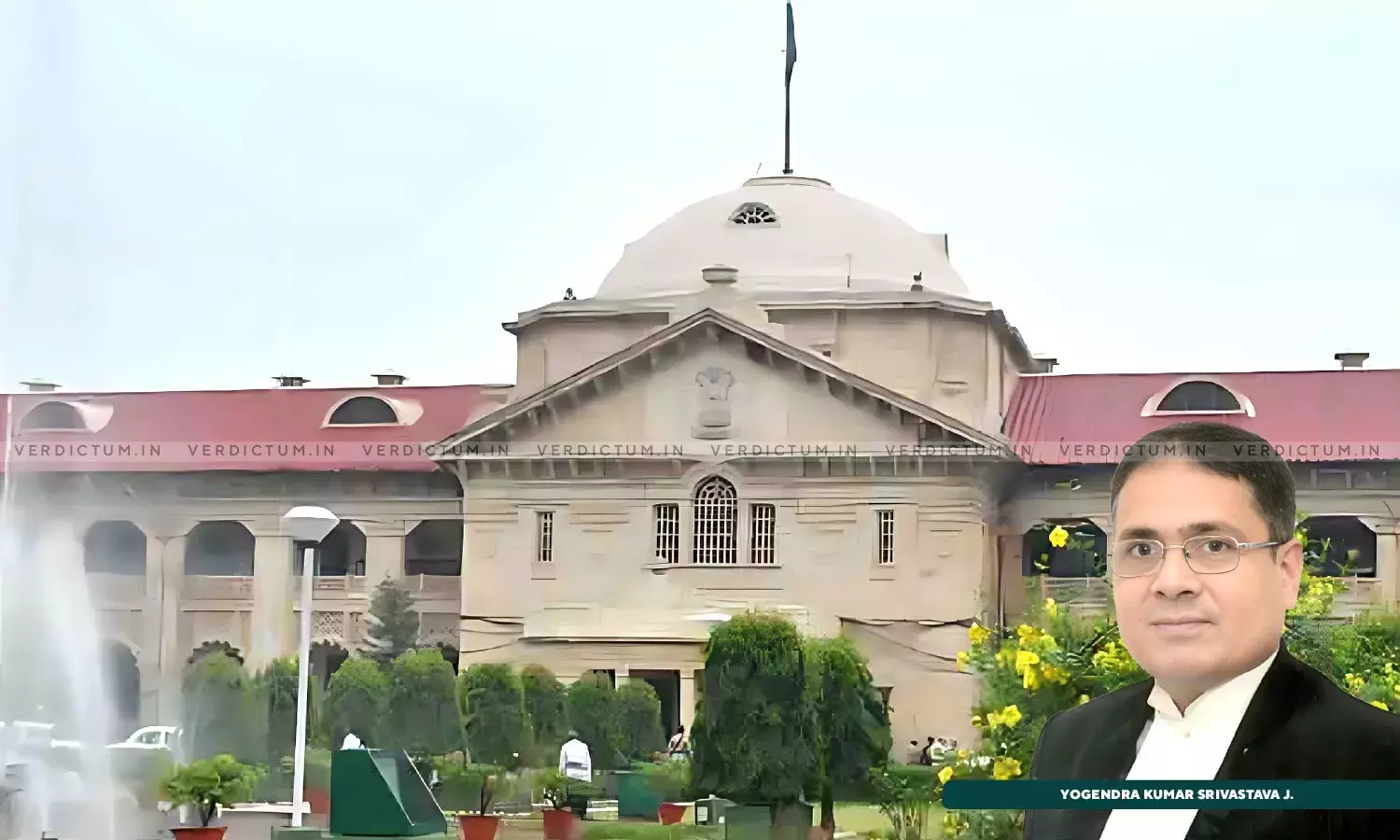
The Allahabad High Court has held that the Uttar Pradesh Regulation of Urban Premises Tenancy Act, 2021 does not exclude oral, month-to-month or otherwise unwritten tenancies from its statutory ambit merely because such arrangements were not reduced into writing or because the prescribed particulars were not furnished before the Rent Authority.
While dismissing two petitions filed by tenants challenging the maintainability of eviction proceedings before the Rent Authority, the Court held that where the relationship of landlord and tenant is admitted or otherwise established, proceedings before the Rent Authority remain maintainable notwithstanding the absence of a written tenancy agreement.
The Court further held that Section 4 of the Act is regulatory and evidentiary in character, intended to formalise tenancy arrangements, introduce documentary certainty and strengthen institutional record-keeping, and not a provision creating a jurisdictional precondition. A party cannot be permitted to derive advantage from its own default in failing to execute a written tenancy agreement and thereby defeat the very remedial scheme which the Legislature has enacted, it said.
Justice Dr. Yogendra Kumar Srivastava observed, “…The Uttar Pradesh Regulation of Urban Premises Tenancy Act, 2021 does not exclude oral, month-to-month, or otherwise unwritten tenancies from its statutory ambit merely because such arrangements were not reduced into writing or because the prescribed particulars were not furnished before the Rent Authority. Where the relationship of landlord and tenant is admitted or otherwise established, and the dispute falls within the field occupied by the statute, proceedings before the Rent Authority remain maintainable notwithstanding the absence of a written tenancy agreement”.
Advocate Kamlesh Kumar Tiwari appeared for the petitioner and Advocates Mohit Kumar Shukla and Ram M. Kaushik appeared for the respondents, while Rahul Agarwal, Additional Advocate General, assisted by Gaurav Singh, Standing Counsel, appeared for the interpretation of the statutory provisions involved.
“Sections 4(1) and 4(3)(b) are mandatory regulatory provisions intended to formalise, record and bring certainty to tenancy arrangements through written documentation and disclosure of particulars before the statutory authority. Section 4(7), in turn, contemplates the consequence of non-furnishing of such information and leaves no manner of doubt that the Legislature did not intend procedural non-compliance to result in wholesale exclusion from the operation of the Act. These provisions cannot, therefore, be construed as creating a blanket exclusion from the statutory framework, nor as rendering proceedings before the Rent Authority inherently non-maintainable in every case of non-compliance, nor as otherwise creating a jurisdictional bar against recourse to the specialised forum constituted under the enactment”, the Bench further observed.
In the first matter, tenant Akhilesh Kumar was in occupation of a shop at Gandhi Road, Jhansi, at a monthly rent of Rs. 3,000 on a month-to-month basis.
The landlord instituted eviction proceedings before the Rent Authority, Jhansi, since the tenant objected that no written tenancy agreement existed and that the proceedings were therefore not maintainable before the Rent Authority, with jurisdiction lying before the Court of Small Causes.
In the connected matter, tenant Suman Dwivedi similarly challenged eviction proceedings instituted against her on the ground of absence of a written agreement. Both the Rent Authority and the Rent Tribunal rejected the objections and upheld maintainability. The tenants approached the Allahabad High Court under Article 227 of the Constitution of India.
The Court undertook a detailed examination of Sections 4, 21, 38 and 42 of the Act and held that they must be read harmoniously as an integrated statutory scheme. Section 4(7), the Court held, is of particular significance, it contemplates the consequence of non-furnishing of tenancy particulars and expressly preserves the landlord's right to seek eviction even in the absence of such information, demonstrating that the Legislature did not intend procedural non-compliance to result in wholesale exclusion from the Act.
The Court further held that Section 38(2) of the Act, properly construed, excludes adjudication of title and ownership disputes and does not require ordinary tenancy disputes to be relegated to the Court of Small Causes merely because the tenancy is oral or unwritten.
“This Court is of the considered opinion that absence of a written tenancy agreement, by itself, does not denude the Rent Authority of jurisdiction under the Uttar Pradesh Regulation of Urban Premises Tenancy Act, 2021 where the tenancy relationship is admitted or otherwise established in accordance with law. The objections raised by the petitioners on the ground of maintainability, therefore, do not merit acceptance”, the Bench said.
“It is, however, clarified that the observations made hereinabove shall not be construed as diluting the statutory mandate embodied in Section 4 of the Act, nor as creating any disincentive for execution and intimation of written tenancy agreements in the manner contemplated therein”, further noted.
On the question of reference to a Larger Bench, the Court declined, holding that the apparent conflict between Amit Gupta and Raman Arora on one hand and Amarjeet Singh and Canara Bank on the other is capable of reconciliation, the former line concerned survival of proceedings before the Court of Small Causes while the latter directly addressed the Rent Authority's jurisdiction under the Act, and the two operate in distinct though cognate fields.
Accordingly, both the petitions were dismissed and the orders of the Rent Authority and Rent Tribunal in both matters were affirmed.
Cause Title: Akhilesh Kumar v. Sanjay Sahgal (Neutral Citation: 2026:AHC:116349)
Appearances:
Petitioner: Kamlesh Kumar Tiwari, Advocate.
Respondent: Mohit Kumar Shukla, Ram M. Kaushik, Advocates.