

Disputed Signatures On Photocopy Cannot Be Referred For Handwriting Expert Examination: Allahabad High Court
The Court held that secondary copies lack forensic features like pen pressure and ink flow required for reliable scientific scrutiny.

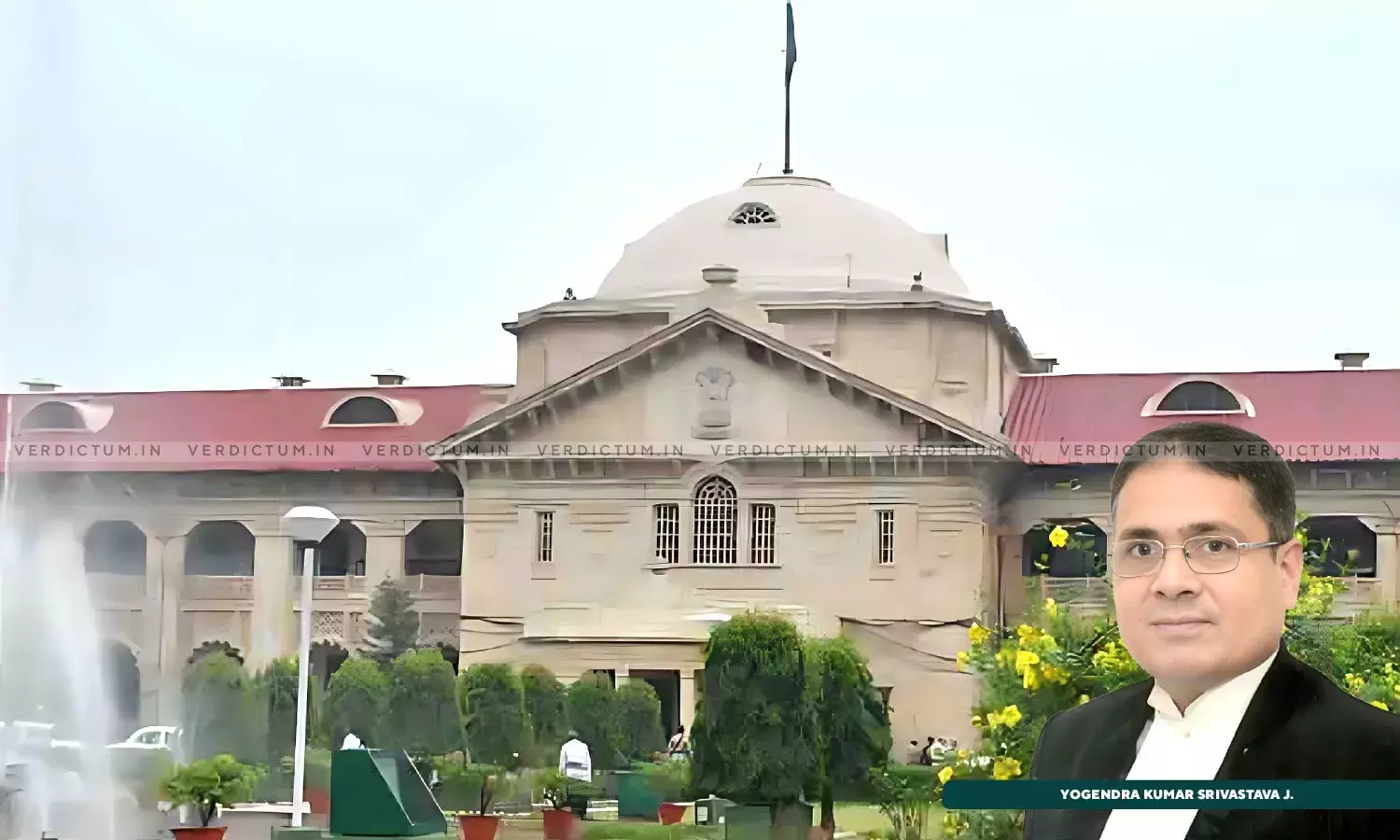
The Allahabad High Court has ruled that a document’s photocopy cannot be referred for comparison by a handwriting expert in the absence of the original document.
Dismissing a petition filed under Article 227 of the Constitution of India, the Court held that intrinsic forensic characteristics—such as line quality, pen pressure, ink flow, and stroke formation—are inherently lost or distorted during mechanical reproduction.
Consequently, an expert examination conducted solely on a photocopy is inherently speculative and fails to provide reliable evidentiary assistance.
The Court further clarified that witness admissions regarding signatures or terms cannot bypass the foundational legal requirement of producing the original document for scientific analysis.
The Bench of Justice Yogendra Kumar Srivastava held, "The contention advanced on behalf of the petitioner that the respondent had admitted certain terms relating to the rent or had stated that he could identify the signatures of his deceased father also does not carry the matter any further. Such statements constitute matters of evidence whose probative value shall fall for consideration by the Rent Authority while deciding the proceedings on merits. They cannot, by themselves, confer upon the petitioner a right to seek expert examination of a document where the foundational requirement for such an exercise, namely production of the original document, is absent. No amount of admissions can dispense with the foundational requirement that the material proposed for forensic examination must itself be capable of reliable scientific scrutiny. An expert opinion cannot be directed merely to undertake a speculative exercise or to overcome the inherent limitations arising from examination of a photocopy of a disputed document."
Advocate Ram Lakhan Kashyap appeared for the Petitioner, while Senior Advocate Swapnil Kumar appeared for the Respondents
Brief Facts
The petitioner was occupying a commercial shop as a tenant, claiming tenancy under an alleged rent agreement dated September 22, 2005, executed between him and late Ansar Hussain, the predecessor-in-interest of the respondent. The respondent instituted eviction proceedings against the petitioner under Section 21(2) of the Uttar Pradesh Regulation of Urban Premises Tenancy Act, 2021, before the Rent Authority, Etah, registered as Rent Case No. 629 of 2024. In his written statement, the petitioner relied upon a photocopy of the alleged rent agreement to assert his tenancy rights.
During the pendency of the proceedings, the petitioner filed an application before the Rent Authority seeking to send the disputed signatures appearing on the photocopy of the rent agreement to a handwriting expert for scientific comparison with the admitted signatures of late Ansar Hussain on rent receipts. The Rent Authority, vide order dated November 20, 2025, rejected the application on the ground that the original rent agreement was not produced and scientific examination could not be conducted on a mere photocopy.
Aggrieved, the petitioner preferred an appeal before the District Judge/Rent Tribunal, Etah, which was dismissed vide judgment dated January 7, 2026, affirming the order of the Rent Authority and noting additional objections regarding the inadmissibility of the document under Section 35 of the Indian Stamp Act, 1899. The petitioner subsequently filed the present writ petition under Article 227 of the Constitution of India, challenging both orders.
Contentions of Parties
The Petitioner contended that the courts below committed a manifest illegality in rejecting the application for expert examination. It was argued that the respondent, during his cross-examination, had admitted his acquaintance with his late father’s signatures as well as the initial rate of rent and its enhancement terms.
The petitioner submitted that these admissions provided sufficient foundational material to justify referring the document for forensic examination, and the denial of such an opportunity resulted in a grave miscarriage of justice and prejudice to the tenant.
Per contra, the Respondent raised a preliminary objection that the appeal before the Rent Tribunal was not maintainable against a purely interlocutory order. On merits, the respondent submitted that handwriting examination on a photocopy was scientifically unfeasible because intrinsic forensic characteristics—such as pen pressure, line quality, ink flow, and stroke formation—were lost in mechanical reproduction.
Reliance was placed on judicial precedents to argue that expert opinion based on a photocopy was inherently unreliable. Additionally, the respondent contended that the alleged agreement was unregistered and insufficiently stamped, rendering it inadmissible under Section 35 of the Indian Stamp Act, 1899, Section 49 of the Registration Act, 1908, and Section 107 of the Transfer of Property Act, 1882.
Observations of the Court
The High Court observed that while the opinion of a handwriting expert was a relevant fact under the law of evidence, it remained advisory in nature and did not bind the court.
The Court emphasized that forensic handwriting analysis required the physical verification of microscopic features, line quality, pen pressure, and rhythm—indicia that were discernible only from an original document and were inevitably obliterated or distorted in a photocopy.
Consequently, an expert opinion founded solely upon a secondary reproduction lacked reliability and could not provide dependable scientific assistance to the court.
The Court further held that collateral admissions made by a witness regarding signature identification or rent rates could not substitute or dispense with the foundational requirement of producing the original document for scientific scrutiny.
Addressing the scope of supervisory jurisdiction under Article 227 of the Constitution of India, the Court observed that its jurisdiction was supervisory rather than appellate, meant only to rectify jurisdictional errors, patent illegalities, or manifest perversity.
The Court observed, "Significantly, rejection of the application seeking expert opinion does not foreclose the petitioner's right to establish the existence of the alleged tenancy or the terms thereof through other legally admissible evidence. The petitioner remains at liberty to rely upon rent receipts, oral evidence or any other admissible documentary material available on record. The impugned orders merely decline one particular mode of proof which, in the facts and circumstances of the present case, has been found incapable of yielding reliable evidentiary assistance."
The High Court held that the orders passed by the Rent Authority and affirmed by the Rent Tribunal were informed by sound legal principles and suffered from no jurisdictional infirmity or perversity.
Accordingly, the High Court dismissed the writ petition filed under Article 227 of the Constitution of India, with no order as to costs.
Cause Title: Udayveer Singh v. Rent Tribunal and others [Neutral Citation:2026:AHC: 157254]
Appearances:
Petitioner: Advocates Ram Lakhan Kashyap, Jahar Singh, Stuti Singh
Respondents: Senior Advocate Swapnil Kumar and Advocate Sudhanshu Kumar